During the past year, I have had the privilege of attending Broadway-tour performances of Wicked and Phantom of the Opera. Both were impressive shows filled with talented actors and breathtaking sets. I will always remember those evenings; however, neither imprinted my heart and mind to the degree that last evening’s trip to the theater did.
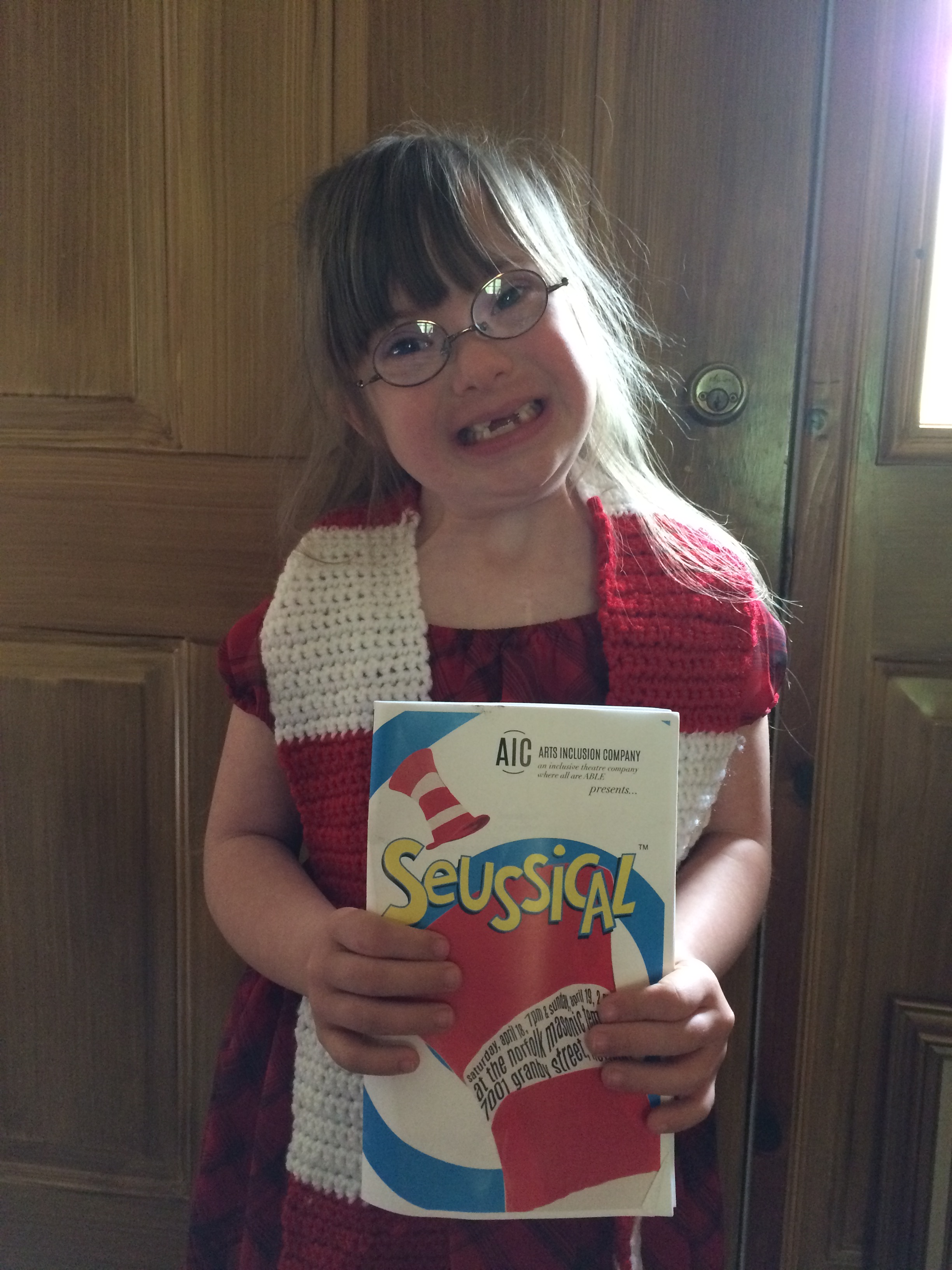
Seussical presented by the Arts Inclusion Company (www.artsinclusioncompany.com) packed a three-hour performance with enough layers of meaning and life lessons to leave me deep in thought for weeks. Co-founded by my friend and hero Dianna Swenson, AIC defines itself as a “company where people of All Abilities are welcomed to participate in all aspects of theatrical arts.”
The show burst with color, music, energy, and a range of talent and ability working in unity in a way that I see nowhere else. Watching the performers and their “shadows” act and sing together to bring characters and story to life is breathtaking. I couldn’t help thinking that we were witnessing a glimpse of the Kingdom on earth—a portrait of how life could be if we all risked putting our individually broken selves together to create something much more complete and meaningful than we are capable of alone.
The show as scripted and rehearsed and performed was enough to make for an entertaining, uplifting evening at the theater. However, there was much more to the evening than that for me.
Just as AIC gives its performers and crew opportunities they may not otherwise have, the same is true for its audience. There are very few artistic venues to which I would take my 6-year-old daughter, who in addition to having an age-appropriate attention span and energy level also happens to have Down syndrome, which often gives an extra element of challenge and “surprise” to our outings. AIC is comprised of people who “get this,” so every aspect of the show and environment was designed to accommodate and encourage accessibility. Priority seating was available to individuals in wheelchairs, and the audience was prepared to accept “happy noises” in whatever form they came during the performance.
This, alone, would make the show unique and welcoming; however, during last night’s performance, the AIC crew and performers had an incredible opportunity to practice 360-degree inclusion. Early in the second act, a young woman named Samantha, who happens to be the daughter of another friend and hero and who also happens to have Autism, became so mesmerized with the show that she left her front-row, floor-level seat and walked onto the stage.
Every warrior mom in the room empathized with my friend as she attempted unsuccessfully to get her daughter back to her seat. That moment proved to be pivotal for the show on so many levels. Her mom clearly knew that to push her daughter at that point would have certainly had a disruptive and very negative ending. So she did what only a very, very courageous mother would do—she let her daughter go, trusting that the environment that AIC strove to create was really what it claimed to be—inclusive.
What followed was about ten minutes of unscripted beauty. Samantha had spent the entire first act watching these performers sing and dance, and as she responded onstage, it was amazing to see what she had picked up just from observation. Even more amazing was how the performers reacted to her unexpected presence onstage. No one missed a beat—not the experienced actors or those who were on the public stage for the first time. One of the leads did some improv with her in one scene, shadows engaged her, and after several minutes, she sat—not back in her seat, but on the steps leading to the stage. At that point, everyone had accepted Samantha as part of the show. To me, she represented all of us, the audience, as we engaged with this incredible performance. To see her sitting, mesmerized, so comfortably in the middle of the performance was like witnessing myself viewing the performance while it occurred—a very surreal experience.
Behind the scenes, the crew worked with her mother to formulate the best plan to get Samantha off the stage because, of course, for her safety and that of the performers, she needed to return to her seat. But there were many ways that could have happened—and only one was in keeping with the theme of the evening’s performance, that “a person’s a person, no matter how small.”
So at a natural break in the flow of the musical, two men gently approached Samantha to coax her back to her seat. She still resisted, so Dianna walked toward her. Dianna explained what happened next on her Facebook page after the show: “I prayed and all I got was ‘sing to her,’ so I sang her name to her and off she went back to sit with the audience to enjoy the rest of the performance with her mom. The audience cheered for her! They cheered for this little girl who walked up on the stage. She wasn’t trying to interrupt the show, she was trying to get closer to the beauty, and to me, she became part of the beauty of what Arts Inclusion stands for.”
Dianna nailed it when she said that Samantha “became part of the beauty” because rather than disrupting the show or upstaging the actors onstage, her actions allowed the show to take on an even deeper meaning than it already had, and it allowed the performers to SHINE so much brighter in their handling of the situation. Even more than that, it engaged the audience on a level impossible to create “on script.”
Yes, the ending could have gone differently. Samantha could have still refused to leave the stage, and these kind men may have had to muscle her back to her seat. And there still would have been grace in that because of the great lengths everyone went to to maintain her dignity while protecting the show and the labor put into its preparation. But Dianna prayed, and God told her what to do, so the story had the happiest of endings.
And I enjoyed a lovely evening out with my family—a pizza dinner, a great show, and a chance to experience 360-degree inclusion such as I have never experienced it before. Thank you, AIC, for living what you believe and for demonstrating that every single life contains disability in some form but that the heart of disability is actually ABILITY.
 crosseyedliving