 “And behold, a woman of the city, who was a sinner, when she learned that [Jesus] was reclining at table in the Pharisee’s house, brought an alabaster flask of ointment, and standing behind him at his feet, weeping, she began to wet his feet with her tears and wiped them with the hair of her head and kissed his feet and anointed them with the ointment…Then turning toward the woman he said to Simon, ‘Do you see this woman? I entered your house; you gave me no water for my feet, but she has wet my feet with her tears and wiped them with her hair. You gave me no kiss, but from the time I came in she has not ceased to kiss my feet. You did not anoint my head with oil, but she has anointed my feet with ointment. Therefore I tell you, her sins, which are many, are forgiven—for she loved much… And he said to her, ‘Your sins are forgiven.’ Then those who were at table with him began to say among themselves, ‘Who is this, who even forgives sins?’ And he said to the woman, ‘Your faith has saved you; go in peace.’” (Luke 7:37-38, 44-47b, 48-50)
The biblical stories of healing or forgiveness that are directly connected to the faith of the individual can be daunting to read. If faced with such circumstances, would my faith be strong enough to save?
But doesn’t our faith always save us? It seems to me that faith is what holds me together, and that it is only when I forget to have faith that despair enters in. I have heard it preached that fear and faith cannot co-exist, and I believe that is true. But the thing I really must remember is that faith doesn’t depend on me. Faith isn’t something I do but something God gives. So I don’t lose my faith—He doesn’t take it back from me—I just forget to live in it. And when I do, the enemy is right there ready to slip into any crack he may sense in my faith—or my remembrance of my faith—and to fill it with fear.
I experienced this most starkly in the wee hours of May 15, 2013. Timothy had been rushed to the PICU the morning before with the rogue infection that would eventually take his life. His intestines had been externalized in a silo, and we had almost lost him. By early afternoon, he seemed to be out of the woods only to return to the edge later that evening. The doctors and nurses had worked diligently to stabilize him, and I had gone home to care for the other children and try to catch a few hours of sleep. I had barely laid my head on the pillow when a call from the hospital propelled me back into my car and down the bypass. It was after midnight, but I had been told to hurry because Timothy was headed to the OR for an emergency procedure.
Our trusted surgeon who had saved Timothy’s life the morning before intended to open his silo in a planned procedure around lunchtime on the 15th, save what he could of Timothy’s intestines, and remove what the infection had killed. Instead, Timothy’s vital signs were worsening, and the on-call surgeon had decided to open him up right away to see what could be done.
I don’t know how many times I have sat in CHKD’s surgery waiting room—too many to count—but this was the most memorable. Since it was after midnight, we were the only ones there. When the doctor came out, he was noticeably distressed. Timothy’s intestines were almost all completely dead. He could see only a few pink pieces that could possibly be dissected and patched into a salvageable tract, but it would not be enough to sustain him. He would need TPN and eventually a transplant—IF he survived the procedure in his precariously fragile state. This alone would not be so daunting except that this little boy already had a mended heart, compromised lungs, a trach, and a g-tube. He had lived all but one month of his life in hospitals. All of this ran through our minds as the doctor explained the options and told us to take a few minutes to decide whether to attempt the procedure or to close his silo and probably guarantee death soon after.
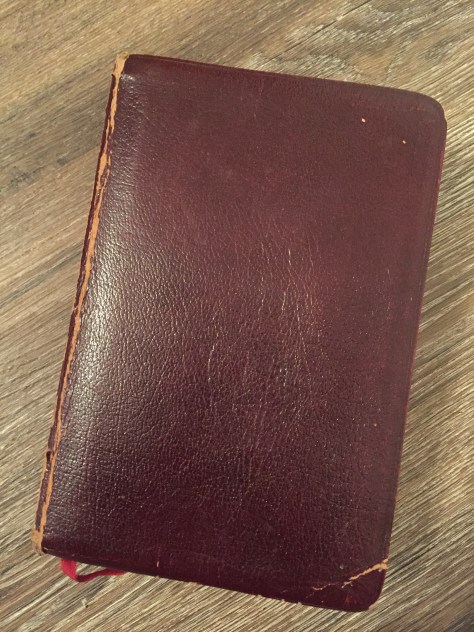
I don’t know how long he left us there to ponder this option, but I know that we were distraught. Neither one of us had slept, and the previous day had been a roller coaster of the greatest proportion. We didn’t say much except to say that we did not want to be in this position. We didn’t want to make this decision. I put a call in to our former pastor and his wife, knowing that they would be sound asleep and unable to help. We wanted someone to tell us whether either option was biblically “wrong.” Instead we were left alone with our decision and gripped with fear. I remember flipping desperately through the book of Psalms in my oldest, most beloved Bible, hoping to find some word of instruction.
The doctor impatiently checked back with us, saying time was critical and Timothy was at risk just waiting in the OR. It was then that I heard from the Lord—not with an answer but with a reassurance.
What God revealed was that it did not matter which path we chose because He was sovereign in either situation. If we opted for the procedure to continue, Timothy would either die on the table or survive and make his way with little to no intestines. If we opted to close him back up, miraculous healing could still occur or death could be imminent. The doctor had assured us that either option was medically reasonable, and in that moment, God led us to have faith in Him to carry out His plan for Timothy’s life in either scenario.
With full confidence that our decision in no way limited God’s power to heal our son if He chose to do so, we told the surgeon to close the silo.
I have shared many stories of Timothy’s life and death over the past five years, but this one is the most difficult to tell. Because at some level, it felt like we had given up on Timothy’s life after all of those months of advocating for him in every possible way.
I have no idea whether our decision was “right” or “best.” For me it was not a choice between life and death but a choice to have faith in the sovereignty of God over every situation and a choice to give our son the most dignity in life or death that we possibly could.
Jesus told the woman her faith had saved her and to “go in peace.” Our faith saves us—from our sins, from death, from our fears, from thinking we are ever outside of God’s reach. And peace follows–peace that transcends the outcome of the situation…because it is grounded in faith.
“But God, being rich in mercy, because of the great love with which he loved us, even when we were dead in our trespasses, made us alive together with Christ—by grace you have been saved—and raised up with him and seated us with him in the heavenly places in Christ Jesus, so that in the coming ages he might show the immeasurable riches of his grace in kindness toward us in Christ Jesus. For by grace you have been saved through faith. And this is not your own doing; it is the gift of God, not a result of works that no one may boast.” (Ephesians 2: 4-9, ESV)
 crosseyedliving