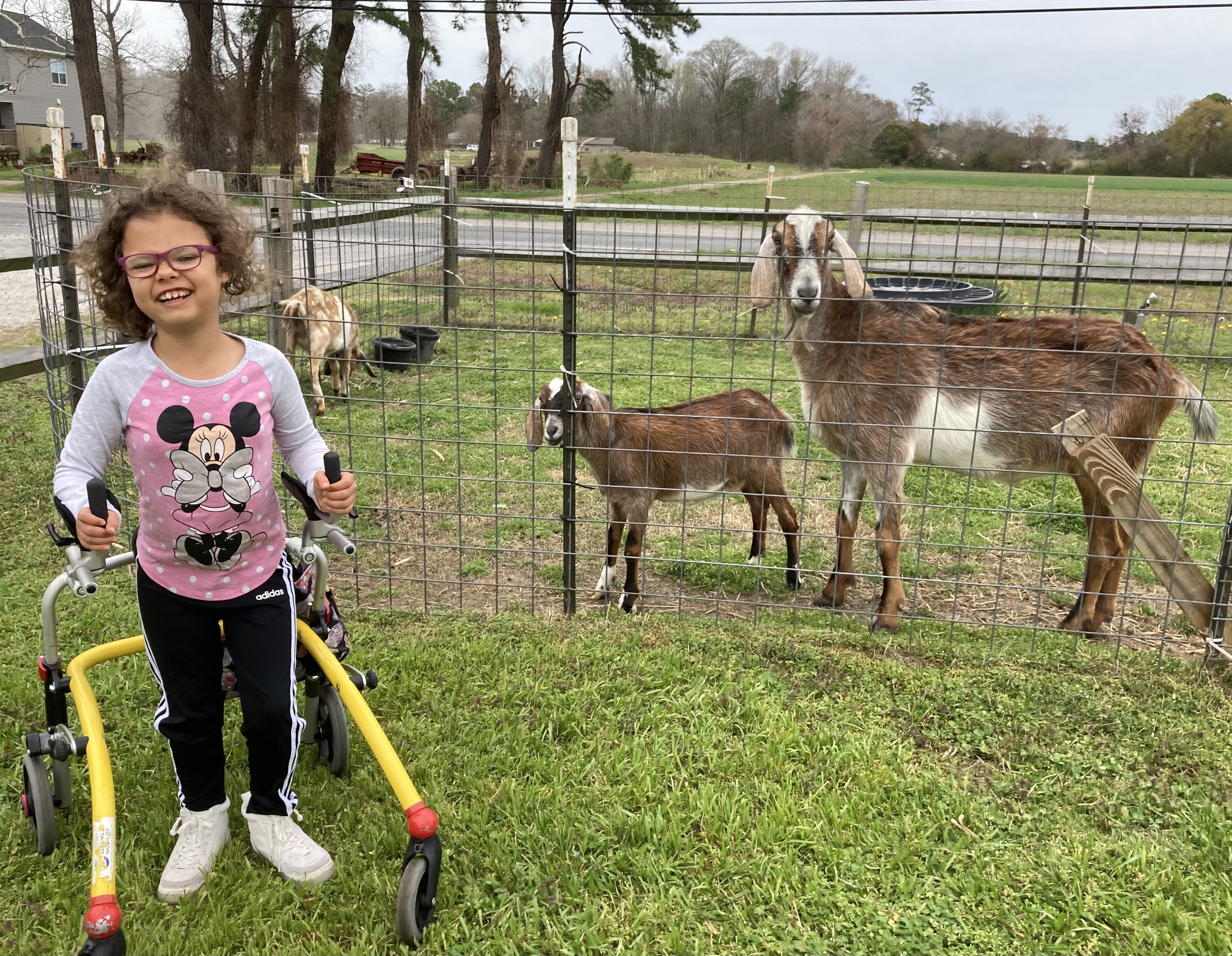
When you hear the question, “Who’s the GOAT?” What comes to mind?
Perhaps if you are a basketball fan, you think of Michael Jordan?…a concert lover, Taylor Swift?…a football buff, Tom Brady?
Arguments about the GOAT—Greatest Of All Time—span every context imaginable, from the sports field to the courtroom, from the theater to the boardroom. So how does one achieve GOAT status? Even Jesus’s disciples considered the question. In his gospel, Luke records that “[a]n argument arose among [the disciples] as to which of them was the greatest” (Luke 9:46, ESV).
The events leading up to that moment provide interesting context for their argument. The day before the argument took place, Jesus and three of his disciples had experienced the transfiguration. Peter was so enamored by the magnificence he encountered on the mountain that he suggested setting up camp there. Luke tells us that as they descended the mountain the next day, they were met by a great crowd. A man in the crowd shouted, begging for Jesus to look at his son, who was seized by a spirt that mauled him and caused him to foam at the mouth. The father told Jesus, “I begged your disciples to cast it out, but they could not.” After exclaiming his frustration with a “faithless and perverse generation,” Jesus “rebuked the unclean spirit, healed the boy, and gave him back to his father” (v. 42). Luke tells us that “all were astounded at the greatness of God” (v. 43). In the midst of that amazement, Jesus told his disciples of his impending betrayl, but “they did not understand this” and were afraid to ask Jesus about it. Instead, this “argument arose among them concerning which one of them was greatest” (v. 46). While no direct correlations are made in Scripture, the disciples were clearly enamored by and focused on greatness while also struggling to be effective in their healing ministry and even to understand the One who had empowered them for it.
Jesus recognized their struggle, resolved their argument, AND definitively answered humankind’s ongoing argument about who is the GOAT:
“But Jesus, knowing the reasoning of their hearts, took a child and put him by his side and said to them, ‘Whoever receives this child in my name receives me, and whoever receives me receives him who sent me. For he who is least among you all is the one who is great’” (Luke 9:47-48, ESV).
So into the disciples’ argument, with actions and words, Christ spoke five truths:
When we seek greatness, God knows.
The least are brought closest to Christ.
Receive the least and you receive Christ.
Receive Christ and you receive the Father.
The least among us is greatest.
Luke did not describe the disciple’s reactions to Jesus’s resolution of their argument, but it was likely revolutionary to them. Like us, they had their ideas about greatness and clearly wanted to be the GOAT themselves. Fortunately, in his gospel Matthew also recorded Jesus’ insights related to GOAT status as He taught his disciples on the Mount of Olives:
“When the Son of Man comes in his glory, and all the angels with him, then he will sit on his glorious throne. Before him will be gathered all the nations, and he will separate people one from another as a shepherd separates the sheep from the goats. And he will place the sheep on his right, but the goats on the left. Then the King will say to those on his right, ‘Come, you who are blessed by my Father, inherit the kingdom prepared for you from the foundation of the world. For I was hungry and you gave me food, I was thirsty and you gave me drink, I was a stranger and you welcomed me, I was naked and you clothed me, I was sick and you visited me, I was in prison and you came to me.’ Then the righteous will answer him, saying, ‘Lord, when did we see you hungry and feed you, or thirsty and give you drink? And when did we see you a stranger and welcome you, or naked and clothe you? And when did we see you sick or in prison and visit you?’ And the King will answer them, ‘Truly, I say to you, as you did it to one of the least of these my brothers, you did it to me’” (Matthew 25:31-40, ESV).
Christ’s response to our focus on or pursuit of greatness is to seek out the least among us, instruct us to receive the least, and declare that when we serve the least, we serve Him. Four times in Luke 9:48, Jesus repeats the word receives: “Whoever receives this child in my name, receives me, and whoever receives me receives him who sent me. For he who is least among you all is the one who is great.” The Greek word which translated “receives” is “déchomai,” which means “to take with the hand; not to refuse friendship; to receive into one’s family; to receive of the thing offered in speaking, teaching, instructing.”
What does this look like?
In his book The Power of the Powerless: A Brother’s Legacy of Love, author and teacher Christopher De Vinck shared the story of growing up with his brother Oliver who suffered severe brain damage caused by a gas leak that occurred during his mother’s pregnancy and left Oliver completely dependent for his entire life—unable to see, talk hold his head up, or hold anything in his hand. De Vinck described his parents’ response to the doctor’s diagnosis of Oliver’s condition:
When our children are in pain, we try to heal them. When they are hungry we feed them. When they are lonely we comfort them.
‘What can we do for our son?’ my parents wanted to know.
Dr. De Lange said that he wanted to make it very clear to both my mother and father that there was absolutely nothing that could be done for Oliver. He didn’t want my parents to grasp at false hope.
‘You could place him in an institution.’
‘But,’ my parents answered, ‘he is our son. We will take Oliver home, of course.’
The good doctor said, ‘Then take him home and love him’” (p.11).
De Vinck then shared the influence his parents’ decision had on his life:
“Oliver still remains the most hopeless human being I ever met, the weakest human being I ever met, and yet he was one of the most powerful human beings I ever met.
As a teacher, I spend many hours preparing my lessons, hoping that I can influence my students in small, significant ways. Thousands of books are printed each year with the hope that the authors can move people to action. We all labor at the task of raising our children, teaching them values, hoping something ‘gets through’ to them after all our efforts.
Oliver could do absolutely nothing except breathe, sleep, eat, and yet he was responsible for action, love, courage, insight.
For me, to have been brought up in a house where a tragedy was turned into a joy, explains to a great degree why I am the type of husband, father, writer and teacher I have become” (p. 12).
Near the end of his book, De Vinck reflected, “Looking at [Oliver], I saw the power of powerlessness. His total helplessness speaks to our deepest hearts, calls us not merely to pious emotions but to service. Through this child, I felt bound to Christ crucified—yes, and to all those who suffer in the world. While caring for Oliver, I also felt that I ministered in some mysterious way, to all my unknown brothers and sisters who were and are, grieving and in pain throughout the world. So through Oliver, I learned the deepest meaning of compassion’” (p. 87-88).
The lives of two of my friends share similarities with Oliver’s: Joy and Collin. Joy was adopted by my friends, the Jacob family, when she was four years old. Soon after, she was diagnosed with a rare disease, and her family was told she would only live about another year. Two weeks ago, Joy passed away peacefully at the age of eleven, more than double her life expectancy. No one in Joy’s life lived under those or any other expectations, however, and as Joy’s neurologist shared with the family after she passed, “She exceeded my expectations in every way and showed me that love can carry a child beyond what science tells us.”

I attended Joy’s Celebration of Life this weekend where the sanctuary was filled with images of her beautiful smile, sounds of her laughter and the songs she loved, and the people who had cared for her day-to-day needs proclaiming that what they received from Joy was far more than they gave. Her mother, my friend J.J., shared with me, “It still just blows my mind how many people were impacted by Joy–quadriplegic, non-verbal, severe intellectual challenges, in addition to all of her medical challenges. It all humbles me. God used Joy to change lives. How can I think that God can’t use me?”
Just a few miles away from the home where Joy lived, Collin lives with his mom, dad, and sister. Collin suffered a traumatic brain injury at birth that left him completely dependent on others. He was not expected to live to be a year old. Instead, thanks to the loving care of his family, who also ignored expectations, Collin is finishing his second decade of life—a life that led my friend Dianna, his mother, to not only receive and serve her son despite his significant needs, but to learn from him that everyone has a song. Dianna has devoted her life to arts inclusion—teaching voice and musical theater to the most accomplished students at the Governor’s School as well as to individuals who are nonverbal like Collin. Dianna’s Vocal Inclusion studio is based in her home so that her son can always be surrounded by music. Through her work, students of all abilities—including my own—are given the best stages and the most notable audiences with which to share their songs.

Attending Joy’s service brought back memories of my own experience receiving, serving, and learning from a little boy not too different from Oliver, Joy, and Collin—a little boy who never spoke a word or walked a step but changed the world—especially mine—in very powerful ways.
I am aware that some look at these lives as tragedies, but they are not. They are supernatural opportunities for transformation. They are opportunities to touch and know and serve and love and learn from Christ in the most intimate, life-changing way possible. They are opportunities to see and hear and understand in ways I can only describe as divine. They are the most difficult experiences imaginable and therefore the most powerful. Reading or hearing stories about individuals like Oliver, Collin, Joy, and Timothy may inspire or encourage you and that’s amazing. But so much more awaits you if you are open to seeking, receiving, serving, and learning directly from them in whatever ways life allows.
Jesus responded to the disciples’ argument and our quest to know or be the GOAT—by seeking out a child, putting the child by His side, and admonishing his disciples to receive (déchomai)—the least of these, the very ones who turn out to be the Greatest Of All Time.
“For he who is least among you all is the one who is great.” (Luke 9:48b, ESV)
 crosseyedliving
“ They are supernatural opportunities for transformation” What a wonderful statement on all the works of our good & great Lord!