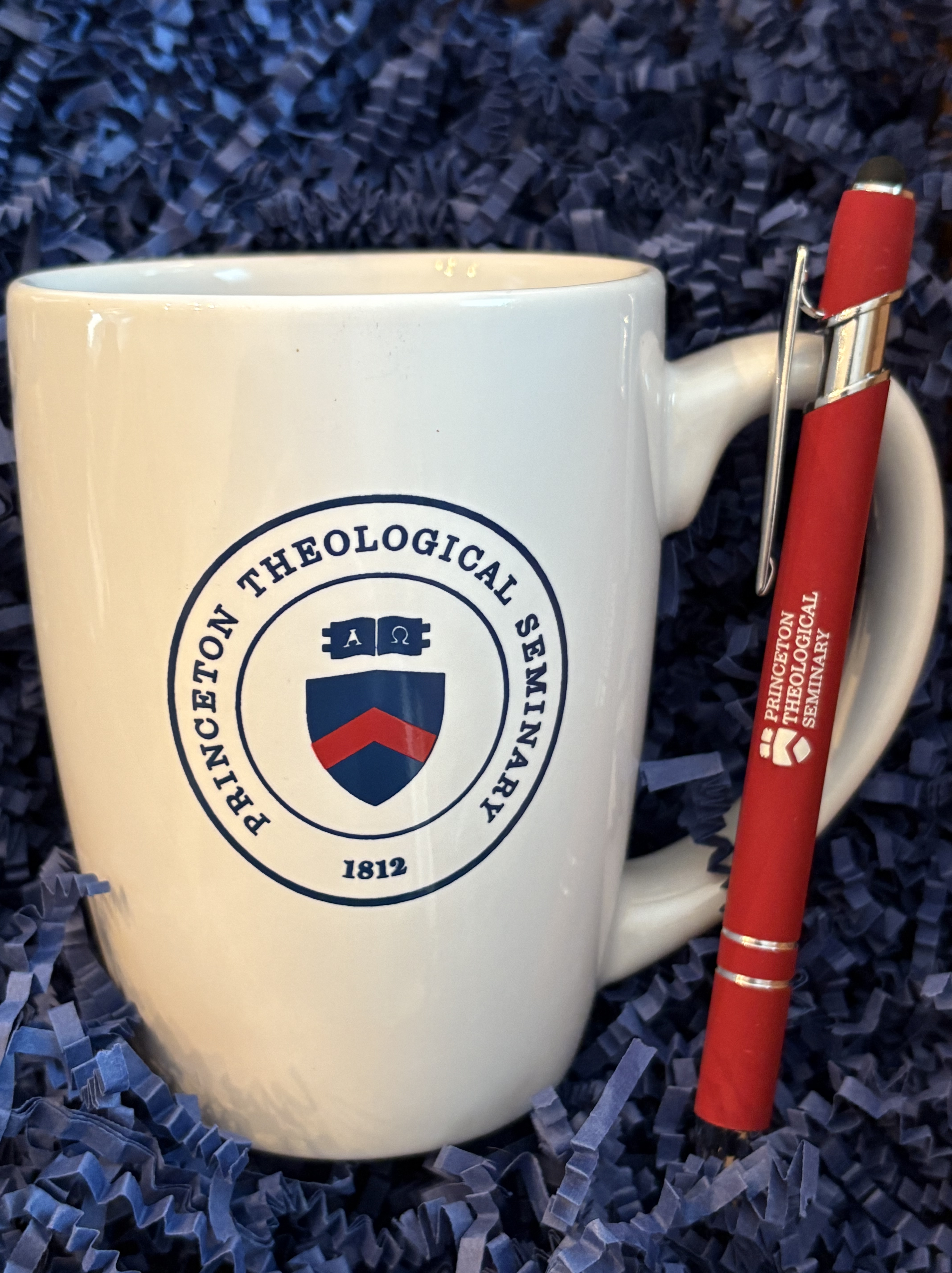
I first applied for seminary in 2008. A few years before, I had been privileged to be part of a Bethel Bible Series Intensive led by the pastor of our church in Jacksonville. We slowly and deeply studied the entire Bible over two years. The experience was so life-altering that several students immediately applied for seminary or changed careers. As a military wife and mom of four young children, the impact for me was less visible but no less dramatic, leading me to rely on God and stretch myself in ways I never would have before. However, as I now know, stepping out in faith often brings unexpected outcomes. By 2008, my marriage was an increasingly negative force in my life, I had suffered four back-to-back miscarriages, and the bold decisions I had made in faith had left me confused and depressed.
At that point, I decided to join my fellow Bethel Intensive classmates who had embarked on seminary journeys. My application was accepted, and I enrolled in my first course—Greek—only to learn I was pregnant again. Fully expecting to miscarry, I questioned God for allowing me to endure yet another loss when I was taking steps to move forward from a season of despair. His response was to put my seminary journey on hold, again showing me that my simple plans, while not wrong, were but a shadow of what He had in mind for me.
I did not miscarry but gave birth to Lydia Eliana, my beautiful daughter who happened to have Down syndrome and a congenital heart defect. Her life has changed me and my faith in more ways than I could count or describe. From the night after her birth when I experienced a visitation from God in our hospital room to her open-heart surgery eight months later, my previous trust walks began to look like mere baby steps. God expanded my world and my faith exponentially, and once again not a “blessed” life but unimaginable trial followed.
I sometimes refer to the years that followed as my Job years. They brought three adoptions of children with special needs, numerous surgeries and extended hospital stays for Lydia and her younger siblings, a flood, a tornado, the death of a son, and the steady decline of my marriage that had turned abusively toxic. In 2018, I secured a safe home for myself and my youngest children despite overwhelming odds. Four years later, I became the one thing I never wanted to be—an ex-wife—and in the process, I tasted personal injustice in a system skewed toward men with money and careers over the wives that helped them secure both.
My years as a single mom to three children with exceptional challenges as well as four adult children have honestly been the best of my life. With less money, less personal time, and much more responsibility, I have rediscovered the self I lost to a relationship that was unhealthy and a life that was supposed to be scripted a certain way but that very nearly suffocated me and my children. I earned my PhD in Special Education during those years, an undertaking that baffled many who questioned the timing but was lifegiving to me. As a homeschool parent, I watched my research play out in real time in my own children’s lives. I began writing again and learned that I could use my voice to shine light on the ability and potential of all people. I learned that families don’t have to look like the “ideal” to be loving and whole and healthy. I watched God redeem and restore all that had been destroyed in my relationships with my children. His provision for me during those years was beyond anything I could have hoped.
My own experience, those of my children, and events in our nation during the past five years opened my eyes to how differently people in our nation experience the world. At a march in Norfolk, Virginia in the spring of 2020, I heard speakers talk of systemic injustices and racism through things like housing, finance, and zoning—concepts that were completely new to me. I began to read voraciously—history, memoir, political theory, theology, and scripture—trying to understand the “-isms” that plague our country and why our nation is so slanted, fractured, and polarized. Meanwhile, the political environment in our nation declined to unimaginable levels, and voices emerged that married the Christian faith with some unbelievable bedfellows. I struggled with my own local church’s overt and covert complicity in what I was witnessing on a national level and eventually chose to leave a familiar worship space for one that centers the radical love and power of Jesus as depicted in Scripture. The more I read and experience, the more convinced I become that the answers aren’t just in federal policies or even local practices but in the stories of individual people and in respectful listening to, consideration of, and acting on those stories.
Lydia turned sixteen in October, a few weeks before I received a letter of acceptance to Princeton Theological Seminary. Pausing my seminary journey to raise her and her siblings was not a sacrifice but an opportunity. The version of myself that will pursue a Master of Theology in Justice and Public Life from PTS has astronomically more experience and understanding than I had when I was first accepted for seminary study almost two decades ago. The mission field in which God led me to serve and on which I live each day of my life has developed a much sharper sense of my calling as an advocate of those whose voices are marginalized, silenced, belittled, distorted, or completely unacknowledged by society. Whether through my role as an educator or a writer, I know that I am called to be a difference-maker in the pursuit of justice. As I enter this program at PTS, several aspects of the “how” I will do this remain unknown. I trust God to direct my steps as He has always done and believe unequivocally in His capacity to lead me wherever He knows I need to go to fulfill His purposes in my life.
Just after the election, my friend Kiva sent me a link to a podcast featuring Heather Cox Richardson, a historian and writer whose work I have found to be exceptionally informative and empowering over the past four years. In it, she discussed ways to move forward in the coming years. Her advice was to do what you do best and do it with joy. What I have always done best is read, learn, teach, and write about the people and issues for which God has broken my heart. It is with that intention and with an open posture that I enter my “seminarian era,” eager to see God provide the “how” I will need to fulfill the “what” and “why” He planted in my heart during what I hope is only the first half of my life.
In her most recent newsletter, Krista Tippett wrote of the current Moment, describing it as “an age of devastating tumult” as well as “an age of magnificent possibility.” She expounded: “Much is breaking. Much is being born. The two go hand in hand and that is one of the deepest and strangest, most terrible and most redemptive truths of human reality.” She called for us to combat the “narrative of danger and destruction [that] comes to us a thousand times, a thousand ways, each day” by training “our eyes and imaginations on the beauty and creativity that are so alive in our world, the generative learning and stretching that are underway.” For me, the opportunity to study the theology of justice and and public life through PTS is my act of resistance, my way of training my eye and imagination in order to equip myself to “do what I do best and do it with joy.” In doing so, I hope to “combat the narrative of danger and destruction” by adding my voice to the remnant crying out on behalf of the love and mercy Christ Himself modeled. I have to believe that if enough of our little voices join together, the sound will rise above the piercing volume of falseness and cruelty that dare to carry the banner of a Man who bears no resemblance to their noise.
 crosseyedliving