The Church as a Force for Justice and Change

I do not recall attending church as a child, though I think we may have gone occasionally on holidays. My first memories of church are from 5th grade when a neighbor invited me to the Wednesday night program at her Baptist church that was within walking distance of our neighborhood. I began attending on Sunday mornings and was baptized in that church at age 13. I went on local mission weeks and to church camps with the youth group and eventually branched out to attend Fellowship of Christian Athletes (FCA) programs in my first two years of high school. 

Church was not a part of my later high school and early college life until I began dating the man I would eventually marry. Not having grown up in church, my faith roots were shallow and my knowledge was limited. When he invited me to his church, I went eagerly, not realizing that the Mormon church was not simply another denomination but an entire entity (cult) unto itself. The experience of immersing myself, joining, and eventually insisting on my own excommunication from the Latter Day Saint (LDS) church (it is the only way out), left me burned by religion and subsequently agnostic.

Only love for my unborn first child and a desire for her to have the spiritual roots I had lacked propelled me back into a church five years later, and I went determined to be physically present but spiritually distant. Two churches and an incredible pastor later, the mustard seed of faith planted in my teenage years sprouted. As a military spouse, I experienced multiple churches in the years that followed, and each nurtured my faith in its own imperfect ways. Everywhere I lived, the church was central to my life. The church has been the primary place where I worshipped, studied, fellowshipped, learned, led, served, and grew for going on thirty years.

I believe in the church. I love the church. I am who I am because of the church. The church has always been flawed and broken and at times has fallen grossly on the wrong side of history. Unfortunately, this is one of those times for the church in America (the only context I have experienced and can speak personally about). The people in our nation and those influenced by it are in desperate need of justice, but the church as an institution is too sick to be a force for change. It, in fact, is both overtly and covertly complicit in numerous acts of injustice in our nation and abroad. We are not without hope, however, for the church as Christ presented and empowered her can and should speak into the injustice we are experiencing and inflicting.

I do not claim to be a church historian or an expert on the church as an organization. I am confident that there are individual churches and perhaps even entire denominations that are relatively healthy. I am currently a part of one such church community. However, as an entity, the organized church in America has become consumed by the empire that houses it, which renders it ineffective as a force that opposes the injustices inflicted by that empire. I could reflect upon numerous examples related to poverty, race, gender, sexual orientation, immigration, and more, but as a culmination of a summer spent studying the Israel-Palestine conflict, I will limit my reflections to the church’s impotence as a force of justice and change in the genocide and ethnic cleansing that is ongoing in Gaza.

As I have shared previously, I had extremely limited knowledge of the Israel-Palestine conflict prior to taking a course at St. Stephen’s University this past summer. The message I had received from the evangelical non-denominational church I left last fall after seven years of membership and full participation was simple: Israel was the good guy that any true Christian would defend at all costs. Palestinians were terrorists and indefensible. Any alternative opinion was heresy.

Interestingly, none of this messaging came to me via direct instruction or even explicit teaching from the pulpit. It was just understood and soaked into me through prayer requests, prophetic words shared on Sunday mornings, and the corporate response to news related to Israel and Palestine, especially the October 2023 attacks. I have always been an eager student—taking classes, attending Bible studies, and reading books recommended by pastors and others I respect—but in no church that I have attended over the past thirty years was I ever encouraged to read or understand anything related to Israel-Palestine. I credit Dr. Munther Isaac’s December 2023 sermon “Christ in the Rubble” with sparking my curiosity enough to eventually lead me to the SSU course.

Week after week this summer, we read and discussed colonialism, Zionism, land, empire, eschatology, theology, antisemitism, and Kairos. Week after week, we asked ourselves, “What can we do?” Week after week we confessed to one another our churches’ silence and our own paralysis within our church bodies. Why?

America is no longer just a nation. She is an empire. She is also a civil religion. Much of the American church has believed a false narrative that America was founded as a Christian nation, that she is chosen. It has traded worship of Jesus for worship of country and a mandate that Jesus never issued. It has allowed flawed theology to seep into its teaching and has prostituted itself to political movements under the guise of numerous “moral imperatives.” Meanwhile, it has become its own consumer-driven, results-oriented, bureaucratic entity that is so cumbersome even at the local, individual level that congregations or pastors who may glimpse or even know in their hearts that they are off-course are powerless to effect change. Much of the church has crawled in bed with empire, most especially the current U.S. administration, and is slapping Christian labels onto policies, actions, and statements that reflect nothing of Christ, tarnishing His name in horrific ways.

With each topic we studied this summer, the picture of the American church’s direct endorsement of the ethnic cleansing and genocide in Palestine grew clearer. It is not just a matter of complicity. It is worse than that. The American church and the empire housing it have directed, funded, enabled, defended, and covered up atrocious crimes against humanity. And for the reasons just described, it is not equipped to be a force of justice or change.

Thankfully, the American church is not the church. The church—the ekklesia—was built by Jesus and is indestructible (Matthew 16:18). It consists of members of the body of Christ that Paul describes in 1 Corinthians 12. It is not bound by geographical location, by biological traits, by cultural norms, by denominational guidelines, by political affiliation, or any other man-made label or construct. Christ is its head and He has uniquely gifted, called, and equipped each member of the body “for the work of ministry, for building up the body of Christ, until all of us come to the unity of the faith and of the knowledge of the Son of God, to maturity, to the measure of the full stature of Christ” (Ephesians 4:12-13). Paul implored the church in Ephesus that the members of the body of Christ “must no longer be children, tossed to and fro and blown about by every wind of doctrine, by people’s trickery, by their craftiness in deceitful scheming. But speaking the truth in love, we must grow up in every way into him who is the head, into Christ” (Ephesians 4:14-15). The same applies to the church today. If the members of the body of Christ are to grow up into Him, we need to reflect His teachings such as those in the Sermon on the Mount (Matthew 5-7) and the Sermon on the Plain (Luke 6) and His numerous parables about who is our neighbor and how often we forgive and how we are to treat the foreigner, the outcast, and the least of these. 

The organized church in America is too entangled in empire and its own bureaucracy to function as a force of change in any of the injustices that plague our nation or the world, especially related to Israel-Palestine. The hope is in the individual members of the body of Christ whose head is Jesus, who lived and died and was raised from the dead and seated at God’s “right hand in the heavenly places, far above all rule and authority and power and dominion, and above every name that is named, not only in this age but also in the age to come” (Ephesians 1:20-21). God has “put all things under his feet and has made him the head over all things for the church, which is his body, the fullness of him who fills all in all” (Ephesians 1:22-23). 

As individual members of the body of Christ, we must centralize His teachings and apply them to the injustices of our day. We must use our voices, our hands, our feet, and our minds to speak and act and teach and write and utilize our gifts in His service. In doing so, we will be a force of change in our communities, our schools, our workplaces, our congregations, our denominations, and our government. But we must not be motivated by a desire to convert or overpower the empire or to wed it to the church. As my pastor, Brian Zahnd, has said, “Empire gonna empire. But don’t confuse it with the kingdom of Jesus.”[1] We are not citizens of the empire but “citizens with the saints and also members of the household of God, built upon the foundation of the apostles and prophets, with Christ Jesus himself as the cornerstone. In him the whole structure is joined together and grows into a holy temple in the Lord; in whom [we] also are built together spiritually into a dwelling place of God” (Ephesians 2:19-22). His Kingdom has come and is yet coming. Until its fulfillment, we are His body in our nation and our world, including in homeless encampments, at the border, in prisons, across the aisle, in our neighborhood, and—imperatively—in the rubble of the tragedy that is occurring in Palestine and in Israel.


[1] Facebook post (June 22, 2025)
“It’s Complicated”

I never knew what to do with Israel-Palestine. For years, mostly in church, I heard outrage toward Palestinians, unconditional loyalty toward Israel, and biblical justification for both. My attempts to understand the issue were meager, and I concluded that I had no opinion on the matter because it was just too complicated to understand.

The events of October 7, 2023 changed that—but not immediately. Because it was a Saturday, I learned of the attacks at church on Sunday morning. An elder led the congregation in prayer for Israel. I was appropriately sorry but didn’t think much about it because…well, it was just too complicated. 

Three months later, I heard a sermon by Christian Palestinian pastor and theologian Dr. Munther Isaac called “Christ in the Rubble.” In my Evangelical Christian bubble, Palestinians were terrorists, not Christian pastors. Listening to his sermon grieved me and left me with a myriad of questions, but I did not pursue them because they still seemed…well, too complicated. 

A year and a half later and several months after a series of revelations led me away from my evangelical church home, I received a copy of Dr. Isaac’s book, also called Christ in the Rubble, for my birthday. Within the first few chapters, I was mesmerized. Page after page, Dr. Isaac measuredly described the historical events that led to what I eventually realized has become a story of ethnic cleansing and genocide. His book is monumental because it takes something complex and emotionally volatile and makes it understandable for someone like me who was not encouraged or motivated to learn about, and had assumed she could not understand, the issues surrounding Israel-Palestine.

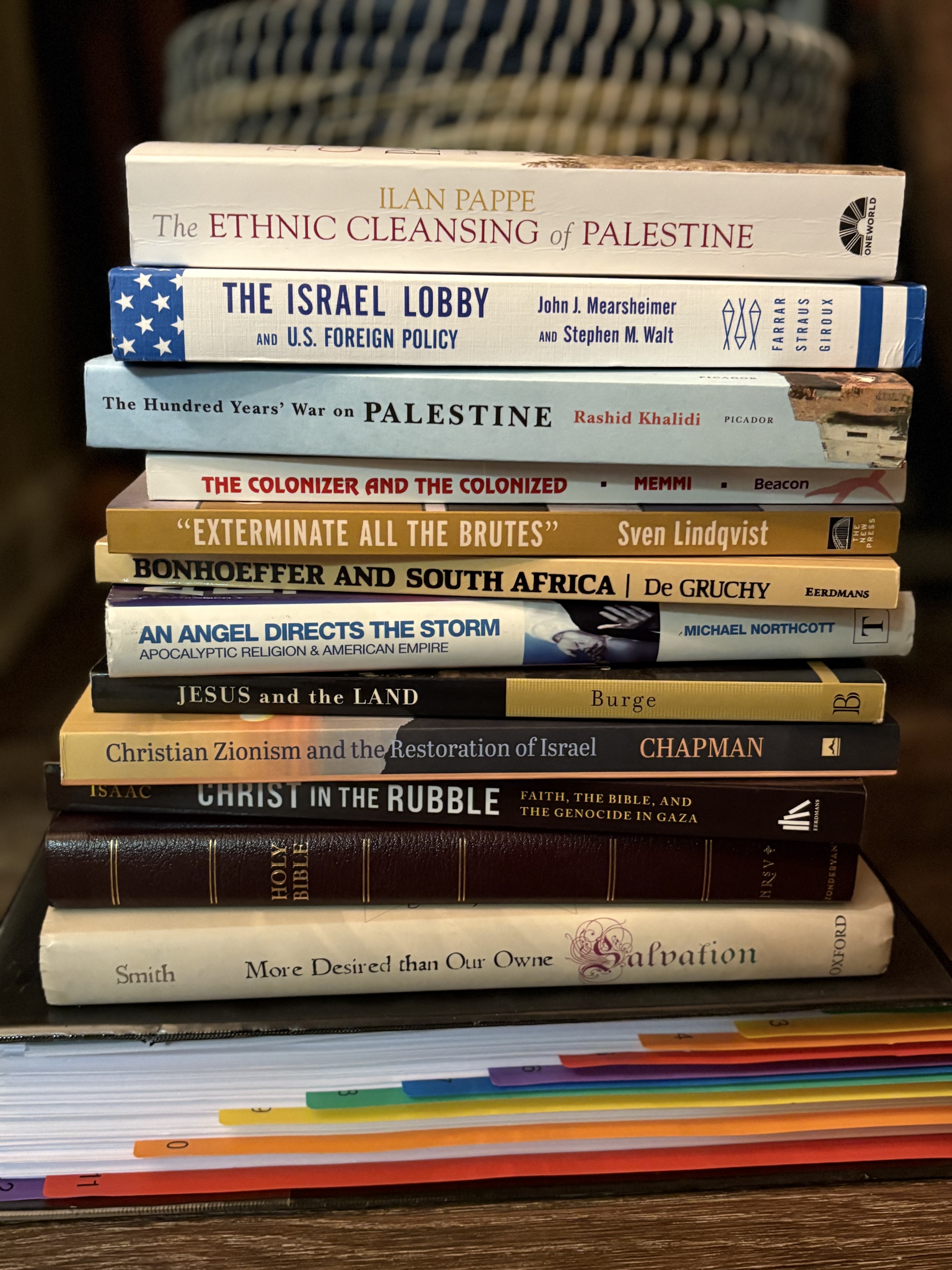
Two months later, as part of my M.Min. program at St. Stephen’s University, I had the opportunity to enroll in a summer course called “Zionism, the Church’s Colonial Legacy, and the Palestinian Call.” Part of me was nervous. This would be my first SSU course and the topic was something I had only a book and a sermon’s worth of knowledge about. Would I be able to engage meaningfully? Would the learning curve be too steep? The other part of me was excited. I entered SSU to challenge myself to stretch my faith in world-changing ways, and I now knew that this is a watershed event of my lifetime. With my evangelical bubble burst, I could not—would not—live as an ignorant puppet. I wanted to understand—truly understand—and see the issue with the eyes of Jesus.

Dr. Mark Braverman proved to be as knowledgeable and gentle a guide as Dr. Isaac. In his own words, he is “a Jew, deeply connected to my tradition and to my people, who is horrified and heartbroken over what is being done in my name: for the suffering of my Palestinian sisters and brothers in Palestine and in exile, for the psychological and spiritual peril of my own people who have imprisoned themselves behind the wall they have built.”[1]

Over twelve weeks, I read broadly and deeply a high volume of texts from numerous scholars and theologians. I grew to realize that what we are witnessing is simple: Israel is undoubtedly committing ethnic cleansing and genocide against the Palestinian people. The reasons are more complex but identifiable. They include but are not limited to colonialism, Zionism, the Israel Lobby, flawed theology about the promise of land, false narratives about the founding of America, scripturally unsupported eschatology, and a twisting of the concept of antisemitism. At the root of most of these reasons lies a beast called empire. 

Silence is complicity. And thankfully, there are numerous examples of nations, faith communities, and individuals who have spoken out. Choose a few Kairos documents to read and you will find hope and a way forward amid an overwhelming tragic situation. There are options from South Africathe United Kingdomthe United Statesthe Philippines and most importantly, Palestine itself. More recently, you will find formal declarations of apartheid and genocide, including admissions from Israeli sources. 

As a youth and young adult, I read numerous memoirs from the Holocaust and always wondered why no one stopped the horrors from occurring. I told myself that they would have had they known. Well, today we know. The world knows. Reports of ethnic cleansing and genocide reach us daily. And yet, the cries continue, the people starve or are killed trying not to, the bombs fall, and the war machine keeps humming along. 

In my class, multiple students raised the point that they could not speak of what we were learning in their churches. I thought about that in context of my own experience. I have been active in church bodies in multiple states over the past thirty years, but in no church that I have attended was I ever encouraged to read or understand anything related to Israel-Palestine. Despite this, I knew the drill: Israel was the good guy that any true Christian would defend at all costs. Palestinians were terrorists and indefensible. Any alternative opinion was heresy.

Interestingly, none of this messaging came to me via direct instruction or even explicit teaching from the pulpit. It was just understood and soaked into me through prayer requests, prophetic words shared on Sunday mornings, and the corporate response to news related to Israel and Palestine, especially the October 2023 attacks. I have always been an eager student—taking classes, attending Bible studies, and reading books recommended by pastors and others I respect—but only in the past six months, under a pastor faithful to Jesus rather than wed to Christian nationalism or Christian Zionism or the evangelical church agenda and as a student at St. Stephen’s University, a Canadian school whose mission is “to prepare people, through academic, personal, and spiritual development, for a life of justice, beauty, and compassion, enabling a humble, creative engagement with their world,” have I been encouraged and equipped to learn about the Israel-Palestine conflict and to form my own opinions about what I have learned.

This is my Kairos moment, my time to speak out, to cease being complicit, to become a force of change, to use my voice and my gifts as a writer and teacher and encourager in my very small corner of the world. My message is simple: It isn’t complicated, and it is utterly critical. 

“But for those children who live and die in affliction tonight, are we not obligated by our humanity (if not our faith) to stop switching the channel, to at least attend and bear witness? Does not the crucified God demand that our ‘where are you?’ move beyond a desperate (or cynical) rhetorical question into a sincere inquiry, one that remembers to consider the cross?”[2]


[1] Braverman, Mark (2011, Dec. 7). What is a Kairos Document? [Presentation]. Kairos for Global Justice Encounter, Bethlehem.

[2] Jersak, Bradley (2022). Out of the embers: Faith after the great deconstruction. Whitaker House.

Pivot.

Our homeschool co-op shared a bittersweet final day of the year yesterday. It was our first year at Kindred Homeschool Collective. We joined Kindred because it is inclusive and focuses on seeing the image of God in all people, valuing everyone’s story, and loving like Jesus. We have witnessed all of these things and more over the course of the year and while a summer break will be nice, we look forward to returning in August.

Despite the joy we have all experienced participating at Kindred, it was a challenging year for me. Inclusive doesn’t always mean accessible, and the co-op meets in a beautiful but historic church that posed a lot of challenges for Tess and those of us caring for her. 

The morning before our last day, I received an unexpected message from our friend Rosean, the youth pastor at our co-op’s host church, who also serves as our co-op security person (and so much more). From the very first day of classes, he recognized our challenges and went out of his way to help Tess navigate the stairs, going so far as to meet us at the car most weeks. He always had an encouraging word and a smile to share and never once made us feel like a burden. It was a gift. But when he sent me photos of a new ramp he had installed over the steps that Tess needed to navigate the most each school day, I was so overcome with emotion that I had to sit down. 

I had just had a conversation the previous week with one of our co-op board members about my concerns for managing the next school year, knowing I will likely have less resources and assistance to help Tess and Lydia during the times I will be teaching and serving in the co-op. Any parent in a truly collaborative co-op (as opposed to a drop-off program) faces challenges juggling their own family’s needs with their responsibilities to teach and serve, but when your child is fully dependent on assistance to navigate her environment and meet basic care needs, there are extra struggles. This ramp was an act of seeing and empowering Tess while letting me know that I am not alone in my struggle to manage a positive but often challenging day.

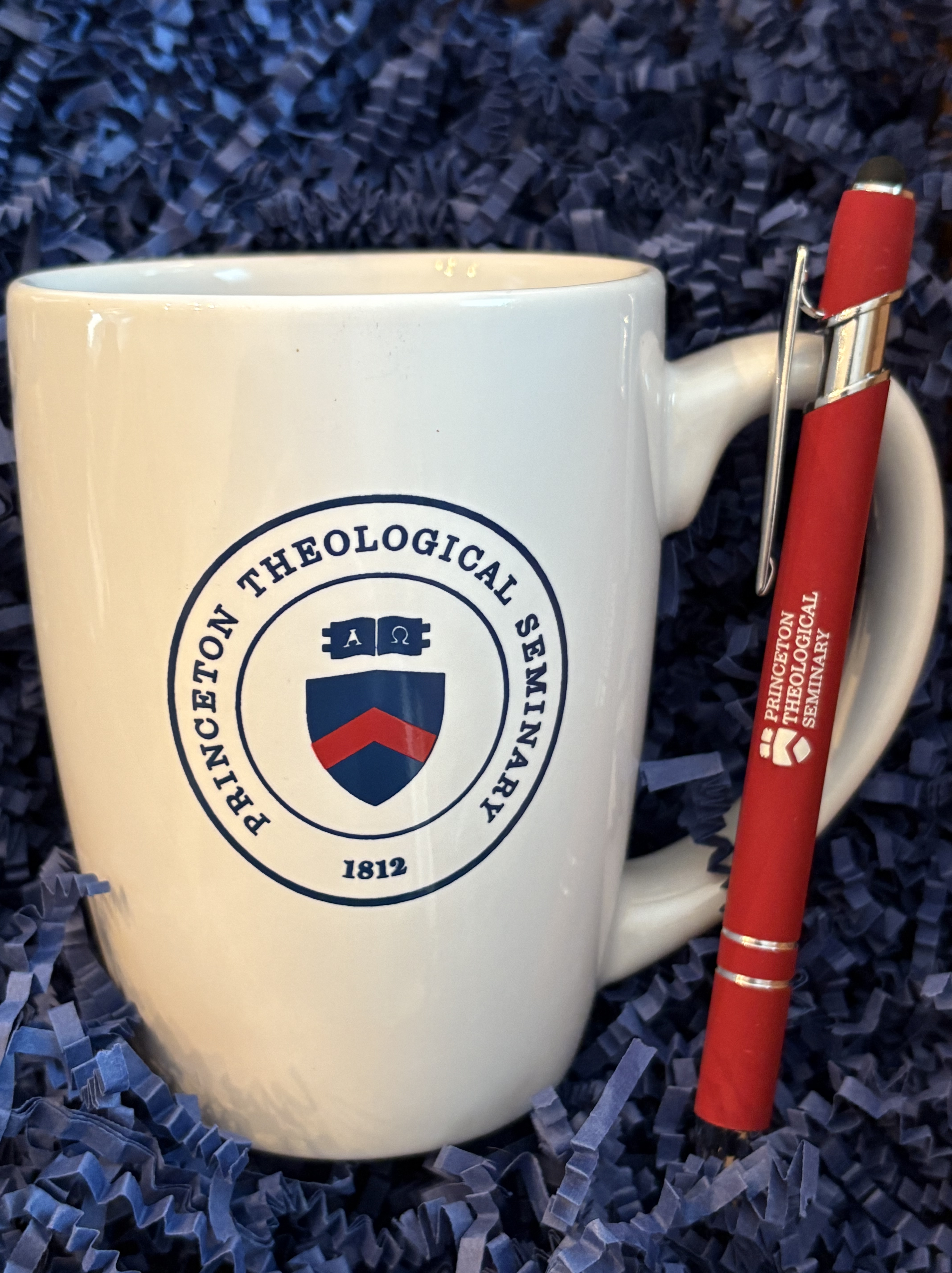
Vision is often enhanced through contrast and this experience helped solidify a decision with which I have been wrestling for the past few months. I shared in a previous post that I was excited to be starting a Princeton Theological Seminary (PTS) graduate program in Theology that focuses that focuses on Justice and Public Life. In that post, I also shared that there were portions of the program I was not sure how I would fulfill but that I was trusting God to make a way. Soon after sharing my decision to commit to the program, I learned that Tess needed her sixth cerebral shunt revision. This one was planned, while the others have been emergent; however, each one has reminded me of the unpredictability of my life as a single mom to kids with medical challenges. While I do believe in trusting God to make a way, I also believe in exploring options and planning ahead. That process led me to realize that the PTS program was not accessible to me.

I have thought a lot about accessibility and inclusion for my kids but have recently come to realize that parents of kids with disabilities need inclusion and accessibility too. We live in a constant state of alert, balancing the needs of a typical child or young adult with the often complex needs that come with our kids’ unique challenges. The basic things like an unexpected trip to the store can be complicated, and we live on the precipice of emergency. Very few, if any, people can step into our life, even on an extremely temporary basis, which limits our mobility, reliability, and especially, our control. Our “no” is often an “I wish” or “If only…,” and our “yes” is always a “hopefully.” It’s a beautiful but complex life that both expands and restricts us. We wouldn’t want a different life and most definitely not a different child, but the world rarely sees or understands our internal or external struggles. Our focus is on securing accessibility and inclusion for our kids but truthfully, we need both as well.

One of my favorite things “hobbies” for most of my life has been following North Carolina Tar Heel basketball. In basketball, players often use their pivot foot to create space against a defender. If I am trying to make a play on the basket and I lift the ball over my head, the defender can fill the void and hinder my movement. If I hold the ball directly in front of me, it is likely to be knocked away. My best option is to use my pivot foot, step forward, and sweep through to back my defender up, creating space for myself to move in a new direction and make a play on the basket.

I could have remained in the PTS program and hoped for the “act of God” that would be necessary for me to fulfill the program component that is just not conducive with my primary responsibilities, but if that act never came, I would not complete the degree. Instead, I decided to pivot and survey the court for other options. And the vision I gained from that pivot showed me more options than I had known of last summer when I first discovered PTS’s program. One of them quickly emerged as ideal.

Next week I will begin classes toward my Master of Ministry (MMin) degree in Theology and Culture (with an emphasis on Justice) at St. Stephen’s University. I am beyond excited! It would take another post to share all the many ways St. Stephen’s is perfect for me. In short, their mission perfectly aligns with my own:  

“The Mission of St. Stephen’s University is to prepare people, through academic, personal, and spiritual development, for a life of justice, beauty, and compassion, enabling a humble, creative engagement with their world.”

And equally valuable—even essential—to me, SSU is inclusive and made itself accessible to me as a single parent of kids with exceptional needs. From my first inquiry to the creation of an outlined course of study that provides me with options for a variety of scenarios that may occur in this beautiful but often out-of-my-control life, they sought to understand my situation on more than a surface level and responded to it, not just with sympathy or even empathy but with action. I cannot describe the peace that accompanied that for me. Now instead of beginning a program with a cloud of uncertainty hovering above me, I begin from a firm, supportive foundation that frees me to be focused and enthusiastic!

Looking back, I see God directing me toward SSU all along in small, subtle ways that I could not have seen if I continued to cling to the ball of PTS’s program or raise it up high to keep someone from taking it from me. I would have either lost the ball or had obstructed vision and movement. Instead, I was able to pivot and open space for myself to do something better than what I originally planned. In the process, I learned that inclusion and accessibility matter for me, too, and that just as I do for my kids, I need to advocate for that and surround myself with the people and communities who see and empower me to do so.

“Let them not be in vain.”

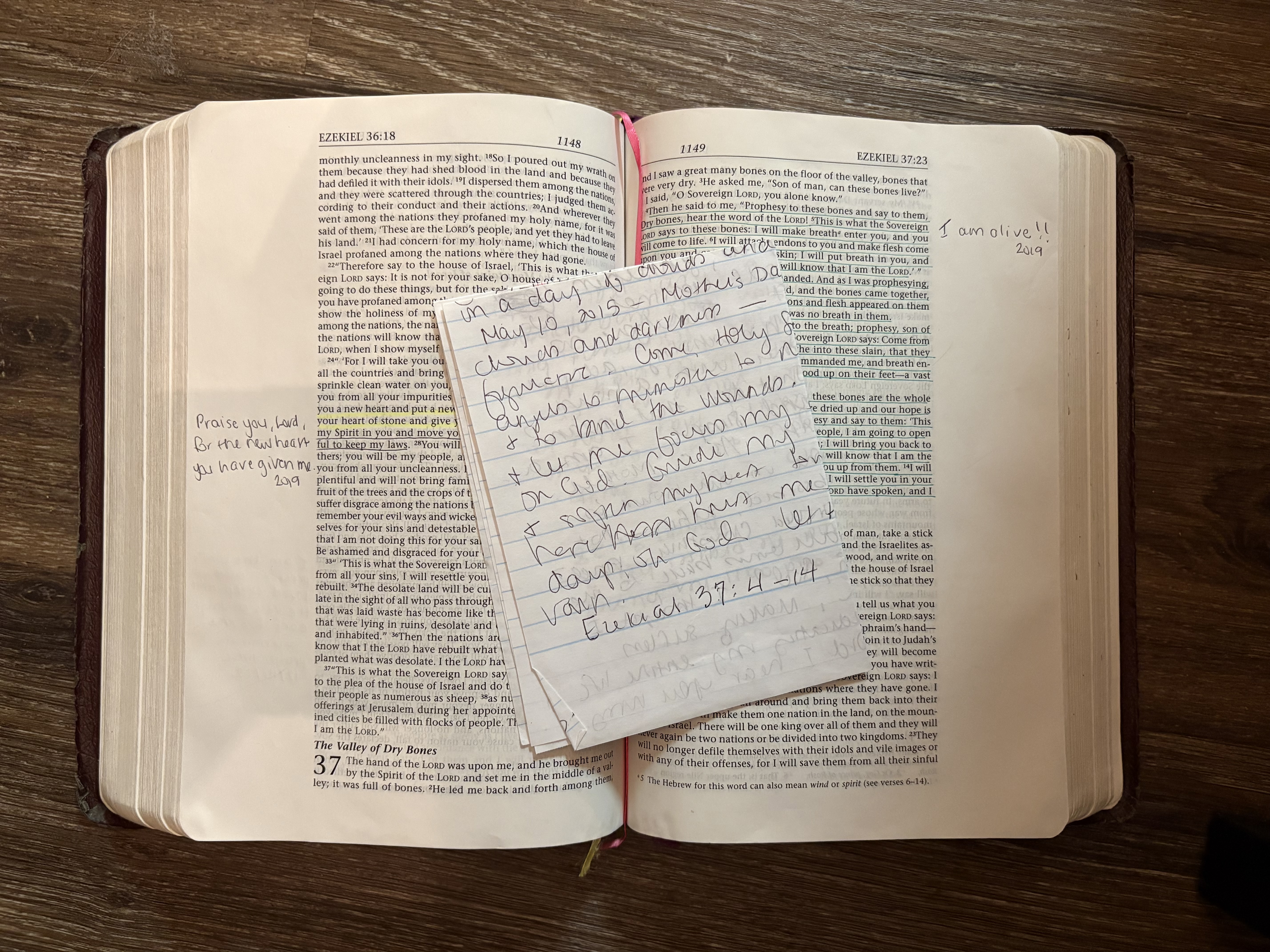
On Mother’s Day 2015, I sat in my car sobbing and wrote these words:

“For Mother’s Day 2015, I received truth. The facades are gone and underneath is the very ugly reality that no one in our home likes me, values, me, or even remotely wants to celebrate me. There is a lot of anger, resentment, bickering, annoyance, frustration, and disappointment. There is no love, kindness, peace, patience, joy, goodness, gentleness, faithfulness, or self-control. No fruit of the Spirit, therefore no Spirit. Christian, homeschooling, adoptive, special needs mother with a house full of poison. What does that mean? Failure. Plain and simple. I am a failure. As a wife. As a mother. As a person. Everyone in our house is self-centered, self-absorbed, selfishnot God-centered, self-controlled, Christlike. And I am the mom, so it all comes back to me. 

How did this happen, God? I thought I was pursuing You, making selfless decisions, and dedicating my entire life to your call. Did I hear You wrong, or is it just that I failed? I know the answer to that. I failed. I failed because I relied on my own strength and wisdom. I sought You but not really. I prayed weakly. I strove mightily in my own flesh rather than relying on You. But what now, God? Is it over? Is it too late? Is there any way my life and the lives of my children and our family can be salvaged? Show me, God.

‘I myself will search for my sheep and look after them. As a shepherd looks after his scattered flock when he is with them, so I will look after my sheep. I will rescue them from all the places where they were scattered in a day of clouds and darkness.’ (Ezekial 34:11-12)

May 10, 2015—Mother’s Day—a day of clouds and darkness—both literal and figurative. Come, Holy Spirit, come. Send angels to minister to my broken heart and to bind the wounds. Fill me anew and let me focus my eyes upon you, oh God. Guide my steps and my words and soften my heart toward those who have hurt me. Redeem my days, oh God. Let them not be in vain.” 

At the end of the piece of notebook paper, I wrote these Scripture references:

Then he said to me, “Prophesy to these bones and say to them, ‘Dry bones, hear the word of the Lord! This is what the Sovereign Lord says to these bones: I will make breath enter you, and you will come to life.  I will attach tendons to you and make flesh come upon you and cover you with skin; I will put breath in you, and you will come to life. Then you will know that I am the Lord.’”

So I prophesied as I was commanded. And as I was prophesying, there was a noise, a rattling sound, and the bones came together, bone to bone.  I looked, and tendons and flesh appeared on them and skin covered them, but there was no breath in them.

Then he said to me, “Prophesy to the breath; prophesy, son of man, and say to it, ‘This is what the Sovereign Lord says: Come, breath, from the four winds and breathe into these slain, that they may live.’” So I prophesied as he commanded me, and breath entered them; they came to life and stood up on their feet—a vast army.

Then he said to me: “Son of man, these bones are the people of Israel. They say, ‘Our bones are dried up and our hope is gone; we are cut off.’ Therefore prophesy and say to them: ‘This is what the Sovereign Lord says: My people, I am going to open your graves and bring you up from them; I will bring you back to the land of Israel. Then you, my people, will know that I am the Lord, when I open your graves and bring you up from them. I will put my Spirit in you and you will live, and I will settle you in your own land. Then you will know that I the Lord have spoken, and I have done it, declares the Lord.’” (Ezekial 37:4-14)

‘ I will give you a new heart and put a new spirit in you; I will remove from you your heart of stone and give you a heart of flesh. And I will put my Spirit in you and move you to follow my decrees and be careful to keep my laws.’ (Ezekial 36:26-27)

A decade has passed since that day—the day my kids and I refer to as “The Olive Garden Mother’s Day” (punctuated by the sigh of a very, very bad shared memory). God did open my grave, settle me in my own land, give me a new heart, and redeem my days. I still fail (an awful lot), but I know that does not make me a failure. The thin, worn sheet of notebook paper on which I wrote the words above is folded in quarters and tucked into my Bible between Ezekial 36 and 37. In 2019, I wrote in the margins of that Bible beside the Ezekial 36 verse: “Praise you, Lord, for the new heart you have given me.” And beside the Ezekial 37 verses, I wrote: “I am alive!!”

I have now celebrated thirty Mother’s Days. They cover the spectrum from the horrible 2015 experience to feeling incredibly valued and special—awakening to kid-made (but VERY high quality) breakfasts cooking or crafts made of fingerprints—to sitting in a hospital rocker with no clue that the next time I held my son, he would draw his last breath. Most are ordinary —the kids at home these days don’t cook breakfasts or make special crafts on their own (yet), and they need all of their usual care on Mother’s Day just like every other day. But the range of Mother’s Day experiences are a snapshot of what it has been like to be a mom—extraordinary days and extra ordinary days, tremendous love and tremendous grief, my greatest effort and my greatest failure. They are also a picture of God’s grace and redemption—needed over and over and over again. 

What I value most now is time with whichever adult kids are around and available, words they take the time to write or speak to me, and little gestures that let me know they see me and they care. I value watching the younger kids sing and dance or just be kind to each other. I value seeing love poured into my grandtwins by their parents and their aunties and uncles and thinking how that love will only grow and spread long after I am here to see it. Simple things that mean the worldthat let me know that all the years before were not in vain.

Seminarian Era

I first applied for seminary in 2008. A few years before, I had been privileged to be part of a Bethel Bible Series Intensive led by the pastor of our church in Jacksonville. We slowly and deeply studied the entire Bible over two years. The experience was so life-altering that several students immediately applied for seminary or changed careers. As a military wife and mom of four young children, the impact for me was less visible but no less dramatic, leading me to rely on God and stretch myself in ways I never would have before. However, as I now know, stepping out in faith often brings unexpected outcomes. By 2008, my marriage was an increasingly negative force in my life, I had suffered four back-to-back miscarriages, and the bold decisions I had made in faith had left me confused and depressed. 

At that point, I decided to join my fellow Bethel Intensive classmates who had embarked on seminary journeys. My application was accepted, and I enrolled in my first course—Greek—only to learn I was pregnant again. Fully expecting to miscarry, I questioned God for allowing me to endure yet another loss when I was taking steps to move forward from a season of despair. His response was to put my seminary journey on hold, again showing me that my simple plans, while not wrong, were but a shadow of what He had in mind for me. 

I did not miscarry but gave birth to Lydia Eliana, my beautiful daughter who happened to have Down syndrome and a congenital heart defect. Her life has changed me and my faith in more ways than I could count or describe. From the night after her birth when I experienced a visitation from God in our hospital room to her open-heart surgery eight months later, my previous trust walks began to look like mere baby steps. God expanded my world and my faith exponentially, and once again not a “blessed” life but unimaginable trial followed. 

I sometimes refer to the years that followed as my Job years. They brought three adoptions of children with special needs, numerous surgeries and extended hospital stays for Lydia and her younger siblings, a flood, a tornado, the death of a son, and the steady decline of my marriage that had turned abusively toxic. In 2018, I secured a safe home for myself and my youngest children despite overwhelming odds. Four years later, I became the one thing I never wanted to be—an ex-wife—and in the process, I tasted personal injustice in a system skewed toward men with money and careers over the wives that helped them secure both.

My years as a single mom to three children with exceptional challenges as well as four adult children have honestly been the best of my life. With less money, less personal time, and much more responsibility, I have rediscovered the self I lost to a relationship that was unhealthy and a life that was supposed to be scripted a certain way but that very nearly suffocated me and my children. I earned my PhD in Special Education during those years, an undertaking that baffled many who questioned the timing but was lifegiving to me. As a homeschool parent, I watched my research play out in real time in my own children’s lives. I began writing again and learned that I could use my voice to shine light on the ability and potential of all people. I learned that families don’t have to look like the “ideal” to be loving and whole and healthy. I watched God redeem and restore all that had been destroyed in my relationships with my children. His provision for me during those years was beyond anything I could have hoped.

My own experience, those of my children, and events in our nation during the past five years opened my eyes to how differently people in our nation experience the world. At a march in Norfolk, Virginia in the spring of 2020, I heard speakers talk of systemic injustices and racism through things like housing, finance, and zoning—concepts that were completely new to me. I began to read voraciously—history, memoir, political theory, theology, and scripture—trying to understand the “-isms” that plague our country and why our nation is so slanted, fractured, and polarized. Meanwhile, the political environment in our nation declined to unimaginable levels, and voices emerged that married the Christian faith with some unbelievable bedfellows. I struggled with my own local church’s overt and covert complicity in what I was witnessing on a national level and eventually chose to leave a familiar worship space for one that centers the radical love and power of Jesus as depicted in Scripture. The more I read and experience, the more convinced I become that the answers aren’t just in federal policies or even local practices but in the stories of individual people and in respectful listening to, consideration of, and acting on those stories.

Lydia turned sixteen in October, a few weeks before I received a letter of acceptance to Princeton Theological Seminary. Pausing my seminary journey to raise her and her siblings was not a sacrifice but an opportunity. The version of myself that will pursue a Master of Theology in Justice and Public Life from PTS has astronomically more experience and understanding than I had when I was first accepted for seminary study almost two decades ago. The mission field in which God led me to serve and on which I live each day of my life has developed a much sharper sense of my calling as an advocate of those whose voices are marginalized, silenced, belittled, distorted, or completely unacknowledged by society. Whether through my role as an educator or a writer, I know that I am called to be a difference-maker in the pursuit of justice. As I enter this program at PTS, several aspects of the “how” I will do this remain unknown. I trust God to direct my steps as He has always done and believe unequivocally in His capacity to lead me wherever He knows I need to go to fulfill His purposes in my life.

Just after the election, my friend Kiva sent me a link to a podcast featuring Heather Cox Richardson, a historian and writer whose work I have found to be exceptionally informative and empowering over the past four years. In it, she discussed ways to move forward in the coming years. Her advice was to do what you do best and do it with joy. What I have always done best is read, learn, teach, and write about the people and issues for which God has broken my heart. It is with that intention and with an open posture that I enter my “seminarian era,” eager to see God provide the “how” I will need to fulfill the “what” and “why” He planted in my heart during what I hope is only the first half of my life.

In her most recent newsletter, Krista Tippett wrote of the current Moment, describing it as “an age of devastating tumult” as well as “an age of magnificent possibility.” She expounded: “Much is breaking. Much is being born. The two go hand in hand and that is one of the deepest and strangest, most terrible and most redemptive truths of human reality.” She called for us to combat the “narrative of danger and destruction [that] comes to us a thousand times, a thousand ways, each day” by training “our eyes and imaginations on the beauty and creativity that are so alive in our world, the generative learning and stretching that are underway.” For me, the opportunity to study the theology of justice and and public life through PTS is my act of resistance, my way of training my eye and imagination in order to equip myself to “do what I do best and do it with joy.” In doing so, I hope to “combat the narrative of danger and destruction” by adding my voice to the remnant crying out on behalf of the love and mercy Christ Himself modeled. I have to believe that if enough of our little voices join together, the sound will rise above the piercing volume of falseness and cruelty that dare to carry the banner of a Man who bears no resemblance to their noise.

Ballot Cast

IMG_0587

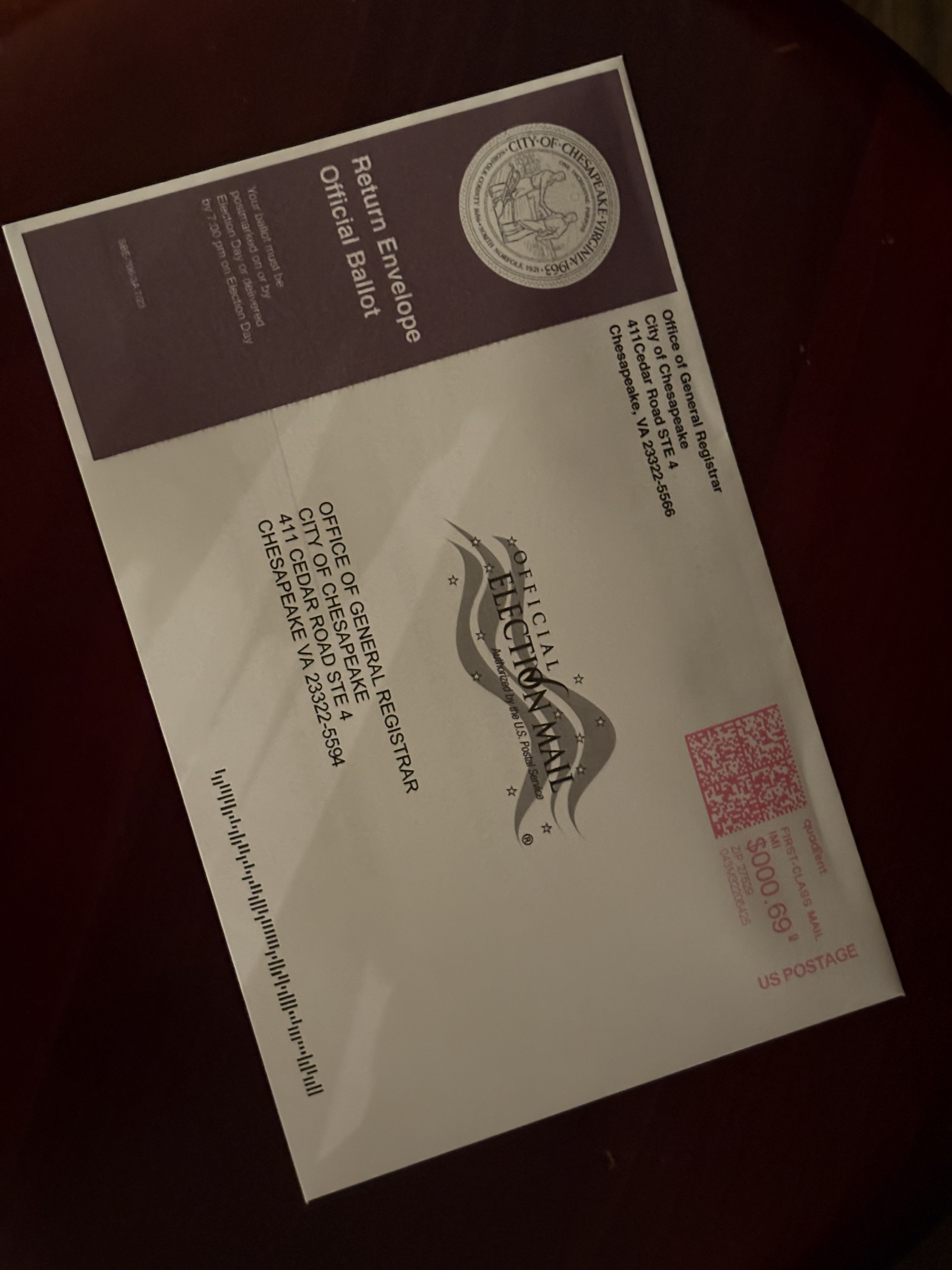
This weekend I cast my ballot
for democracy,
for life,
for equality,
for character,
for decency,
for hope,
for joy,
for unity,
for safety,
for national security,
for bipartisanship,
for prosperity,
for honor,
and for respect.

I am more excited about this vote
than any I have cast in the 36 years I have had the right and privilege to do so.

I understand that the norm in our culture is to keep our ballots private and to avoid talking politics.

But as I have read widely
and listened intently over the past few years
and come—very easily after August 5—to my choice of candidates,
I have also felt compelled to act.
I am in no position to canvas neighborhoods
or serve long hours at polling sites.
I have no notoriety that makes my endorsement hold any value in society.

But I am publicly sharing my ballot to show anyone who may wonder
how a stay-at-home mom
whose faith is central to her life,
who homeschools her children,
who believes in the sanctity of life from womb to tomb,
who is a morally conservative and generally traditional person in many ways
might cast her ballot.

My vote is not a “lesser of two evils” choice.
I wholeheartedly believe
that our nation should be run by someone
who values the rights of and gives respect to every individual in it equally,
who speaks to others with at least the minimal decency I require of my children,
who understands that morality and religion cannot and should not be legislated,
who believes issues like abortion are not political issues and are too complex to be handled as if they are black and white,
and who acknowledges the brokenness in our nation
without damning it and a large percentage of its citizens.

With respect and hope,
I marked my ballot for Vice President Kamala Harris.

I hope she wins,
but if she does not,
my disappointment will contain no despair,
for I live my life as an exile in Babylon,
exercising the rights I am granted here
and participating in society with as much integrity as I can.
But my allegiance is to Jesus and His Kingdom,
which is global and diverse,
not national
or partisan
or white
or male
or heterosexual
or American
and is not threatened in any way by either political victor.

My prayer is that each citizen of our nation
would thoughtfully and intelligently consider
the policies,
words,
behavior,
and character
of each candidate
as reflected in that candidate’s words and actions,
not in ads or clips or propaganda tools,
and cast their vote
as an individual with valid beliefs and opinions,
not as a pawn of any group,
political or otherwise.

May we all live
and treat others
as the Image Bearers that we are—ALL of us.


God Bless Us, Every One!

According to his biographer, Charles Dickens “thought of A Christmas Carol as a way to, ‘help open the hearts of the prosperous and powerful towards the poor and powerless….’” He first intended to write a pamphlet that would be called “An Appeal to the People of England on behalf of the Poor Man’s Child,” but after thinking about it for less than a week, he “decided instead to embody his arguments in a story, with a main character of pitiable depth.”  By putting faces on societal issues through relatable characters such as Bob Cratchit, Tiny Tim, and the infamous Ebenezer Scrooge, Dickens enabled audiences to truly see and begin to understand the messages he wanted them to hear, messages that remain incredibly relevant today.

For the past ten weeks, a Hampton Roads company of actors and actresses have gathered for hours every Saturday and on various days throughout the week, rehearsing to bring Dickens’ story to life. Arts Inclusion Company (AIC) is “a theater community where all are ABLE.” AIC utilized Dickens’ memorable characters portrayed by incredible actors and actresses to convey its own message that indeed we are ALL able and deserve to be seen.

When AIC announced auditions for A Christmas Carol, I was one of the first to sign my kids up. I had eagerly awaited our return to “Neverland,” and was excited for Tess to have the chance to participate this year. Lydia prepared a rendition of “I Love Trash” by Oscar the Grouch, complete with a prop, but was too shy to perform it in the audition. Titus, who has a self-described “short memory,” forgot the lyrics he was going to sing and ended up dancing for his audition. Tess sang the only song she had yet sung on her own from memory—“Happy Birthday.” 

After Scrooge observes the home and family of his employee Bob Cratchit, he is baffled by the fact that “They have so little and yet they rejoice.” Christmas Present responds, “They have infinitely more than you observe, Ebenezer Scrooge. They have each other. The world is full of people like these, man. It is only that you have never lifted up your eyes to see. See them now…”

Each offering made by my kids and all the others who auditioned that day was more than enough because the AIC Board members and volunteers have mastered the lesson Scrooge learned through his Christmas Eve encounters with the ghosts. They are able to see “infinitely more” than can be observed.

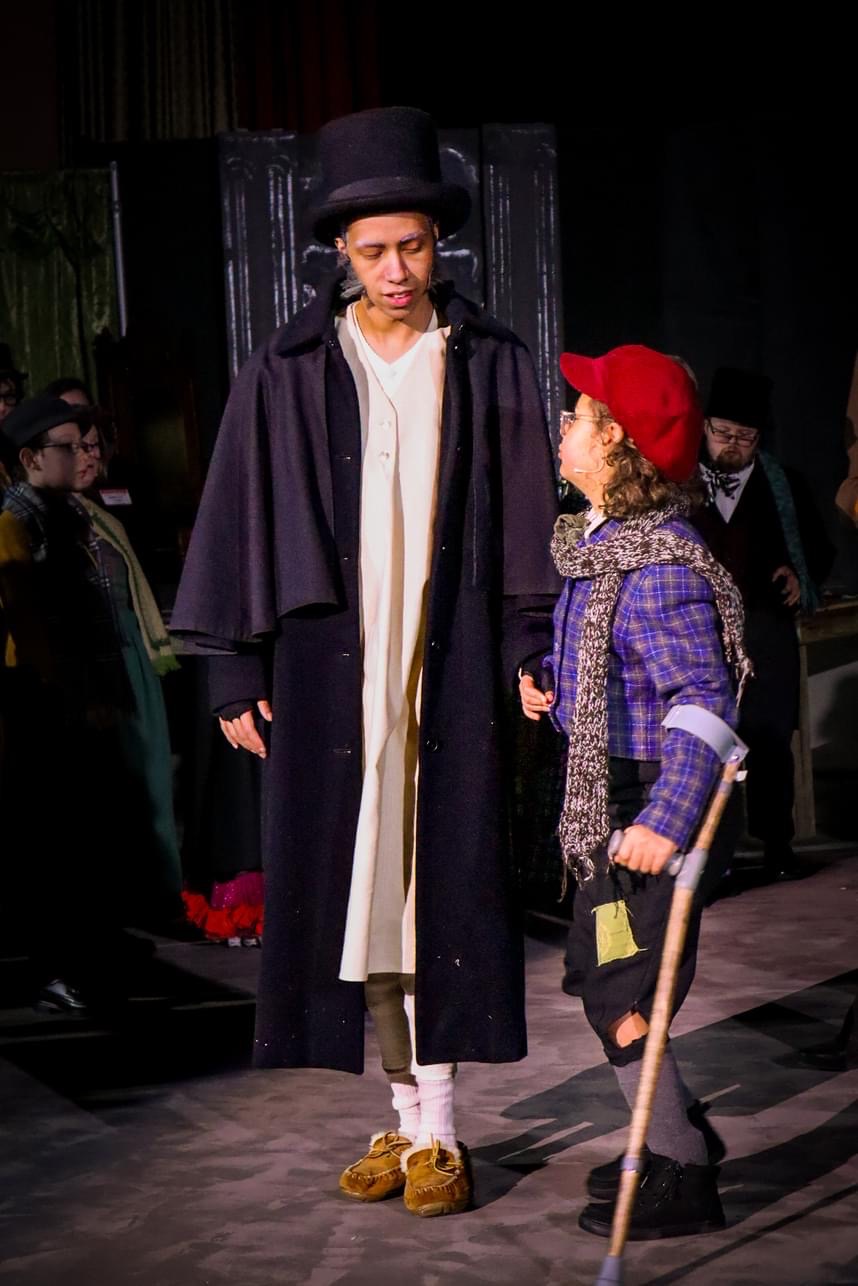
When the cast list came out, Tess, who first started speaking about five years ago, ate her first food by mouth three years ago, just began drinking water by mouth in May of this year, and had only recently sung “Happy Birthday” from memory was cast in the role of Tiny Tim.

In early 2020, I was asked to share Tess’s story as part of a video series our church was doing on Miracles. The turnaround time was short, so I quickly sifted through six and a half years of photographs and video clips that my son Jonah and I compiled into a video the church could show on Sunday morning. At the very end of that video is footage of the first time Tess walked with a little lofstrand crutch her physical therapist thought we should try. I called it one of the “thousand little miracles” that had comprised Tess’s first six and a half years of life. 

Three and a half years and a thousand more miracles later, I accepted Tess’s role as Tiny Tim in AIC’s production with faith that God would equip her to fulfill it. I could never have imagined how very perfectly suited she would be for the part and how much she would embrace it. Watching Tess deliver her lines and sing her songs with the same infectious laugh I described in the Miracles video, and seeing her walk to the front of the stage with her lofstrand crutch at the end of the show holding the hand of, not an attendant or family member, but a fellow actor—another overcomer—was an experience for which I do not have words.

By the end of A Christmas Carol, Ebenezer Scrooge has learned the lesson the Ghost of Christmas Present set out to teach him: “A man may have nothing in this world but he can make it a paradise by the way he lives his life. You have it all before you and go about with your eyes cast to the ground. Look up, Ebenezer, look up.” With eyes to see, Scrooge transformed into “as good a friend, as good a master, and as good a man as the good old City knew,” a man whose “own heart laughed,” and a man who “knew how to keep Christmas well.”

I have been privileged to watch Tess transform from a premature infant whose MRI images evoked either doom-and-gloom prognoses or intolerable pity to a walking, (constantly) talking, singing, sibling-annoying, joy-filled child who has gifts to nurture, purposes to fulfill, and hearts to touch. All because select doctors, therapists, attendants, friends, and family chose to see “infinitely more” in her than could be observed.

Dickens concluded his novella with a blessing, “And so, as Tiny Tim observed, God bless Us, Every One!” As often happens with powerful, meaningful words like love, hate, or truth, our modern society has conscripted the word “bless” and twisted into something that varies from religious speak (#blessed) to Southern falsity (“bless her heart”) and everything in between. Being blessed has come to represent success, material wealth, status, health, and perfect relationships. But the actual meaning of bless is “to ask God to look upon with favor.” Not a party favor or a favor from a friend, but “approval, support, and a kindness that is beyond what is expected.” 

Each performer in AIC’s production has a story that includes countless people who could see “infinitely more” than they observed. I hope that every audience member who witnessed Tess’s performance this weekend and the performance of each and every actor and actress who shared the stage with her for these past ten weeks now has the eyes to see that ALL are able and deserve to be seen.

And as the very ABLE Tess (in the role of Tiny Tim) observed, “God bless Us, Every One!”

Photo Credit: Suzette Valentine (mom of Scrooge)

Diamond Cutters

Diamonds form below the Earth’s surface in molten rock under specific amounts of extreme heat and pressure. Their resulting molecular structure makes them the hardest known mineral in the world, so a diamond can only be scratched by another diamond. In their natural state, however, diamonds are rough stones that require processing to become a sparkling, gift-worthy gem. The task of crafting that gem falls to a diamond cutter. 

Many choices go into the diamond cutter’s work: whether to cut the stone to a manageable size by cleaving it along its weakest plane, by sawing it with a rotating blade, or by utilizing a laser. Whichever method is chosen, the process is time-consuming and demands that the diamond cutter decide which part of the diamond will become the table (the flat top with the largest surface area) and which will become the girdle (the outside rim at the greatest point of diameter). The cutter then uses other diamonds to hand cut the diamond to the desired shape and to create the girdle’s rough finish. Finally, he or she uses a wheel and an abrasive diamond powder to smooth the diamond and create a finished look.

Last week marked the tenth anniversary of this blog, a platform I created to capture our infant twins’ adoption story as it unfolded, but which ultimately became a space to reflect upon and share a variety of stories over this past decade of life. In the end, not only have the experiences I captured transformed me, but the process of reflecting on and writing them has as well. My hope in sharing them is always that perhaps each one touches and, in some small way, transforms at least one of the people who take the time to read them. 

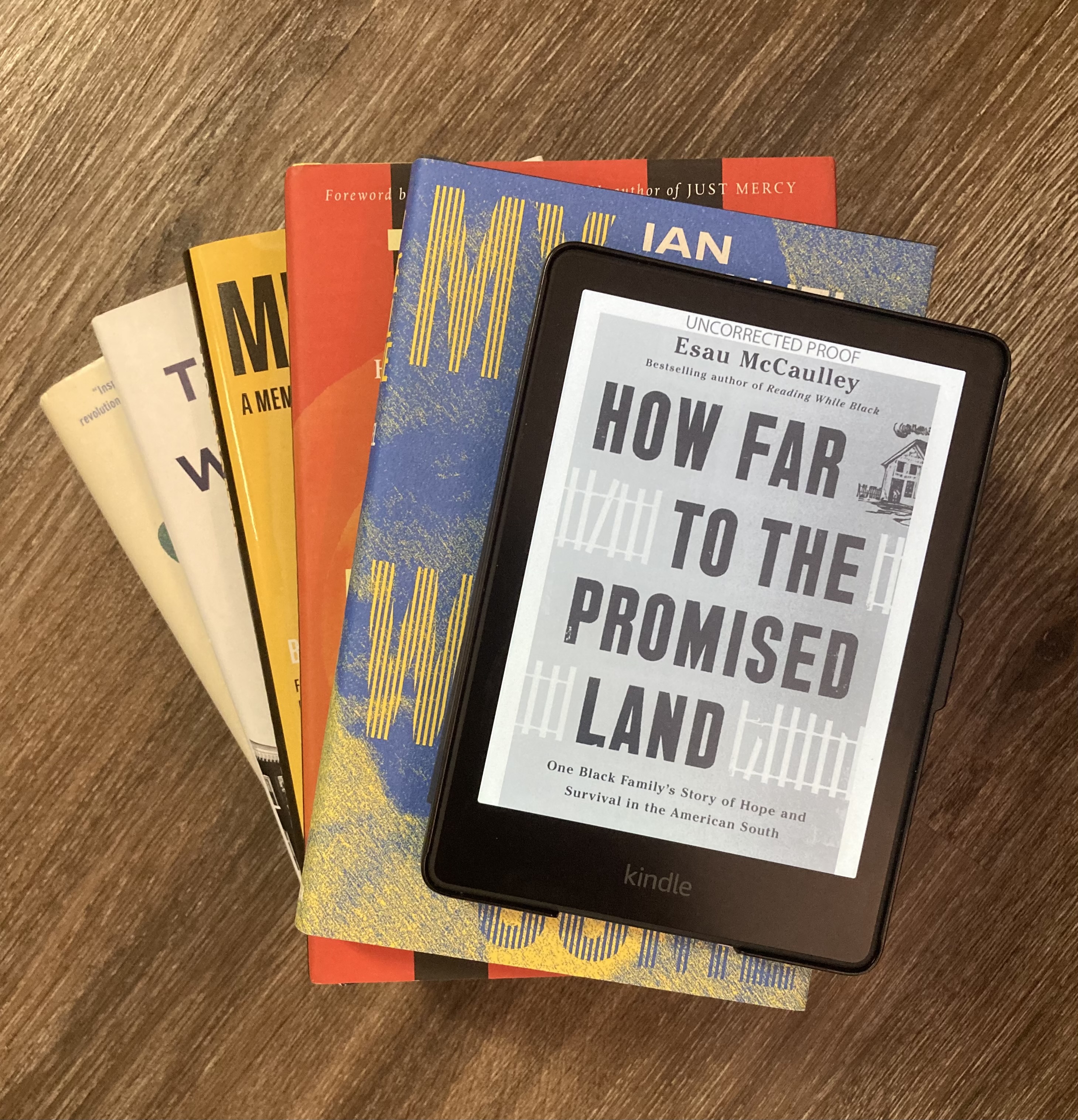
As I reflected on this milestone in my own writing journey this past week, I also had the privilege of participating in a Q&A  Session with Esau McCaulley about his forthcoming book How Far to the Promised Land: One Black Family’s Story of Hope and Survival in the American South. Listening to Esau share the decisions he made about what to include and not include in his book, I was struck by the similarities between the craft of memoir writing and the craft of diamond cutting. 

Like a diamond cutter, an author who writes of his or her personal journey begins with a vast amount of naturally-occurring raw material. Each person, event, and experience in a writer’s life is a part of his or her quarry of stones. How does a memoir writer even know where to begin? 

Diamonds are one of three forms of carbon, which is both “one of the most common elements in the world and is one of the four essentials for the existence of life.” Just as the raw material of a diamond is brought to the surface and transformed by a diamond cutter into something exquisite, so are the events of a life in the hands of an author. The choices made during that extensive process affect the value of the gem produced.

I eagerly pre-ordered Esau’s book last winter when the release date was first announced, and when the invitation was later extended to join his launch team, I quickly responded. Esau has long been one of the most respected voices to which I turn for a thoughtful, biblically-sound response to the issues of social and racial justice that pervade our nation. I knew Esau as a young seminary graduate where he served in a church our family attended immediately after our move to Virginia. His wife Mandy was our children’s primary care physician during her three-year pediatric residency at the naval hospital near our home.  

Because of my respect for Esau as a writer and theologian, the snippets of knowledge I had from social media of his family’s experiences after leaving Virginia, and my love for memoir as a literary genre, I anticipated an enjoyable and engaging read. What I experienced, however, was so much more.

I have written previously of the power of story and have made a personal vow to follow the advice that Farah Jasmine Griffin’s father gave her to “read until you understand.” In an effort to understand as much about the experience of others as I can possibly grasp, I have read memoirs by Anthony Ray Hinton, Jr., Wes Moore, Viktor Frankl, Frederick Douglass, Michelle Obama, Brandon P. Fleming, Alicia Appleman-Jurman, Harriet Jacobs, Ian Manuel, Elie Wiesel, Michelle Kuo, and many others. Each has profoundly affected me in its own way; however, Esau uniquely crafted his memoir in ways that provided me new and deeper levels of understanding and reflection.

Diamonds are judged on four factors that determine their beauty. The first factor is the cut, which is determined by the cutting process described above and the resulting facets and shape of the finished diamond. A diamond’s clarity is a measurement of its flaws or inclusions. Its weight is measured in carats, and its color ranges from yellow to icy white, which is the most transparent and most expensive. In addition, a diamond’s luster and dispersion of light, though not one of the four factors, also contribute to its beauty and worth.

As the diamond cutter of his story, Esau’s choice of cut laid the foundation for the entire book. Rather than the more common, narrow focus typical of most memoir (and powerful in its own right), Esau had a pivotal experience that helped him see the need to write about “the community and family that shaped me—the people normally written out of such stories—and how the struggle in each life to find meaning and purpose, regardless of its outcome, has a chance to teach us what it means to be human.” He wrote his story along with that of his mother, his father, his grandparents, and numerous other family and community members in what is ultimately a wider yet deeper picture of his own life and especially the interconnectedness of all lives.

In crafting his story, Esau digressed from the work of a traditional diamond cutter who would seek to minimize flaws and inclusions for the sake of clarity. A diamond may be more valuable the closer it is to perfection, but clarity in a powerful story is achieved through the transparent inclusion of the underside of life—the parts that we often hide but actually need to examine, to understand, and sometimes to act upon. Esau took the risk of sharing some incredibly difficult and flawed aspects of the people of whom he wrote, including himself, and in doing so provided a powerful opportunity for his readers to both understand and be understood. I could not list the number of connection points offered in the twelve chapters of this book, but I would dare to say that I believe its story will resonate in some way with anyone who reads it.

The weight of Esau’s story is significant. As the story of a black family in the American South, how can it be anything but heavy? As I write this, news has broken of a racially-targeted mass shooting in Jacksonville, Florida—a place that both my family and the McCaulleys have called home. We need this story and many others like it. We need a nation that encourages reading and discussing these stories. Most of all, we need the transformation and action that can come from understanding the intricacies of people, especially those who are targeted in crimes such as the one in Jacksonville—and yes, even those who commit them.

Esau observed, in the chapter on his marriage, that his own marriage and more broadly, any interracial marriage, “is not about racial reconciliation in America; that is too much weight for anyone to bear.” The same could be said about this memoir. It is a weighty story of one family over a period of specific times and places. It cannot carry the burden or promise of solving the issues it brings to light, but it can offer to take each reader a step closer on his or her journey of understanding. As someone who has been deliberately pursuing her own understanding, I received from Esau’s diamond crafting an entirely a new vantage point from which to see, not only an individual but, “the story of a people.” And as the subtitle of the book states, it is both a survival story AND a story of incredible hope. Reading it evoked a full range of emotions in me from sorrow to laughter, from outrage to respect. I laughed, I cried, I raged, I learned, and ultimately, I was transformed a degree more by the experience.

The most expensive diamond is transparent. Writing this memoir had to be costly for Esau and his family, but the result is a multifaceted, brilliant gem with immense value to the reader. Part of the power of his narrative is that while it offers redemptive hope and forgiveness, it acknowledges the cost of trauma…the message that is often avoided yet most needed in areas of any type of reconciliation, whether racial, social, or personal. His story not only moved me closer to understanding, it gave me a new vantage point from which to see and understand ALL stories, including my own. It encouraged me as a writer to continue crafting my own diamonds out of the molten rock of my own experiences and to do so with thoughtful intention to the cut, the inclusions, and the clarity with which I share.

The dispersion of light is not considered one of the four main factors on which a diamond’s beauty is judged. Dispersion occurs when white light passes through a prism and splits into its spectrum of colors—what we know as the colors of the rainbow. The very best stories are those that can be held up and examined so that the light hits them in a myriad of ways from multiple angles and perspectives. That light reveals truth about the subjects of the stories, their authors, and those who hear them. But in a truly powerful story, that light will be dispersed and the story will transform all who encounter it—the writer, the reader, and the world in which they live—perhaps even such that white light is seen for the spectrum of color it truly is. 

Write on, diamond cutters.

(Information on diamond cutting retrieved from How Stuff Works.)

Who’s the GOAT?

IMG-4799 copy

When you hear the question, “Who’s the GOAT?” What comes to mind?

Perhaps if you are a basketball fan, you think of Michael Jordan?…a concert lover, Taylor Swift?…a football buff, Tom Brady?

Arguments about the GOAT—Greatest Of All Time—span every context imaginable, from the sports field to the courtroom, from the theater to the boardroom. So how does one achieve GOAT status? Even Jesus’s disciples considered the question. In his gospel, Luke records that “[a]n argument arose among [the disciples] as to which of them was the greatest” (Luke 9:46, ESV).

The events leading up to that moment provide interesting context for their argument. The day before the argument took place, Jesus and three of his disciples had experienced the transfiguration. Peter was so enamored by the magnificence he encountered on the mountain that he suggested setting up camp there. Luke tells us that as they descended the mountain the next day, they were met by a great crowd. A man in the crowd shouted, begging for Jesus to look at his son, who was seized by a spirt that mauled him and caused him to foam at the mouth. The father told Jesus, “I begged your disciples to cast it out, but they could not.” After exclaiming his frustration with a “faithless and perverse generation,” Jesus “rebuked the unclean spirit, healed the boy, and gave him back to his father” (v. 42). Luke tells us that “all were astounded at the greatness of God” (v. 43). In the midst of that amazement, Jesus told his disciples of his impending betrayl, but “they did not understand this” and were afraid to ask Jesus about it. Instead, this “argument arose among them concerning which one of them was greatest” (v. 46). While no direct correlations are made in Scripture, the disciples were clearly enamored by and focused on greatness while also struggling to be effective in their healing ministry and even to understand the One who had empowered them for it.

Jesus recognized their struggle, resolved their argument, AND definitively answered humankind’s ongoing argument about who is the GOAT:

“But Jesus, knowing the reasoning of their hearts, took a child and put him by his side and said to them, ‘Whoever receives this child in my name receives me, and whoever receives me receives him who sent me. For he who is least among you all is the one who is great’” (Luke 9:47-48, ESV).

So into the disciples’ argument, with actions and words, Christ spoke five truths:

When we seek greatness, God knows.

The least are brought closest to Christ.

Receive the least and you receive Christ.

Receive Christ and you receive the Father.

The least among us is greatest.

Luke did not describe the disciple’s reactions to Jesus’s resolution of their argument, but it was likely revolutionary to them. Like us, they had their ideas about greatness and clearly wanted to be the GOAT themselves. Fortunately, in his gospel Matthew also recorded Jesus’ insights related to GOAT status as He taught his disciples on the Mount of Olives:

“When the Son of Man comes in his glory, and all the angels with him, then he will sit on his glorious throne. Before him will be gathered all the nations, and he will separate people one from another as a shepherd separates the sheep from the goats. And he will place the sheep on his right, but the goats on the left. Then the King will say to those on his right, ‘Come, you who are blessed by my Father, inherit the kingdom prepared for you from the foundation of the world. For I was hungry and you gave me food, I was thirsty and you gave me drink, I was a stranger and you welcomed me, I was naked and you clothed me, I was sick and you visited me, I was in prison and you came to me.’ Then the righteous will answer him, saying, ‘Lord, when did we see you hungry and feed you, or thirsty and give you drink? And when did we see you a stranger and welcome you, or naked and clothe you? And when did we see you sick or in prison and visit you?’ And the King will answer them, ‘Truly, I say to you, as you did it to one of the least of these my brothers, you did it to me’” (Matthew 25:31-40, ESV).

Christ’s response to our focus on or pursuit of greatness is to seek out the least among us, instruct us to receive the least, and declare that when we serve the least, we serve Him. Four times in Luke 9:48, Jesus repeats the word receives: “Whoever receives this child in my name, receives me, and whoever receives me receives him who sent me. For he who is least among you all is the one who is great.” The Greek word which translated “receives” is “déchomai,” which means “to take with the hand; not to refuse friendship; to receive into one’s family; to receive of the thing offered in speaking, teaching, instructing.”

What does this look like?

In his book The Power of the Powerless: A Brother’s Legacy of Love, author and teacher Christopher De Vinck shared the story of growing up with his brother Oliver who suffered severe brain damage caused by a gas leak that occurred during his mother’s pregnancy and left Oliver completely dependent for his entire life—unable to see, talk hold his head up, or hold anything in his hand. De Vinck described his parents’ response to the doctor’s diagnosis of Oliver’s condition:

When our children are in pain, we try to heal them. When they are hungry we feed them. When they are lonely we comfort them.

‘What can we do for our son?’ my parents wanted to know.

Dr. De Lange said that he wanted to make it very clear to both my mother and father that there was absolutely nothing that could be done for Oliver. He didn’t want my parents to grasp at false hope.

‘You could place him in an institution.’

‘But,’ my parents answered, ‘he is our son. We will take Oliver home, of course.’

The good doctor said, ‘Then take him home and love him’” (p.11).

De Vinck then shared the influence his parents’ decision had on his life:

“Oliver still remains the most hopeless human being I ever met, the weakest human being I ever met, and yet he was one of the most powerful human beings I ever met.

As a teacher, I spend many hours preparing my lessons, hoping that I can influence my students in small, significant ways. Thousands of books are printed each year with the hope that the authors can move people to action. We all labor at the task of raising our children, teaching them values, hoping something ‘gets through’ to them after all our efforts.

Oliver could do absolutely nothing except breathe, sleep, eat, and yet he was responsible for action, love, courage, insight.

For me, to have been brought up in a house where a tragedy was turned into a joy, explains to a great degree why I am the type of husband, father, writer and teacher I have become” (p. 12).

Near the end of his book, De Vinck reflected, “Looking at [Oliver], I saw the power of powerlessness. His total helplessness speaks to our deepest hearts, calls us not merely to pious emotions but to service. Through this child, I felt bound to Christ crucified—yes, and to all those who suffer in the world. While caring for Oliver, I also felt that I ministered in some mysterious way, to all my unknown brothers and sisters who were and are, grieving and in pain throughout the world. So through Oliver, I learned the deepest meaning of compassion’” (p. 87-88).

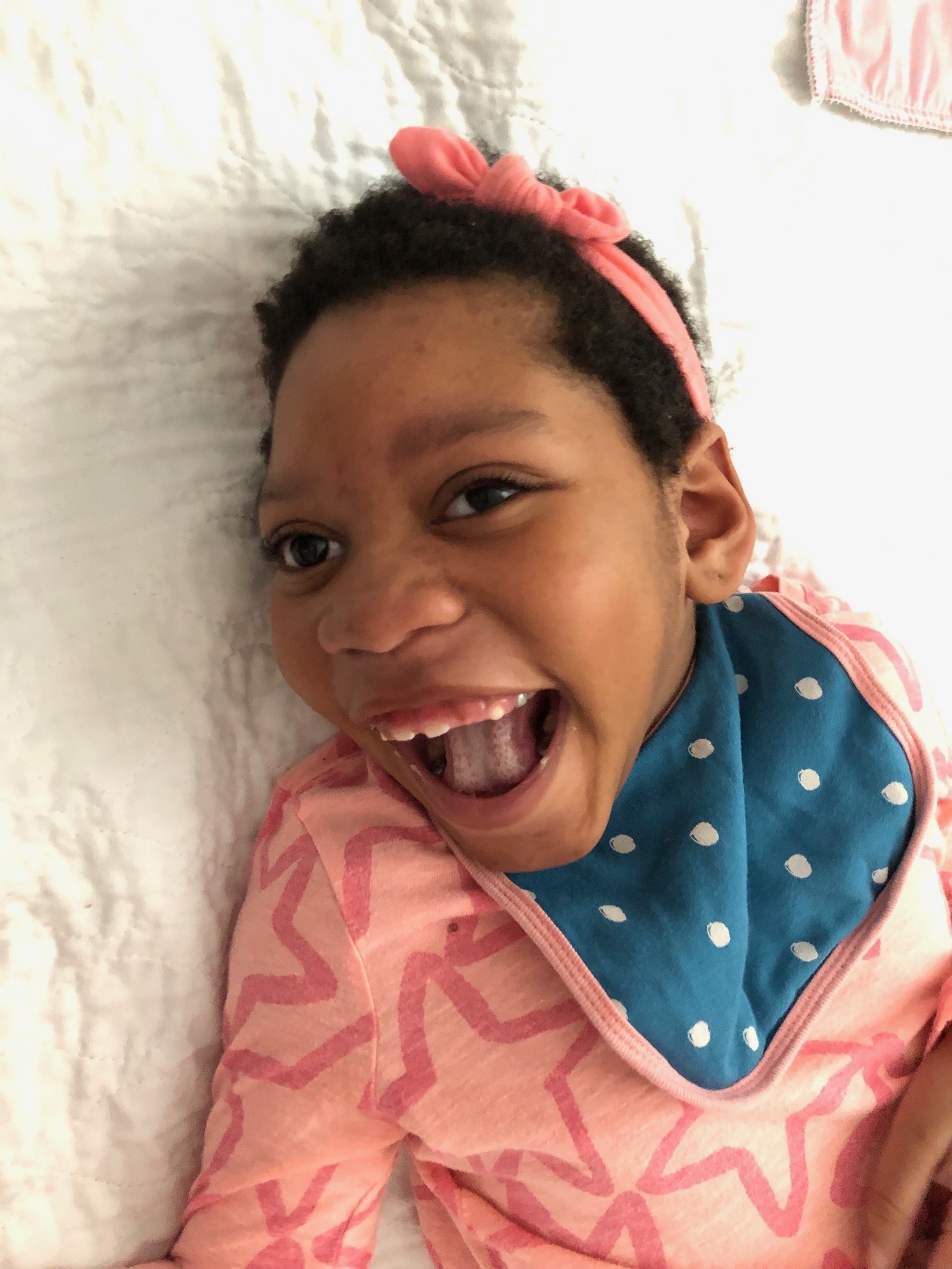
The lives of two of my friends share similarities with Oliver’s: Joy and Collin. Joy was adopted by my friends, the Jacob family, when she was four years old. Soon after, she was diagnosed with a rare disease, and her family was told she would only live about another year. Two weeks ago, Joy passed away peacefully at the age of eleven, more than double her life expectancy. No one in Joy’s life lived under those or any other expectations, however, and as Joy’s neurologist shared with the family after she passed, “She exceeded my expectations in every way and showed me that love can carry a child beyond what science tells us.”

I attended Joy’s Celebration of Life this weekend where the sanctuary was filled with images of her beautiful smile, sounds of her laughter and the songs she loved, and the people who had cared for her day-to-day needs proclaiming that what they received from Joy was far more than they gave. Her mother, my friend J.J., shared with me, “It still just blows my mind how many people were impacted by Joy–quadriplegic, non-verbal, severe intellectual challenges, in addition to all of her medical challenges. It all humbles me. God used Joy to change lives. How can I think that God can’t use me?” 

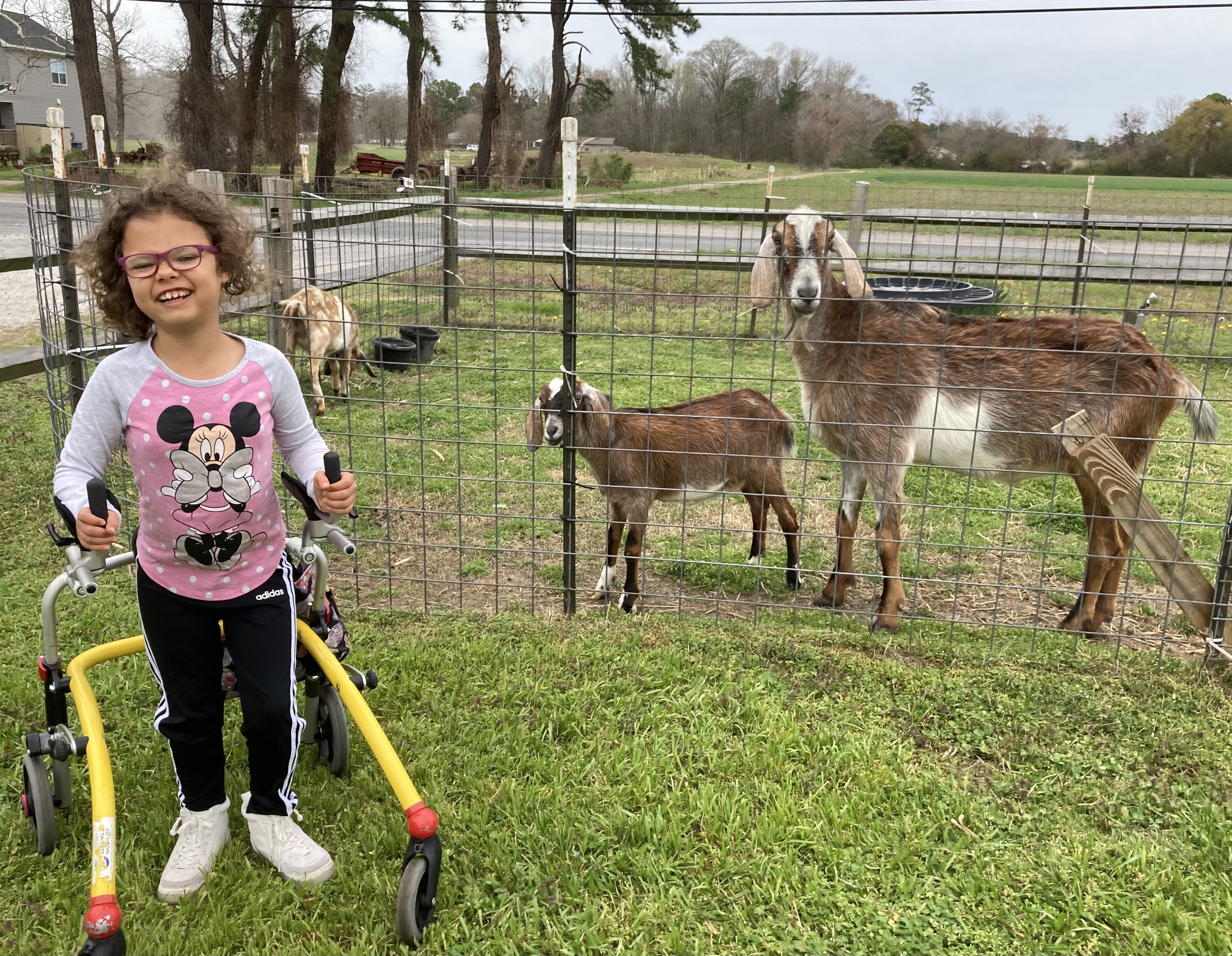
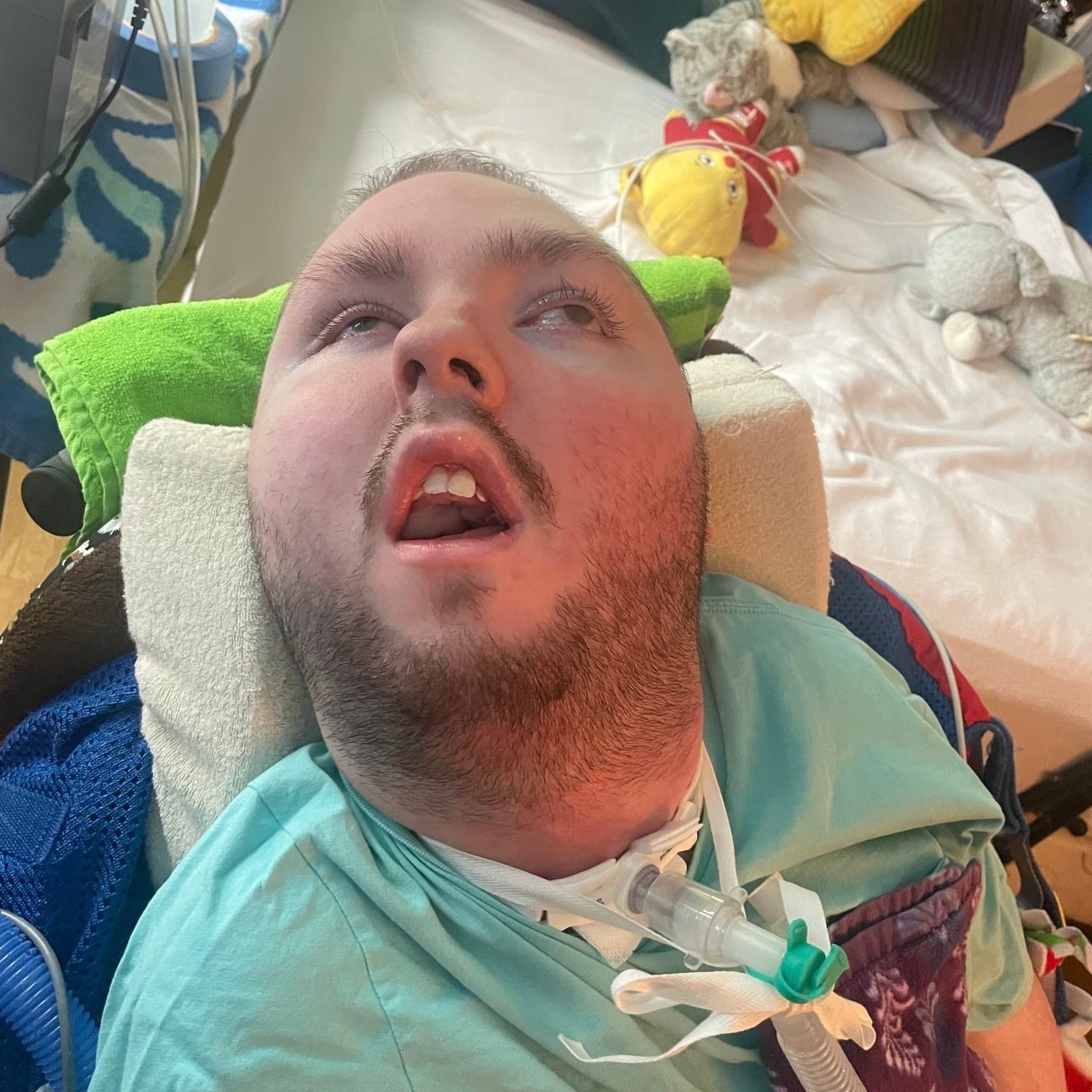
Just a few miles away from the home where Joy lived, Collin lives with his mom, dad, and sister. Collin suffered a traumatic brain injury at birth that left him completely dependent on others. He was not expected to live to be a year old. Instead, thanks to the loving care of his family, who also ignored expectations, Collin is finishing his second decade of life—a life that led my friend Dianna, his mother, to not only receive and serve her son despite his significant needs, but to learn from him that everyone has a song. Dianna has devoted her life to arts inclusion—teaching voice and musical theater to the most accomplished students at the Governor’s School as well as to individuals who are nonverbal like Collin. Dianna’s Vocal Inclusion studio is based in her home so that her son can always be surrounded by music. Through her work, students of all abilities—including my own—are given the best stages and the most notable audiences with which to share their songs. 

Continue reading

At the Heart of It All

I had a meeting this spring with an engaging, intelligent young woman who is doing some of the most meaningful work I can imagine for some of the most overlooked people in our local community. We shared experiences, passions, and ideas for how I can contribute to the work of the non-profit organization she serves. We discussed writing, research, teaching, and storytelling and how I can use them to make a difference. Toward the end of the meeting, she said words like these to me: “I can see that at your very core—at the heart of it all—you are a mother. When you write about or share your experiences, you are mothering all of us who read or hear them.” 

It was one of those life-giving, truth-telling moments that you know you will always remember because something inside you shifts and your view is forever changed. Her words affirmed one of the central lessons of my last seven years that had been percolating in me but that I had not previously been able to articulate: After two decades of believing that my mother-self and my other-self were in conflict, I have finally realized that we are one.

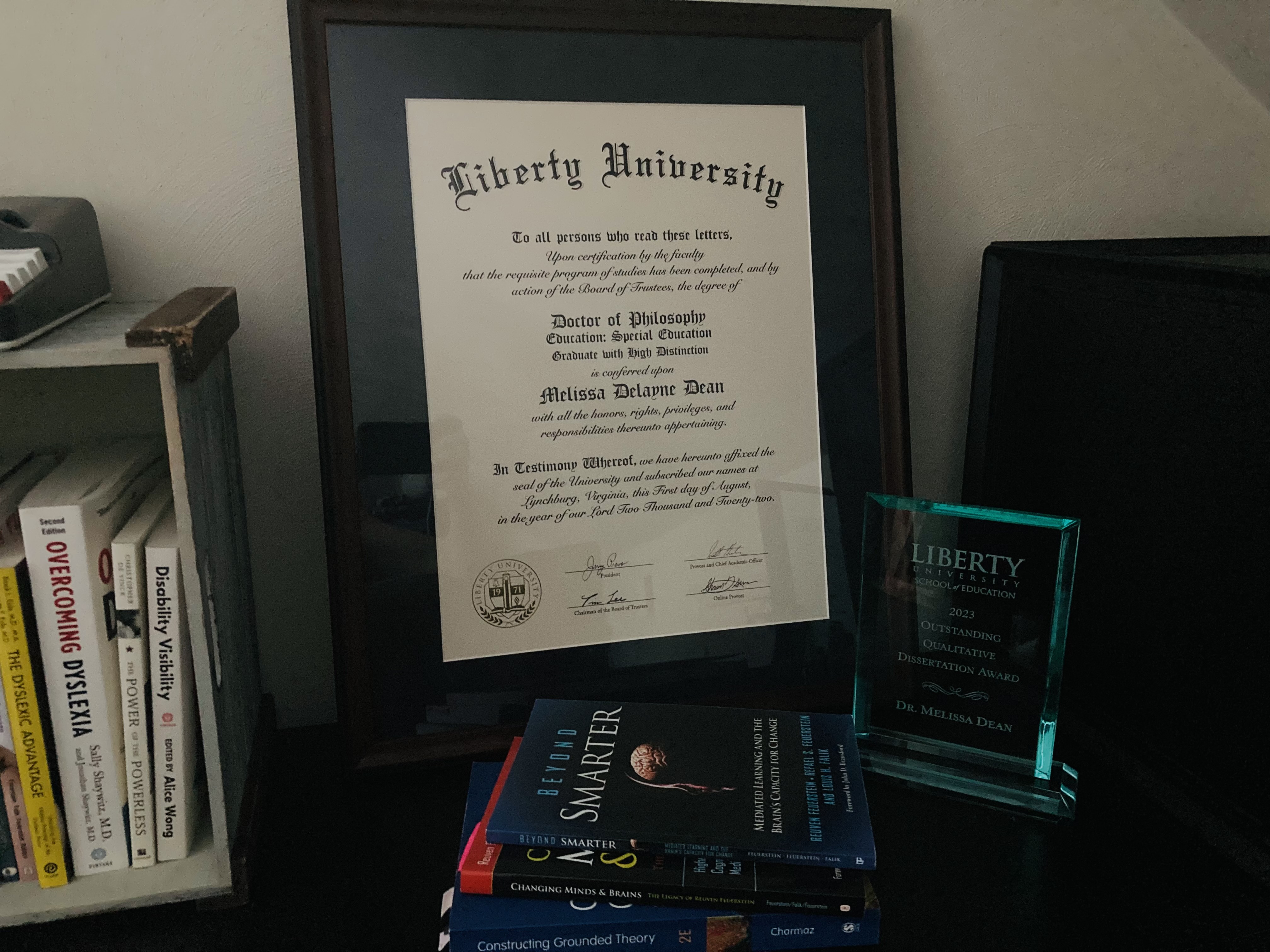
I graduated this spring. Well, technically, I graduated last August, but the ceremony was in May. The timing and expense of the ceremony made it a bit challenging so I chose not to attend and didn’t give it much thought once the decision was made, until…

Shortly after 10 on the Thursday morning of my commissioning ceremony, as I was running errands and about to drive to a haircut appointment, I received an unexpected text from my dissertation chair: “Melissa!!! You just won the qualitative dissertation award!!!!!!” I was stunned. And honored. And a little sad that I wasn’t there to receive it in person. But as the day went on and I shared the news with my family and processed it a bit more, the significance began to register. This was more than just an unexpected accolade to me; it was an external affirmation of a series of choices I had made over the years I spent pursuing that degree…a journey that ended far differently than it began.

I have always valued education. My mom encouraged it in every way, and my dad frequently told me that there were two things in life that no one could take away from me—my education and my self-respect—so I knew it would be wise to have as much as possible of both. Attending college wasn’t a decision I made but an assumption I lived out. And as a lifelong Tar Heel basketball fan, the choice of school was as well. 

Two years after graduating from college and getting married, the military sent my husband to the University of Michigan for a grad school tour. After a four-year long-distance relationship/engagement and two-years of ship deployments, it sounded heavenly to attend grad school together, so I applied to get my master’s degree in English Education at the same time. Surprised by a research assistantship opportunity that I literally stumbled upon in the U-M School of Education women’s bathroom within a week of our move to Ann Arbor, the doors opened for me to pursue basically all the education I wanted while serving in that RA role. By the next spring, I had completed the master’s degree I had originally sought, so the professor I worked with highly encouraged to enter Michigan’s Ph.D. program. The project we were working on had enough data to fuel numerous dissertations, making the opportunity especially appealing. As much as I wanted to apply, I knew my husband would be transferred to Washington, D.C. for a payback tour as soon as he graduated the following spring. It is impossible to complete a Ph.D. in a year and virtual learning did not exist in 1995, so starting the degree and finishing it from afar would have been nearly impossible. I didn’t want a second master’s degree, so I petitioned the Dean to allow me to pursue U-M’s defunct Educational Specialist (Ed.S.) degree, which was basically the coursework of a Ph.D. that culminated in a major paper approved by a committee but not a dissertation based on original research. 

I learned I was pregnant with our first child just weeks after beginning that degree, so I chose to transition from being a research assistant, which required a good bit of travel, to being a teaching assistant. Pregnancy and the Ed.S. coursework coexisted nicely. Even writing the draft of my Ed.S. paper was manageable. My daughter arrived the day after her due date (and my birthday)—six weeks before the end of the semester, her dad’s and my graduation ceremonies, and our move to DC. I couldn’t afford to miss a class and still finish on time, so I took my postpartum donut to class with me, nursed her in my little grad student office between classes, and sat on the floor of my chair’s office calming my colicky baby while discussing the paper revisions necessary to appease the requests of my other committee members. I recall one of the members suggesting I take an incomplete and finish the paper over the summer, but I knew that would never happen. Those weeks were a blur of exhaustion, crying, leaking milk, healing, and doggedly staying the course. Somehow, I finished.

I joked later that I promptly hung both graduate degrees over my daughter’s changing table. As a military spouse, I was at the mercy of my husband’s career demands. Over the subsequent twenty years, I pursued as much work as I could manage—teaching night school, writing for newspapers, editing, and eventually designing courses and teaching online—with promises that “my turn would come.” I hoped to finish that Ph.D. someday and teach at a university and perhaps one day become an author. That day always got pushed into the future…after this, after that…until eventually I couldn’t see it anymore.

Twenty-five years after graduating from U-M, I began applying to doctoral programs while taking the necessary steps to move into a home on my own. To those who don’t know me well, this seemed foolish, but to those who do, it made all the sense in the world. Reading, writing, books, words, ideas, discussions, learning…are what make my heart sing. They are how I process the world. My therapist asked how I would manage the workload with all of the stress and responsibility that was now upon me as a single parent. “School is therapy to me,” I told her, and it truly was.

I assumed my Ph.D. should be in English Education or Curriculum Development, the two fields I had previously studied and acquired the most experience in during my patchwork career. A year into English coursework, however, an external battle prompted me to change direction. I had homeschooled our children for fifteen years with the full support of my spouse, but suddenly that choice was under attack. I made a phone call that changed everything. 

In my conversation with the head of Liberty’s Special Education department, I inquired about the logistics of switching my degree program, knowing that having a terminal degree in the field would end any future conversation about my capacity to homeschool children with special needs. What I didn’t realize at the time was that I was also marrying my professional and parenting lives in a way that would benefit me and the children for years to come. I was also forming a relationship with an incredible professor who would become my mentor and eventually my dissertation chair.

The journey from that conversation to last year was both challenging and invigorating. I loved being a student of a field that so directly affected my own children, and I was exposed to theories that completely revolutionized my views of education, teaching, parenting, and the potential of all learners. Completing my coursework and entering the dissertation stage was simultaneously exhilarating and terrifying. Choosing a topic, however, was simple for me. I knew that even though it would attract no attention in my field, I wanted to study families who chose to homeschool learners with special educational needs and disabilities—families just like mine.

The dissertation road is never smooth—approval delays, finding participants, interviewing, transcribing, and coding are all part of an arduous and very non-linear journey, much of which is completely out of the researcher’s control. I had hoped to graduate in the spring of 2022 but that extended into summer. My dad had been diagnosed with cancer and expressed his desire to see me graduate before he lost the battle he faced. On a mission to grant his desire, I resigned myself to the idea that “done is better than perfect.” But when I started to analyze the data and write Chapters 4 and 5, I quickly realized that I couldn’t tell my participants’ stories any other way than with the justice they deserved. My participants were me, their children were my children, and their voices deserved to be heard.

I submitted my final draft, defended in July 2022, and technically graduated that August. Even though I wasn’t there to receive it, learning that of all the qualitative dissertations submitted in Liberty’s Education Department for the 2022-2023 school year, mine was chosen for distinction overwhelmed me with gratitude, not so much for the award but for the affirmation of all the little choices that led to it:  the choice to postpone the degree for over two decades; the choice to homeschool; the choice to adopt children with special needs; the choice to enter a new field at the highest level during a time of such intense personal stress and transition; the choice to study a low-profile, marginalized population that means the world to me but offers no professional currency; and the choice to finish strong instead of just finishing. 

Outsiders may not realize how remarkable it is for a dissertation about homeschooling learners with special educational needs and disabilities written by a single mom over fifty to be recognized but I know, and it overwhelms me with gratitude and affirmation. I could not have produced that research and its resulting model apart from the choices I made and the experiences I had in the years that have passed since I drove away from Ann Arbor, Michigan in 1996, leaving so much behind.

So now my degree hangs in my guest room office where I work at odd hours of the day and night for a local non-profit doing what I expect to be incredibly meaningful work in service of things that truly matter to me. My primary job is and will continue to be that of mother and teacher to my kids, but I now see how inseparable that is from everything I am and how much better it makes me at anything I choose to do. My mother-self and my other-self are truly one, and I finally realize—and celebrate—the value of that marriage.