Pivot.

Our homeschool co-op shared a bittersweet final day of the year yesterday. It was our first year at Kindred Homeschool Collective. We joined Kindred because it is inclusive and focuses on seeing the image of God in all people, valuing everyone’s story, and loving like Jesus. We have witnessed all of these things and more over the course of the year and while a summer break will be nice, we look forward to returning in August.

Despite the joy we have all experienced participating at Kindred, it was a challenging year for me. Inclusive doesn’t always mean accessible, and the co-op meets in a beautiful but historic church that posed a lot of challenges for Tess and those of us caring for her. 

The morning before our last day, I received an unexpected message from our friend Rosean, the youth pastor at our co-op’s host church, who also serves as our co-op security person (and so much more). From the very first day of classes, he recognized our challenges and went out of his way to help Tess navigate the stairs, going so far as to meet us at the car most weeks. He always had an encouraging word and a smile to share and never once made us feel like a burden. It was a gift. But when he sent me photos of a new ramp he had installed over the steps that Tess needed to navigate the most each school day, I was so overcome with emotion that I had to sit down. 

I had just had a conversation the previous week with one of our co-op board members about my concerns for managing the next school year, knowing I will likely have less resources and assistance to help Tess and Lydia during the times I will be teaching and serving in the co-op. Any parent in a truly collaborative co-op (as opposed to a drop-off program) faces challenges juggling their own family’s needs with their responsibilities to teach and serve, but when your child is fully dependent on assistance to navigate her environment and meet basic care needs, there are extra struggles. This ramp was an act of seeing and empowering Tess while letting me know that I am not alone in my struggle to manage a positive but often challenging day.

Vision is often enhanced through contrast and this experience helped solidify a decision with which I have been wrestling for the past few months. I shared in a previous post that I was excited to be starting a Princeton Theological Seminary (PTS) graduate program in Theology that focuses that focuses on Justice and Public Life. In that post, I also shared that there were portions of the program I was not sure how I would fulfill but that I was trusting God to make a way. Soon after sharing my decision to commit to the program, I learned that Tess needed her sixth cerebral shunt revision. This one was planned, while the others have been emergent; however, each one has reminded me of the unpredictability of my life as a single mom to kids with medical challenges. While I do believe in trusting God to make a way, I also believe in exploring options and planning ahead. That process led me to realize that the PTS program was not accessible to me.

I have thought a lot about accessibility and inclusion for my kids but have recently come to realize that parents of kids with disabilities need inclusion and accessibility too. We live in a constant state of alert, balancing the needs of a typical child or young adult with the often complex needs that come with our kids’ unique challenges. The basic things like an unexpected trip to the store can be complicated, and we live on the precipice of emergency. Very few, if any, people can step into our life, even on an extremely temporary basis, which limits our mobility, reliability, and especially, our control. Our “no” is often an “I wish” or “If only…,” and our “yes” is always a “hopefully.” It’s a beautiful but complex life that both expands and restricts us. We wouldn’t want a different life and most definitely not a different child, but the world rarely sees or understands our internal or external struggles. Our focus is on securing accessibility and inclusion for our kids but truthfully, we need both as well.

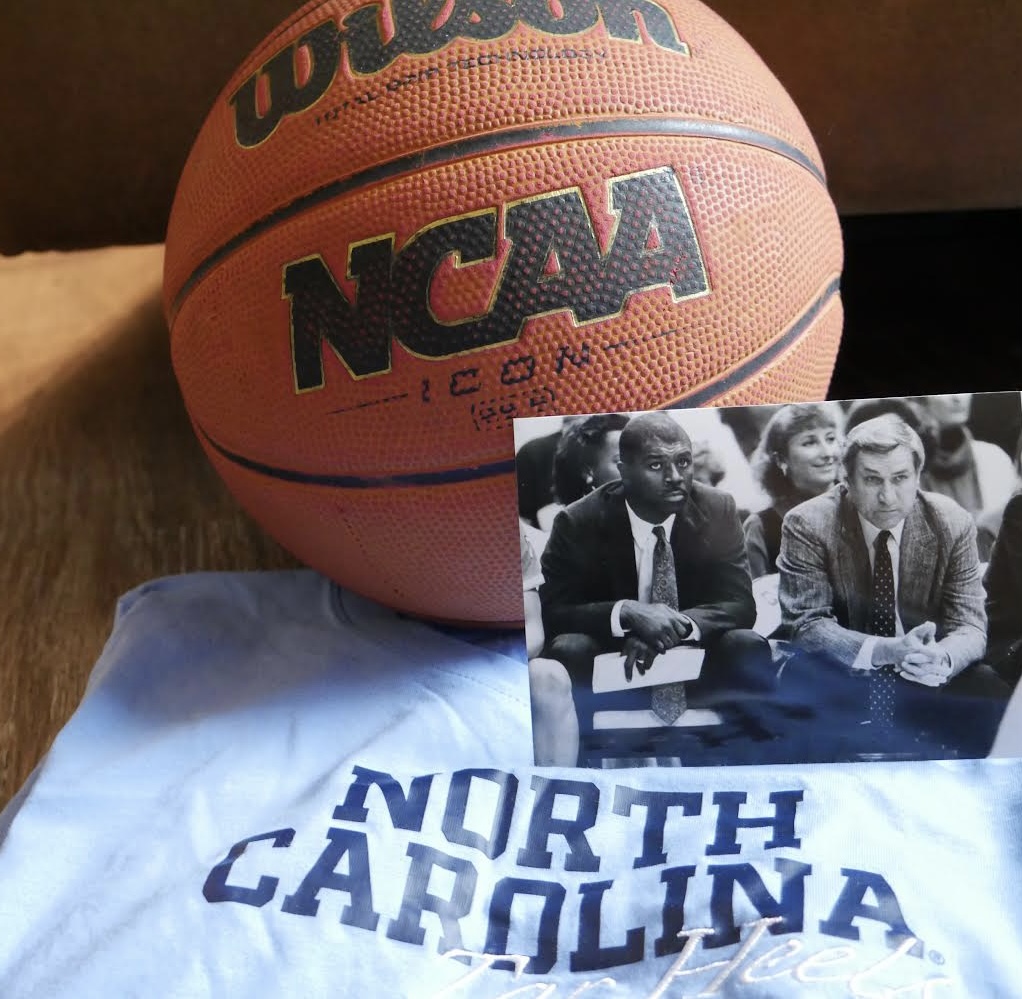
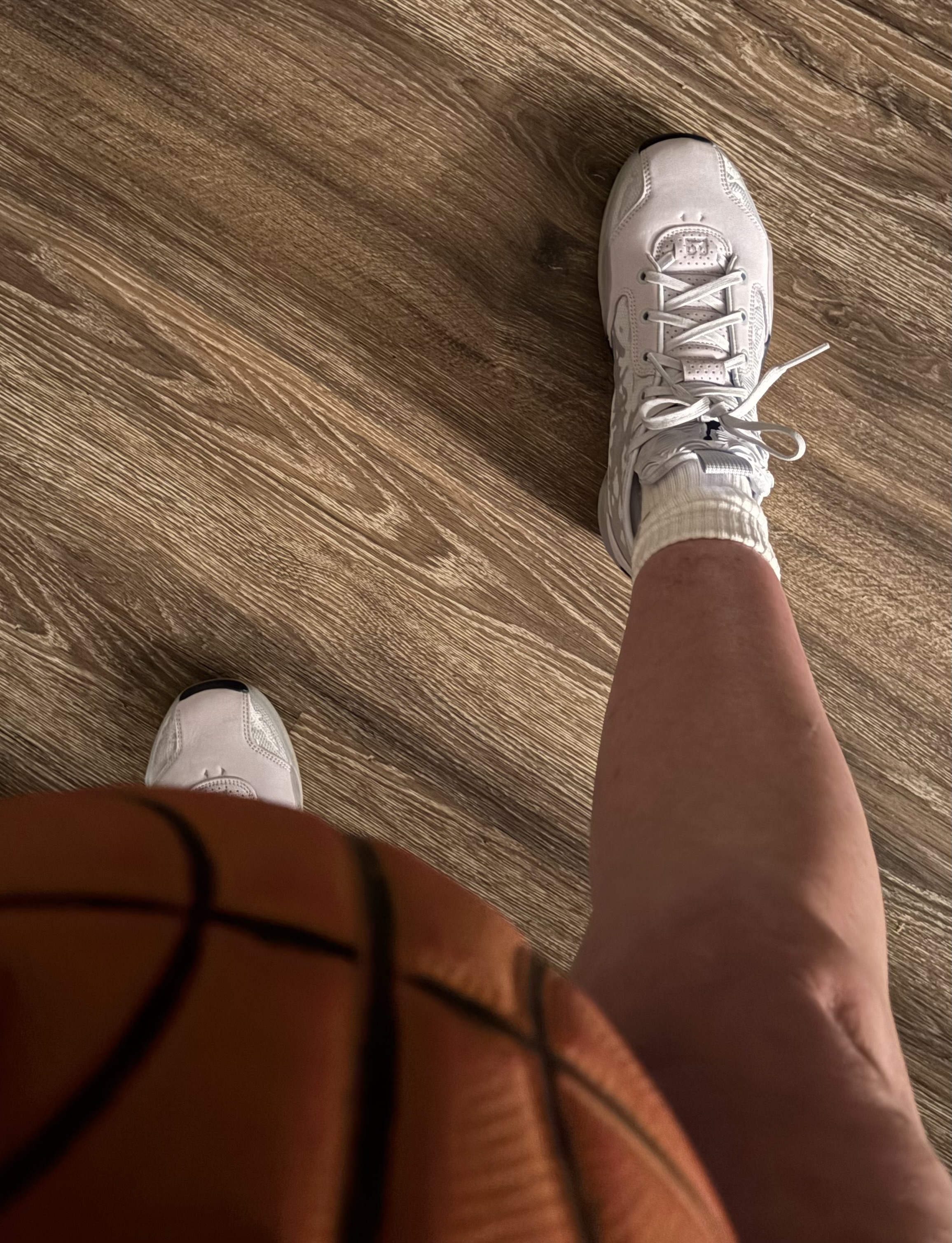
One of my favorite things “hobbies” for most of my life has been following North Carolina Tar Heel basketball. In basketball, players often use their pivot foot to create space against a defender. If I am trying to make a play on the basket and I lift the ball over my head, the defender can fill the void and hinder my movement. If I hold the ball directly in front of me, it is likely to be knocked away. My best option is to use my pivot foot, step forward, and sweep through to back my defender up, creating space for myself to move in a new direction and make a play on the basket.

I could have remained in the PTS program and hoped for the “act of God” that would be necessary for me to fulfill the program component that is just not conducive with my primary responsibilities, but if that act never came, I would not complete the degree. Instead, I decided to pivot and survey the court for other options. And the vision I gained from that pivot showed me more options than I had known of last summer when I first discovered PTS’s program. One of them quickly emerged as ideal.

Next week I will begin classes toward my Master of Ministry (MMin) degree in Theology and Culture (with an emphasis on Justice) at St. Stephen’s University. I am beyond excited! It would take another post to share all the many ways St. Stephen’s is perfect for me. In short, their mission perfectly aligns with my own:  

“The Mission of St. Stephen’s University is to prepare people, through academic, personal, and spiritual development, for a life of justice, beauty, and compassion, enabling a humble, creative engagement with their world.”

And equally valuable—even essential—to me, SSU is inclusive and made itself accessible to me as a single parent of kids with exceptional needs. From my first inquiry to the creation of an outlined course of study that provides me with options for a variety of scenarios that may occur in this beautiful but often out-of-my-control life, they sought to understand my situation on more than a surface level and responded to it, not just with sympathy or even empathy but with action. I cannot describe the peace that accompanied that for me. Now instead of beginning a program with a cloud of uncertainty hovering above me, I begin from a firm, supportive foundation that frees me to be focused and enthusiastic!

Looking back, I see God directing me toward SSU all along in small, subtle ways that I could not have seen if I continued to cling to the ball of PTS’s program or raise it up high to keep someone from taking it from me. I would have either lost the ball or had obstructed vision and movement. Instead, I was able to pivot and open space for myself to do something better than what I originally planned. In the process, I learned that inclusion and accessibility matter for me, too, and that just as I do for my kids, I need to advocate for that and surround myself with the people and communities who see and empower me to do so.
“Let them not be in vain.”

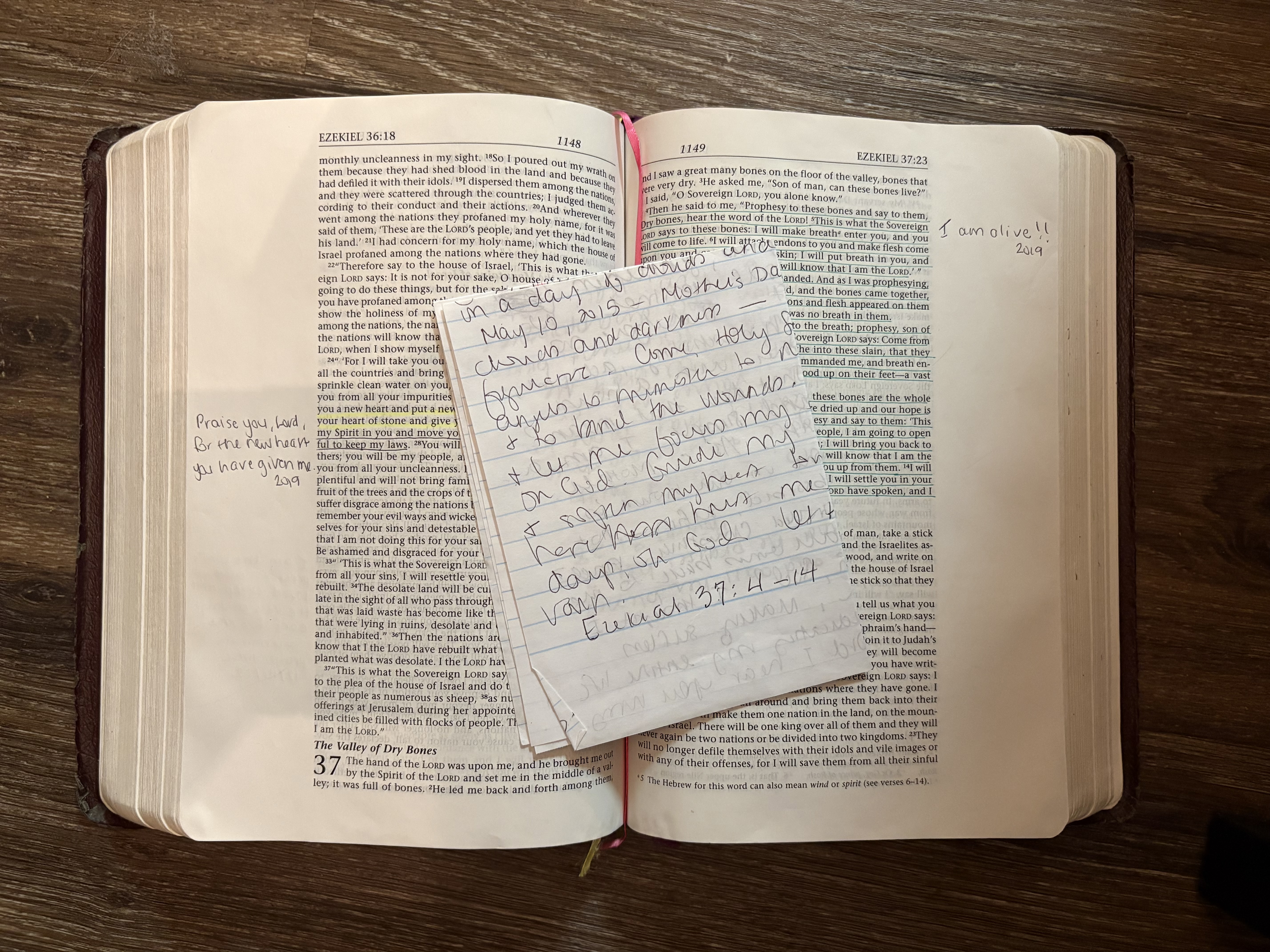
On Mother’s Day 2015, I sat in my car sobbing and wrote these words:

“For Mother’s Day 2015, I received truth. The facades are gone and underneath is the very ugly reality that no one in our home likes me, values, me, or even remotely wants to celebrate me. There is a lot of anger, resentment, bickering, annoyance, frustration, and disappointment. There is no love, kindness, peace, patience, joy, goodness, gentleness, faithfulness, or self-control. No fruit of the Spirit, therefore no Spirit. Christian, homeschooling, adoptive, special needs mother with a house full of poison. What does that mean? Failure. Plain and simple. I am a failure. As a wife. As a mother. As a person. Everyone in our house is self-centered, self-absorbed, selfishnot God-centered, self-controlled, Christlike. And I am the mom, so it all comes back to me. 

How did this happen, God? I thought I was pursuing You, making selfless decisions, and dedicating my entire life to your call. Did I hear You wrong, or is it just that I failed? I know the answer to that. I failed. I failed because I relied on my own strength and wisdom. I sought You but not really. I prayed weakly. I strove mightily in my own flesh rather than relying on You. But what now, God? Is it over? Is it too late? Is there any way my life and the lives of my children and our family can be salvaged? Show me, God.

‘I myself will search for my sheep and look after them. As a shepherd looks after his scattered flock when he is with them, so I will look after my sheep. I will rescue them from all the places where they were scattered in a day of clouds and darkness.’ (Ezekial 34:11-12)

May 10, 2015—Mother’s Day—a day of clouds and darkness—both literal and figurative. Come, Holy Spirit, come. Send angels to minister to my broken heart and to bind the wounds. Fill me anew and let me focus my eyes upon you, oh God. Guide my steps and my words and soften my heart toward those who have hurt me. Redeem my days, oh God. Let them not be in vain.” 

At the end of the piece of notebook paper, I wrote these Scripture references:

Then he said to me, “Prophesy to these bones and say to them, ‘Dry bones, hear the word of the Lord! This is what the Sovereign Lord says to these bones: I will make breath enter you, and you will come to life.  I will attach tendons to you and make flesh come upon you and cover you with skin; I will put breath in you, and you will come to life. Then you will know that I am the Lord.’”

So I prophesied as I was commanded. And as I was prophesying, there was a noise, a rattling sound, and the bones came together, bone to bone.  I looked, and tendons and flesh appeared on them and skin covered them, but there was no breath in them.

Then he said to me, “Prophesy to the breath; prophesy, son of man, and say to it, ‘This is what the Sovereign Lord says: Come, breath, from the four winds and breathe into these slain, that they may live.’” So I prophesied as he commanded me, and breath entered them; they came to life and stood up on their feet—a vast army.

Then he said to me: “Son of man, these bones are the people of Israel. They say, ‘Our bones are dried up and our hope is gone; we are cut off.’ Therefore prophesy and say to them: ‘This is what the Sovereign Lord says: My people, I am going to open your graves and bring you up from them; I will bring you back to the land of Israel. Then you, my people, will know that I am the Lord, when I open your graves and bring you up from them. I will put my Spirit in you and you will live, and I will settle you in your own land. Then you will know that I the Lord have spoken, and I have done it, declares the Lord.’” (Ezekial 37:4-14)

‘ I will give you a new heart and put a new spirit in you; I will remove from you your heart of stone and give you a heart of flesh. And I will put my Spirit in you and move you to follow my decrees and be careful to keep my laws.’ (Ezekial 36:26-27)

A decade has passed since that day—the day my kids and I refer to as “The Olive Garden Mother’s Day” (punctuated by the sigh of a very, very bad shared memory). God did open my grave, settle me in my own land, give me a new heart, and redeem my days. I still fail (an awful lot), but I know that does not make me a failure. The thin, worn sheet of notebook paper on which I wrote the words above is folded in quarters and tucked into my Bible between Ezekial 36 and 37. In 2019, I wrote in the margins of that Bible beside the Ezekial 36 verse: “Praise you, Lord, for the new heart you have given me.” And beside the Ezekial 37 verses, I wrote: “I am alive!!”

I have now celebrated thirty Mother’s Days. They cover the spectrum from the horrible 2015 experience to feeling incredibly valued and special—awakening to kid-made (but VERY high quality) breakfasts cooking or crafts made of fingerprints—to sitting in a hospital rocker with no clue that the next time I held my son, he would draw his last breath. Most are ordinary —the kids at home these days don’t cook breakfasts or make special crafts on their own (yet), and they need all of their usual care on Mother’s Day just like every other day. But the range of Mother’s Day experiences are a snapshot of what it has been like to be a mom—extraordinary days and extra ordinary days, tremendous love and tremendous grief, my greatest effort and my greatest failure. They are also a picture of God’s grace and redemption—needed over and over and over again. 

What I value most now is time with whichever adult kids are around and available, words they take the time to write or speak to me, and little gestures that let me know they see me and they care. I value watching the younger kids sing and dance or just be kind to each other. I value seeing love poured into my grandtwins by their parents and their aunties and uncles and thinking how that love will only grow and spread long after I am here to see it. Simple things that mean the worldthat let me know that all the years before were not in vain.

At the Heart of It All

I had a meeting this spring with an engaging, intelligent young woman who is doing some of the most meaningful work I can imagine for some of the most overlooked people in our local community. We shared experiences, passions, and ideas for how I can contribute to the work of the non-profit organization she serves. We discussed writing, research, teaching, and storytelling and how I can use them to make a difference. Toward the end of the meeting, she said words like these to me: “I can see that at your very core—at the heart of it all—you are a mother. When you write about or share your experiences, you are mothering all of us who read or hear them.” 

It was one of those life-giving, truth-telling moments that you know you will always remember because something inside you shifts and your view is forever changed. Her words affirmed one of the central lessons of my last seven years that had been percolating in me but that I had not previously been able to articulate: After two decades of believing that my mother-self and my other-self were in conflict, I have finally realized that we are one.

I graduated this spring. Well, technically, I graduated last August, but the ceremony was in May. The timing and expense of the ceremony made it a bit challenging so I chose not to attend and didn’t give it much thought once the decision was made, until…

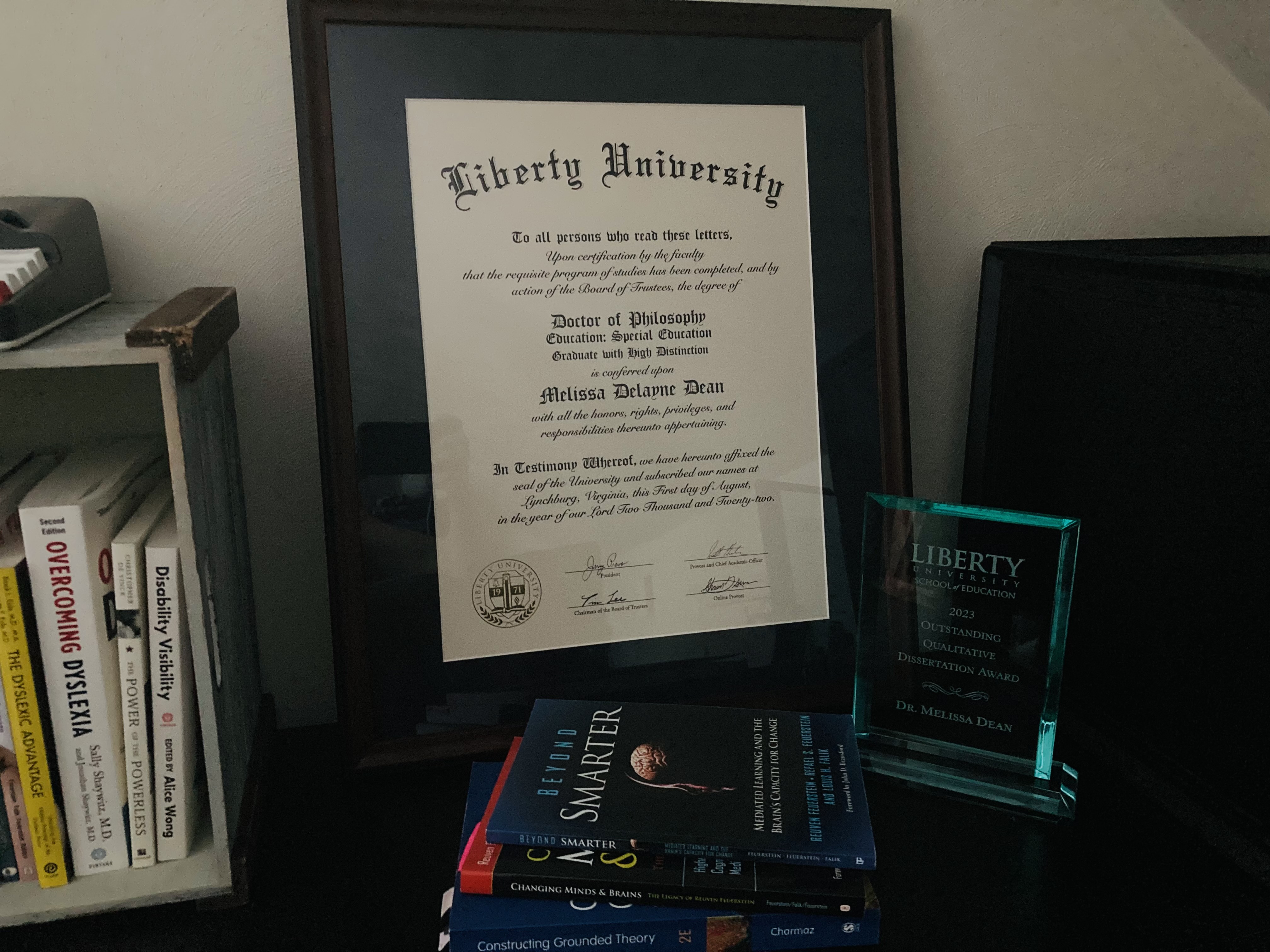
Shortly after 10 on the Thursday morning of my commissioning ceremony, as I was running errands and about to drive to a haircut appointment, I received an unexpected text from my dissertation chair: “Melissa!!! You just won the qualitative dissertation award!!!!!!” I was stunned. And honored. And a little sad that I wasn’t there to receive it in person. But as the day went on and I shared the news with my family and processed it a bit more, the significance began to register. This was more than just an unexpected accolade to me; it was an external affirmation of a series of choices I had made over the years I spent pursuing that degree…a journey that ended far differently than it began.

I have always valued education. My mom encouraged it in every way, and my dad frequently told me that there were two things in life that no one could take away from me—my education and my self-respect—so I knew it would be wise to have as much as possible of both. Attending college wasn’t a decision I made but an assumption I lived out. And as a lifelong Tar Heel basketball fan, the choice of school was as well. 

Two years after graduating from college and getting married, the military sent my husband to the University of Michigan for a grad school tour. After a four-year long-distance relationship/engagement and two-years of ship deployments, it sounded heavenly to attend grad school together, so I applied to get my master’s degree in English Education at the same time. Surprised by a research assistantship opportunity that I literally stumbled upon in the U-M School of Education women’s bathroom within a week of our move to Ann Arbor, the doors opened for me to pursue basically all the education I wanted while serving in that RA role. By the next spring, I had completed the master’s degree I had originally sought, so the professor I worked with highly encouraged to enter Michigan’s Ph.D. program. The project we were working on had enough data to fuel numerous dissertations, making the opportunity especially appealing. As much as I wanted to apply, I knew my husband would be transferred to Washington, D.C. for a payback tour as soon as he graduated the following spring. It is impossible to complete a Ph.D. in a year and virtual learning did not exist in 1995, so starting the degree and finishing it from afar would have been nearly impossible. I didn’t want a second master’s degree, so I petitioned the Dean to allow me to pursue U-M’s defunct Educational Specialist (Ed.S.) degree, which was basically the coursework of a Ph.D. that culminated in a major paper approved by a committee but not a dissertation based on original research. 

I learned I was pregnant with our first child just weeks after beginning that degree, so I chose to transition from being a research assistant, which required a good bit of travel, to being a teaching assistant. Pregnancy and the Ed.S. coursework coexisted nicely. Even writing the draft of my Ed.S. paper was manageable. My daughter arrived the day after her due date (and my birthday)—six weeks before the end of the semester, her dad’s and my graduation ceremonies, and our move to DC. I couldn’t afford to miss a class and still finish on time, so I took my postpartum donut to class with me, nursed her in my little grad student office between classes, and sat on the floor of my chair’s office calming my colicky baby while discussing the paper revisions necessary to appease the requests of my other committee members. I recall one of the members suggesting I take an incomplete and finish the paper over the summer, but I knew that would never happen. Those weeks were a blur of exhaustion, crying, leaking milk, healing, and doggedly staying the course. Somehow, I finished.

I joked later that I promptly hung both graduate degrees over my daughter’s changing table. As a military spouse, I was at the mercy of my husband’s career demands. Over the subsequent twenty years, I pursued as much work as I could manage—teaching night school, writing for newspapers, editing, and eventually designing courses and teaching online—with promises that “my turn would come.” I hoped to finish that Ph.D. someday and teach at a university and perhaps one day become an author. That day always got pushed into the future…after this, after that…until eventually I couldn’t see it anymore.

Twenty-five years after graduating from U-M, I began applying to doctoral programs while taking the necessary steps to move into a home on my own. To those who don’t know me well, this seemed foolish, but to those who do, it made all the sense in the world. Reading, writing, books, words, ideas, discussions, learning…are what make my heart sing. They are how I process the world. My therapist asked how I would manage the workload with all of the stress and responsibility that was now upon me as a single parent. “School is therapy to me,” I told her, and it truly was.

I assumed my Ph.D. should be in English Education or Curriculum Development, the two fields I had previously studied and acquired the most experience in during my patchwork career. A year into English coursework, however, an external battle prompted me to change direction. I had homeschooled our children for fifteen years with the full support of my spouse, but suddenly that choice was under attack. I made a phone call that changed everything. 

In my conversation with the head of Liberty’s Special Education department, I inquired about the logistics of switching my degree program, knowing that having a terminal degree in the field would end any future conversation about my capacity to homeschool children with special needs. What I didn’t realize at the time was that I was also marrying my professional and parenting lives in a way that would benefit me and the children for years to come. I was also forming a relationship with an incredible professor who would become my mentor and eventually my dissertation chair.

The journey from that conversation to last year was both challenging and invigorating. I loved being a student of a field that so directly affected my own children, and I was exposed to theories that completely revolutionized my views of education, teaching, parenting, and the potential of all learners. Completing my coursework and entering the dissertation stage was simultaneously exhilarating and terrifying. Choosing a topic, however, was simple for me. I knew that even though it would attract no attention in my field, I wanted to study families who chose to homeschool learners with special educational needs and disabilities—families just like mine.

The dissertation road is never smooth—approval delays, finding participants, interviewing, transcribing, and coding are all part of an arduous and very non-linear journey, much of which is completely out of the researcher’s control. I had hoped to graduate in the spring of 2022 but that extended into summer. My dad had been diagnosed with cancer and expressed his desire to see me graduate before he lost the battle he faced. On a mission to grant his desire, I resigned myself to the idea that “done is better than perfect.” But when I started to analyze the data and write Chapters 4 and 5, I quickly realized that I couldn’t tell my participants’ stories any other way than with the justice they deserved. My participants were me, their children were my children, and their voices deserved to be heard.

I submitted my final draft, defended in July 2022, and technically graduated that August. Even though I wasn’t there to receive it, learning that of all the qualitative dissertations submitted in Liberty’s Education Department for the 2022-2023 school year, mine was chosen for distinction overwhelmed me with gratitude, not so much for the award but for the affirmation of all the little choices that led to it:  the choice to postpone the degree for over two decades; the choice to homeschool; the choice to adopt children with special needs; the choice to enter a new field at the highest level during a time of such intense personal stress and transition; the choice to study a low-profile, marginalized population that means the world to me but offers no professional currency; and the choice to finish strong instead of just finishing. 

Outsiders may not realize how remarkable it is for a dissertation about homeschooling learners with special educational needs and disabilities written by a single mom over fifty to be recognized but I know, and it overwhelms me with gratitude and affirmation. I could not have produced that research and its resulting model apart from the choices I made and the experiences I had in the years that have passed since I drove away from Ann Arbor, Michigan in 1996, leaving so much behind.

So now my degree hangs in my guest room office where I work at odd hours of the day and night for a local non-profit doing what I expect to be incredibly meaningful work in service of things that truly matter to me. My primary job is and will continue to be that of mother and teacher to my kids, but I now see how inseparable that is from everything I am and how much better it makes me at anything I choose to do. My mother-self and my other-self are truly one, and I finally realize—and celebrate—the value of that marriage.

A Celebration Story

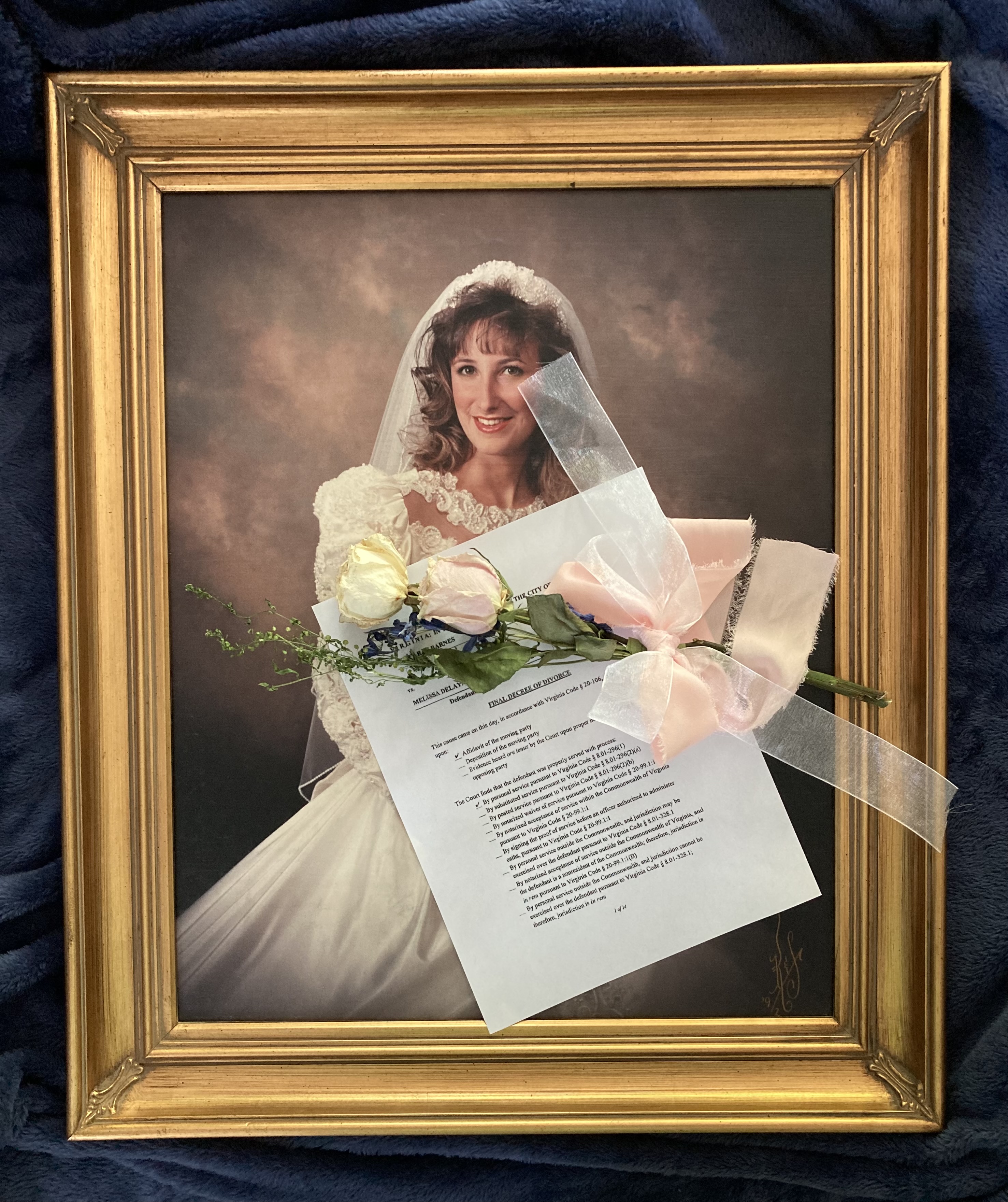
On December 4, 2017, shattered, depleted, and afraid, I filed custody and support petitions in Chesapeake Juvenile Domestic Relations Court. Though I knew they were necessary, I signed them reluctantly and with hope still in my heart for the restoration of our marriage. That hope faded over the coming months as our marital home became an increasingly unsafe space for me. 

Our marriage counselor implored me to “make a safe and sane home for [my]self and [my] children,” and with the support of my family and a handful of friends-who-feel-like-family, I did that. If anyone had tried to tell me what the next few years would bring, I would not have believed them. The journey from that day to April 25, 2023—my divorce finalization day—has been both the darkest and brightest of my life. The story of these past five years, filled with delays and shenanigans, rivals the script of the most absurd soap opera. That is a story for another day. Today’s story is one of celebration.

I used to say that the failure of my marriage was the greatest tragedy of my life. I no longer believe that. Though I made an abundance of mistakes, dating all the way back to the age of fifteen, I would do it all again—even if the outcome was the same—because without that exact marriage, I would not have the family I have today. And though outsiders may view my family as broken, I see it as mended and more beautiful today than I could have imagined. The tragedy was not the mistakes that led to the marriage, its long but toxic life, or its ultimate demise but that I completely lost myself in the process. During these waiting years, I have grieved, healed, rediscovered myself, and learned what love really is. Through it all, I was carried, protected, defended, and put back together by a God I know to be utterly faithful and trustworthy.

Though I reclaimed my name at the point I realized my marriage was beyond hope of restoration, finalizing the divorce closes the circle and completes the journey of my marriage. In his book Daily Prayer with the Corrymeela Community, Pádraig Ó Tuama shared a “Prayer for a new name,” a beautiful reflection of the story of Hagar, the discarded servant who God found in her wilderness exile. She named him El-Roi, “the God who sees me.” In his prayer, Pádraig Ó Tuama wrote:

We have walked far,
and seen many things
and now,
because of what we have seen
because of where we are going
because of where we are
we give this new name now.
We do not destroy past names,
because they have brought us here.
We celebrate the new name
That will bring us on.
(p. 49)

I do not celebrate my divorce, no matter how necessary it was for my survival and is for my closure, because at its root, a divorce represents the fracture of a covenant and in my case, of a family. I do not wish to destroy the memory of the marriage—even its darkest parts—because it brought me here. Instead, I choose to celebrate my journey through and out of the marriage. Those thirty years constitute what (I hope) will be at least a third of my life and cannot be separated from who I am today and will be in the future. I celebrate my survival and the ways God is putting me back together, keeping the pieces He intended and discarding the ones others imposed on me or that I acquired through my own mistakes.

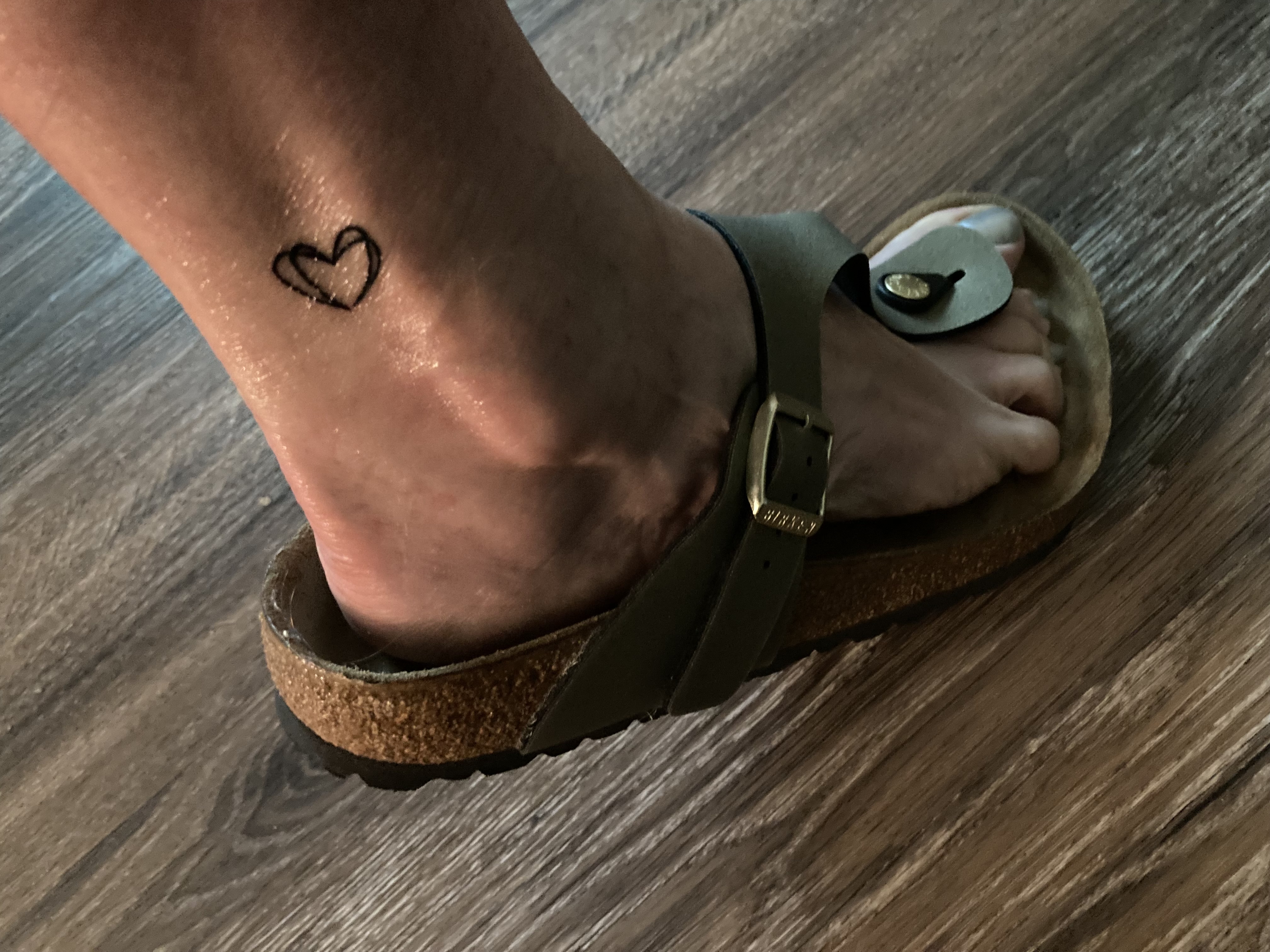
I celebrate the lessons I learned these past five years—some once known but forgotten, others altogether new discoveries. I now know that I am more than a possession. I know that truth emerges in time. I realize that it is far more important to notice what people do than to believe what they say or what they say that they do. I have learned that letting my life speak is much more powerful than any verbal defense I could offer. I know that having gifts and dreams is not narcissistic but that devaluing or belittling the gifts and dreams of others may be. I know that I can change, and that it is best to walk away from a relationship with anyone who believes otherwise. I have accepted that sometimes it is more important to be saved from a marriage than for that marriage to be saved. I have learned to make every effort to avoid bitterness. I have learned that both grief and forgiveness are necessary but ongoing processes. I have learned that my purpose can be found internally—in what makes my heart sing and what breaks it—and in the exact life God gave me, not in someone or something external and elusive. And I have learned that God requires love above all else—love of Him, love of others, and by extension, love of self—a lesson I have chosen to have symbolically etched above my right ankle as a personal Ebenezer stone.

I also celebrate the people who surrounded, supported, and accepted me through all the stages of the journey—the friends and family who remained when others walked away and those temporarily blinded who returned with open eyes. I am grateful for the new friends who stepped into the mess and joined the reconstructive work. I am indebted to the counselors, pastors, and spiritual director who guided me through grief and into forgiveness and gave me tools with which to rediscover myself. Finally, I celebrate the selfless, honorable, pastoral man and his wife who sacrificed so much time and energy to advocate for justice on behalf of me and the children—a justice that is tragically elusive for most women whose life choices leave them as powerless as mine did. None of these people are named in this space, but I will always remember their names, the wisdom they shared, and how God provided for me through them.

Over time, I will share my story more fully and deeply in whatever ways God prompts and allows. I will also advocate for and encourage others who find themselves in situations like mine because that is how we make sense of our senseless stories. In the meantime, I celebrate closing the circle of my marriage—a marriage that produced the eight children that have been, and will always be, my greatest gifts and a picture of redemption to me; a marriage that revealed to me an utterly trustworthy God who fights on my behalf even when I do not understand His ways or His timing; and a marriage in which I made countless mistakes that left me shattered into pieces but that also allowed me to be remade into someone who is better for the breaking and the mending. And now that that circle is closed and celebrated, I step eagerly into new seasons, bursting with song and ready to dance!

“You did it: you changed wild lament
    into whirling dance;
You ripped off my black mourning band
    and decked me with wildflowers.
I’m about to burst with song;
    I can’t keep quiet about you.
God, my God,
    I can’t thank you enough.” (Psalm 30:11-12, The Message)

Carolina Girl

Some of my earliest memories include the sounds of basketballs…the rhythmic staccato of a dribble, the solid thump against a glass backboard, the springing vibration of a metal rim, the swish of a net. My dad took me to the junior high gym where he coached in Mecklenburg County as soon as I could walk. From there, I played hours on the asphalt cul-de-sac outside my childhood home and eventually found my way to the gymnasium where I spent the majority of my high school days, not playing but managing and scorekeeping for the Millbrook Wildcats. Every close friend and every guy I ever dated was a part of that team, and I loved every minute of it—from the daily practices to the games and everything in between. I spent hours crafting pre-game encouragement notes and treats to leave on the guys’ lockers week after week. I could sing along with all the beats that filled the air of every away-game bus ride. Rhymes by Run-D.M.C., LL Cool J, Doug E. Fresh, Kurtis Blow, and the Beastie Boys still randomly shuffle through my mind’s soundtrack.

Throughout childhood, I clipped newspaper articles chronicling every Carolina Tar Heel basketball game and carefully adhered them to the pages of magnetic photo albums. As my senior year approached, I typed a resumé and secured a letter of recommendation from our former coach, my high school mentor Chet Mebane, in pursuit of my dream of being a Carolina basketball manager. Receiving the letter from Coach Bill Guthridge notifying me that I had been accepted as a Junior Varsity manager during my freshman year at UNC was almost as exciting as receiving my acceptance letter to UNC, my lifelong dream school and the only college to which I applied.

Being a Carolina basketball manager at even the JV level was exhilarating—a ton of work and even more fun. I spent countless hours of my freshman and sophomore years in the Dean E. Smith Center. We worked all JV practices, all varsity home games, and all JV home and away games. In the summer, we served as counselors for Carolina’s Basketball Camp. I smelled of sweat, oranges, and Gatorade as I slung towels, wiped floors, chased basketballs, and handed Dixie cups of Gatorade to players—J.R. Reid, Hubert Davis, Jeff Lebo, King Rice, Scott Williams, Rick Fox, and many others. I had the privilege of sitting behind the legendary Coach Dean Smith at every home game and will never forget the time he complimented my sweater as we passed in the Dean Dome stairwell that connected the locker room level to the basketball offices.

I let my Carolina basketball manager dream die on a vine that eventually choked out several other dreams and aspects of my identity. Like many teenage girls, I invested too much effort trying to secure a very unhealthy relationship and sacrificed friends, experiences, and beliefs along the way. In the years that followed, I attended games here and there and loosely followed some of the UNC teams from afar as military moves took me out of the Tar Heel State. But mostly I forgot the girl whose blood had bled Carolina blue all of her life.

In 2021, longtime UNC Coach Roy Williams retired. When his successor was named, I did a double take. Hubert Davis was my classmate at UNC and the player I knew the best in my time as a manager. We both wrote letters in the Dean Dome bleachers to our long-distance romances and even went on double-dates when they were in town at the same time. He was hard-working, kind, and humble and I had tremendous respect for him as a freshman surrounded by big stars—stars I later learned he had gone on to outshine. Graduating from college before cell phones or email addresses even existed, I lost touch with most of my college friends. With my head in the proverbial Carolina basketball sand for three decades, I had only a general awareness that Hubert had played professional basketball and spent some time as a commentator, so I was genuinely surprised to learn he had even been an assistant to Coach Williams, much less in the running to succeed him. But I have Hubert to thank for helping me find a piece of myself that went missing for far too long. 

Curious to see my former classmate coach, I began tuning into the UNC games late in the 2021-2022 season. My Carolina blue blood started pumping again as I pulled for this this come-from-behind team and its humble, faith-filled coach I respected so much even when he was just an 18-year-old freshman baller. I pulled out my 1980s Carolina newspaper clippings, dug up photos from my years of managing in high school, updated my UNC gear, and introduced my kids to the joys of being a Tar Heel. I will always remember the April 2022 night that we beat Duke in the Final Four, which was awfully close to as exhilarating as winning the NCAA title two nights later would have been (not quite, but VERY close).

This 2022-2023 season was the first time in thirty years that I have closely followed a Carolina team, watching almost every single game from start to finish. I have loved waking up on game days, choosing how the kids and I will rep the team, and timing our evening routines around timeouts so I wouldn’t miss any plays. It was a rough season that culminated in Carolina becoming the first team ranked number one in the preseason who did not even make the NCAA tournament. My heart broke for Armando Bacot and his fellow seniors and teammates who had descended from the mountain of the NCAA Finals to the valley of an NIT invitation. The social media chatter has been brutal! Seeing how fickle the “fans” can be, I made it a mission to always be the encouraging fan in the comments. We may be accustomed to success, but a true Tar Heel is loyal no matter what challenges a given team faces–the only kind of fan I want to be.

I lost so much of myself in my efforts to navigate adulthood, parenthood, and an unhealthy marriage. Over the past five years, I have slowly begun to pick up the lost pieces of myself and see how and whether they fit into my life now. I have been rediscovering loves I buried, digging up beliefs I denied, and reigniting passions I had forgotten. Part of the process has been accepting the loss of some of my dreams to broken promises and others to poor choices or my own martyrdom. Part of it has been making peace with my roles in life.

Remembering and rediscovering my passion for UNC basketball has not only been super fun but has given me a new perspective on a piece of myself. When I remember my years as a high school basketball manager, I think so fondly of the friends I made there and the times we shared. I think of how valued I felt by the coach and players as I repeatedly performed the monotonous but essential tasks of ensuring the players were hydrated, safe, and encouraged and that their efforts were accurately reflected in the scorebook. I never desired to be on the floor making the plays but thrived in my element of team caretaker and encourager. 

Picking up this lost piece of myself and reflecting on it in light of today has given me a new perspective on what appears to be my life work as a caretaker and encourager. Seeing it through the lens of my past joy as a Millbrook Wildcat and UNC Tar Heel basketball manager has helped me realize that caretaking, encouraging, and managing are actually central parts of my identity—how God knit me together—not something that just happened to me or that I must resign myself to accept. I willingly chose those roles as a teenager who had the freedom to make an array of choices. I played the roles naturally and well and found them very fulfilling. The people I met in those contexts were “my people,” and I have even reconnected with some of them over the past few years. The revelation that my life today actually reflects my heart thirty years ago has brought me much-needed peace and joy.

As I watch my Heels play each game, I always notice the hard work of the managers on the sidelines. A part of me will always wonder if I would have ever made the elite Varsity Manager team. The odds were not in my favor, but I’ll never know because I walked away from the opportunity. Instead of focusing on what I can’t recover, however, I am choosing to be grateful to have rediscovered something I temporarily lost. I am having a blast sharing Carolina basketball with the people I love most in the world—my kids—just like my dad shared it with me. 

I thought that when the NIT kicks off this week, I would be glued to my TV, decked out in Tar Heel gear, cheering for Leaky, Armando, Pete, Caleb, and R.J., regardless of what postseason tournament title they pursued. However, shortly after the NCAA brackets were announced, UNC Basketball released a statement saying that the team is choosing not to participate in the 2023 NIT. Coach Davis stated that “now is the time to focus on moving ahead,” a lesson I have learned well these past five years. I respect his discernment in making that choice and the wisdom of putting what his players need ahead of what may be expected. So I will pack my UNC gear away until next season when I will eagerly cheer on the next Tar Heel team. Win or lose, I won’t forget my roots again…

I’m a Tar Heel born.
I’m a Tar Heel bred.
And when I die I’ll be a Tar Heel dead.
So it’s rah rah Carolina-lina.
Rah rah Carolina-lina.
Rah rah Carolina-lina–go to hell Duke!

Welcome back, Carolina Girl. I missed you.

Courage to Write

The violent attack on Salman Rushdie troubled me on multiple levels. Previously, I only knew of him from media reports I read about following the controversial publication of The Satanic Verses. Realizing the threat he has lived under for decades because of ideas he had and words he penned and that he now has “life-altering injuries” as a result of his willingness to stand on a stage intended to provide a safe space for persecuted voices, is both humbling and terrifying. 

Sadly, it is not a new story.

I think of Bryan Stevenson enduring countless threats against his life to write on behalf of justice for the incarcerated. In his memoir Just Mercy, Stevenson described one of the numerous bomb threats his office received, “After we cleared the building, the police went through the office with dogs. No bomb was found, and when the building didn’t blow up in an hour and a half, we all filed back inside. We had work to do” (p. 204). Despite the threats, Stevenson has devoted his life to a call to “[b]eat the drum for justice” (p. 46).

I consider Valarie Kaur as an undergrad driving across the country in the days immediately following the September 11 terrorist attacks, bravely capturing the stories of the violent hate crimes inflicted on Sikh Americans, Christian Arabs, South Asian Hindus, and Black Muslims. She reflected in her memoir See No Stranger, “I didn’t understand it then, but recording the stories was secondary to our real work—grieving together” (p. 43).

I recall Frederick Douglass risking his life to acquire literacy and then continuing to risk it to educate and inform his fellow slaves. Not only did his courage lead to freedom, but in taking the further risk to publish his narrative, Douglass continues to enlighten those of us who desperately need a glimpse of the atrocities of slavery in order to understand our own times.

As a writer and a writing teacher, I think about words constantly. I’m the rare soul who punctuates her texts and re-reads her emails five times before sending them to be sure they say exactly what I intend. Even then, there is plenty of room for “error,” as written communication is a reciprocal process between a writer and her reader. Each brings her own experiences and understanding to the text, creating a beautiful symbiosis where meaning is constructed not imparted. 

Our culture allows for the instant sharing of ideas on very public platforms, such a difference from the context in which Rushdie first garnered such outrage. This makes the work of a writer that much riskier. Now we are immediately banned, cancelled, labeled, and attacked in a myriad of ways for sharing our thoughts and our stories. 

However, the greatest risk is to the individual banning, cancelling, labeling, and attacking others, for a closed mind is a dark, lonely, and dangerous place. We cannot be afraid to read and hear the stories of those with whom we disagree. We cannot silence people because we don’t understand them or their experiences. And we cannot let those who are afraid of our truths keep us from writing or speaking them. 

I remember soon after the murder of George Floyd, I shared a list of resources related to racial justice on my Facebook page. A “friend” suggested I remove it because of the potentially inflammatory nature of some of the texts on the list. I politely declined, thinking that fear of reading someone else’s truth is a tremendous hindrance to the understanding and healing our nation so desperately needs. The confirmation hearings of Ketanji Brown Jackson and the educational debates about critical race theory evoked similar feelings of puzzlement and dismay in me. Why would I be afraid for my children to read and hear multiple perspectives? It is honestly more terrifying to think of them growing up with a narrow, one-sided view of the world.

Just as we must all have the courage to write and speak our stories, we must be equally eager to listen as others share their experiences in trustworthy spaces such as those encouraged by Parker Palmer and The Center for Courage and Renewal. In Palmer’s circles of trust, the philosophical underpinning is that “each of us has a voice of truth within ourselves that we need to learn to pay attention to.” The safe spaces created by establishing “a few basic operating principles” that include “no fixing, no saving, no advising, and no correcting each other” allows a place for individuals to be “alone together or in solitude in community” where “anyone can say anything they regard as true into the circle” (The Greg McKeown Podcast, Season 2 Episode 17).

As Kaur wrote, “Deep listening is an act of surrender. We risk being changed by what we hear. When I really want to hear another person’s story, I try to leave my preconceptions at the door and draw close to their telling” (p. 143). 

Stevenson has been driven by a similar philosophy influenced by his grandmother, the daughter of Virginia slaves, who constantly told him, “You can’t understand most of the important things from a distance, Bryan. You have to get close.” He has devoted his life to maintaining “[p]roximity to the condemned, to people unfairly judged” and to righting “the injustice we create when we allow fear, anger, and distance to shape the way we treat the most vulnerable among us” (p. 14).

Kaur went on to acknowledge the difficulty of listening to someone whose beliefs are abhorrent, enraging, or terrifying to you. She concluded that, “In these moments, we can choose to remember that the goal of listening is not to feel empathy for our opponents, or validate their ideas, or even change their mind in the moment. Our goal is to understand them” (p. 156).

My personal experiences with this pale to those of Rushdie, Stevenson, or others whose very lives are at risk from the words they write. But I share their conviction that the risk only intensifies the importance of their work.  

Now in the second “half” of my life, I am relishing the immunity articulated by Richard Rohr who recognized that in this “second half of life, people have less power to infatuate you, but they also have much less power to control you or hurt you. It is the freedom of the second half of life not to need” (Falling Upward, p. 157-158).  

I will always write in support of justice and in opposition to oppression. I will speak out against abuse and racism and sexism and white supremacy. I will advocate for those individuals that society often doesn’t see or hear. I will be the girl in the pew speaking up for love when it seems that judgment often dominates. And I will have the courage to share MY story, MY thoughts, MY experiences, and MY attempts at understanding them. Because no one else can do that for me, and to give in to fear of judgment, criticism, conflict, or cancellation is to give up freedom. As New York Governor Kathy Hochul said after the vicious attack on Rushdie, “I want it out there that a man with a knife cannot silence a man with a pen.” 

So as an oppressed Disney princess once belted: “I won’t be silenced. You can’t keep me quiet–won’t tremble when you try it. All I know is I won’t go speechless.”

The Space Between

I squinted uncertainly at the light peering in through my daughter’s window, struggling to clear the fog of a too short sleep. Beneath the fog laid an awareness that I was in that precarious space between. One year had ended just before I fell asleep, and I had awakened to another. As Lucy pushed back the coats of the wardrobe and stepped onto the crunchy snow of Narnia, I greeted 2022 with curiosity: Will you be as bizarre as your two older siblings in the second decade of the 21st century? What unimaginable losses and gains will we tally to you a year from now? Will I graduate this year? Will I find the fortitude to launch another adult child, knowing the crater that will leave in my days? What new barriers will my youngest children break? Will I finally be divorced this year, or will I “celebrate” thirty years of marriage marriage in May? Will this year be a year of healing for the father I am certain I cannot live without? What books will I read, words will I write, songs will I sing off-key? Where will I travel? Who will I meet? Where and how will God meet me?

I am surprised by how comfortable the space between has become. For so long I tried to control it, rush through it, or fight it. It was too uncertain, too anticipatory, too unknown. It is still those things, so it must be me who has changed—or more likely, me who has been changed. In so many ways I have learned to live in a perpetual space between; perhaps that was the only way I could begin to tolerate ambiguity—to learn to trust. For so long, I planted my feet on shifting unstable structures and expected them to hold me up. 

I made so many of my life’s greatest mistakes in an effort to squirm out of the discomfort of the space between—so uncomfortable living with heartbreak or loneliness that I was willing to close my eyes and put my fingers in my ears while marching further into unhealthy situations because turning to the right or left—or worse, going backward—seemed unbearable. The toxic familiar becomes deceptively safe.

Some of the spaces between seem unbearably difficult—infertility, a terminal diagnosis, a catastrophic injury. I recently read and was forever changed by the memoir of Anthony Ray Hinton, an innocent man who spent thirty years on death row. In reflecting on a turning point in his unjust, inhumane incarceration, Hinton wrote: “…I realized that the State of Alabama could steal my future and my freedom, but they couldn’t steal my soul or my humanity. And they most certainly couldn’t steal my sense of humor. I missed my family. I missed Lester. But sometimes you have to make family where you find family, or you die in isolation. I wasn’t ready to die. I wasn’t going to make it that easy on them. I was going to find another way to do my time. Whatever time I had left. Everything, I realized, is a choice. And spending your days waiting to die is no way to live” (The Sun Does Shine, p. 118).

Hinton’s situation was truly unimaginable. He lived in a horrifically unjust space between—a space between justice and injustice, between truth and a lie, between imprisonment and freedom—and until the Equal Justice Initiative become involved in his case, he had no tangible hope to leave that space. Even when Bryan Stevenson agreed to represent Hinton, the space between extended for twenty-six more years—far too many. Reading how Hinton used his space between to learn and serve and love and forgive will forever be one of the most inspirational experiences in my life. Hinton made those choices with absolutely no guarantee that his space between would not dissolve into his final space.

Ultimately, isn’t all of life the space between? Not of this world, my heart longs for eternity; however, recognizing this does not mean living in constant limbo or uncertainty, for unlike the space between of the days and years of life, eternity has a seemingly contradictory concreteness about it—being both incomprehensible and utterly safe because the God who promised it is both mystery and certainty.

Sure, there are inherent restrictions in my space between. Until I graduate, I cannot write or teach as a PhD—at least not in any formal capacity. Without the closure of divorce, I cannot seek another relationship—at least not a healthy one in which I have a truly free, truly whole, truly healed self to offer another. I have learned to anticipate those events with an expectancy rather than an urgency—exploring the space between instead of trying to deny it or fill it prematurely. 

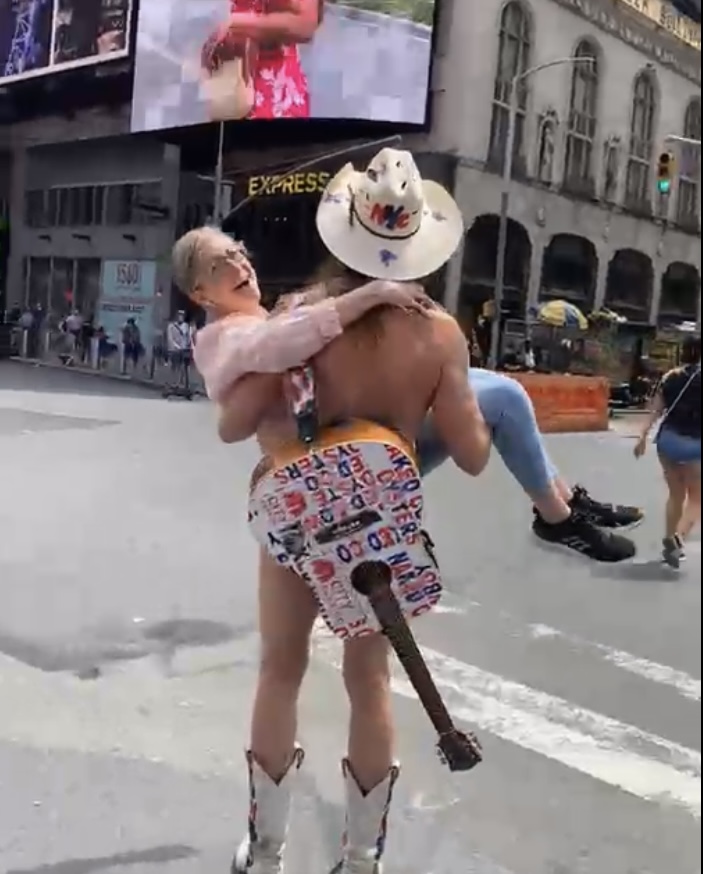
Now it is July and this year is half over—I did celebrate my 30th wedding anniversary with a glorious (and borderline scandalous) trip to New York City in honor of my daughter and her best friend’s high school graduations. I was unexpectedly whisked off my feet by the infamous Naked Cowboy who serenaded me in Times Square with a slightly crass anniversary song. I saw all but one of the original cast members in Hadestown, an incredibly thought-provoking show that is also about the space between, in its own way. And then I came home, got COVID, healed, finished my dissertation, and lost my teaching job for next year due to lack of enrollment in this crazy economy.  

So much is still unknown about this year—I might graduate, my divorce might finally be finalized, I might find a new job. Perhaps another cowboy will whisk me off my feet? Beyond that, who knows? When I submitted my complete dissertation draft, a friend asked if I felt light as a feather. I told her “Not yet. I feel like I gave birth to a baby who is in the NICU and I’m not sure how long it will be there.” But that doesn’t scare me like it used to—this space between. It forces me to trust, makes me comfortable with mystery, and keeps me from thinking I am in control—vital components of a life of faith in a God who reveals Himself but not necessarily His plan. The only life for me.

Secret Scars

This is a piece I wrote several years ago as part of my own healing process. I did not share it at the time because it felt too raw. A few weeks ago, I was reminded of it and the very next day witnessed an incredibly brave public admission of addiction by a young man I know. His willingness to shine a light on his own struggles convicted me that if I mean what I wrote in this piece (and I do), then I am compelled to share my story in hopes of encouraging others who are trapped by shame. Truth and light dispel deception and darkness every time…

As the last parent exited the classroom, I gathered my belongings and quickly headed to my car. Pleased with how the evening conferences had gone, I was equally excited to surprise my husband with an early arrival home. Married eleven months, half of which he had been deployed, we still basked in the newness of marriage. Near the end of the twenty-minute drive, the causeway dumped me right into our apartment complex. I bounded up three flights of stairs to our apartment and turned the doorknob. Surprised to feel the door open slightly and immediately meet resistance, I looked up to see that it had been chained from the inside— by my husband.

Twenty-five years later I sat at a table at my local Starbucks and learned the truth of that night—the whole truth. He dropped it casually into the air as a matter of simple fact— something only a fool wouldn’t have known. A fool like me.

And everything that had seemed fuzzy came slowly into focus as he expounded— “40-year pornography addiction…indulged every year of our marriage…pervasive problem the entire time we were dating and engaged.”

And the memories began to swirl around me like a dementor threatening to suck the very life out of me. The increasing distance, detachment, lack of empathy. The constant need to battle his smartphone for attention. The isolated “incidents” that apparently weren’t isolated—followed by tears and declarations of “I don’t know what came over me.” Lies.

Accusations of being distrustful and unforgiving. Angry outbursts that escalated to abusive verbal and emotional assaults. And then the blame—how powerful I must be to have caused a problem in someone ten years before I even knew him?

And because it numbed him, killed his feelings, and stole his empathy, he easily flicked the crumbs of me off his hands, walked away, and walked straight into another relationship before we even had separation papers. Years of practice gawking at the wives, sisters, daughters of other men seemed to make it easy to take one for his own.

I don’t pretend to know what it did to him internally—only what it did to his interactions with me.

The statistics on pornography use are staggering. Its negative effects on its users are well-documented by scientific research. And for every statistic there is someone bearing secret scars—like tattoos etched on your identity that say Not enough.

Years of dressing in the closet because my body that carried and bore five little souls doesn’t compare to the ones he sees on the screen in his palm. Years of emotional rape…he is with me physically but mentally detached. In his mind I could be anyone—or no one. And I know but I don’t know. And I don’t really want to.

Like most women with secret scars, I try to contain it—control it away. We do all the wrong things. We put up walls, protect our heart. We close our eyes and go through the motions. And we desperately want to protect our children—our sons AND our daughters, but in different ways. Only it’s nebulous and uncontainable, and protection only comes from within.

So we tell ourselves it doesn’t matter. It isn’t about us. But then we are lying too. Because it does and it is.

And when the grief and the pain finally take us to the end of ourselves, we find truth.Created in his own image. Fearfully and wonderfully made. Loved…with an everlasting love. Temple of the living God (Gen. 1:27, Ps. 139:14, Jer. 31:3, 2 Cor. 6:16).

And we realize that even though it seems that he betrayed us by giving himself to thousands of others, he is really the one betrayed. Sold a lie by the enemy—that momentary, physical pleasure is supreme. That deception and intimacy can coexist. That a covenant is not a covenant.

And though it seems that we saved ourselves for the wrong man—that we have been deprived of a pure, true love—that too is a lie. Because “as the bridegroom rejoices over the bride, so shall your God rejoice over you” (Isaiah 62:5, ESV). The gift of ourself, our body, our love was not wasted. It was received and cherished by the one who created us and set us apart for His purpose and His glory.

But the scars don’t need to be secret. Shame and embarrassment and regret make us wrap our scars up tightly in shiny smiles and shallow words and pin them shut with pride. But uncovering the wound—exposing it to light and air—not only brings healing; it also speaks the truth to other women with secret scars who need to know they aren’t alone and they aren’t to blame.

Only when we are transparent—about the betrayal and rejection, about our tattooed identities—can others see Jesus through us. See Him hanging there on the cross, painting our secret scars with His blood—like liquid skin—permanently healing our deepest wounds.

Dear 2020,

I’m sure you’ve heard all the jokes going around about you. You definitely caught us all by surprise. You came in so hip and fun with your double 20s—and the vision pun potential was tremendous. But with the roar of a March wind, you shifted on us, and we’ve all been kind of stumbling round in the whirlwind of you ever since. Our eyes are clouded by the debris and dust, and we all have wounds of some kind. Some of us died literally; others died emotionally—or lived but lost our will to live. We witnessed things we never expected to see in our lifetimes—piles of pandemic body bags, horrific acts of racial injustice, and an embarrassingly polarizing national election filled with hate and judgment. 

Our usual media feed of sports stars and Hollywood celebrities was replaced by images of mask-scarred medical workers, first responders, and teachers—the true heroes in our world finally being recognized for the sacrifices they make every day of every year. That act of service alone makes you a year worthy of praise.

Personally, 2020, you felt like an ordinary year with a few bizarre circumstances thrown in the mix. Granted, it was one of my more challenging years, mainly because of seven surgeries and four hospital stays for Tess, my sweet, strong overcomer. It was heartbreaking to watch two of my children lose their high school and college experiences like prom and graduation, and I felt the loss of not seeing much of my friends and family in person. I dearly missed our usual activities like Special Olympics and the Broadway tour season and simple acts like going to movies in the theater. It does irk me to leave 2020 still married with no end in sight, but God has promised to redeem my years of waiting for court dates and closure. Thankfully nothing about this year has changed the fact that God always keeps His promises. 

On the brighter side, 2020, you brought me a new son-in-love on the most beautiful wedding day imaginable, a day I have already and will continue to replay in my mind over and over because it was truly filled with nothing but joy! And the way our friends came together to make that day happen amidst COVID challenges is something I will always cherish. I had the opportunity to develop a new course this year, something I enjoy so much despite the stress of it. You will also be remembered as the year I finished my doctoral coursework, the fruit of two and a half years and countless hours of labor that I enjoyed with all my being. (Though I cannot say I’m sorry to start my dissertation in a different year—just to be safe.)

So many things actually stayed the same for me in your presence—I worked online from home, went to school online from home, schooled my kids from home, shopped mostly online, and had my groceries delivered—things I did well before you normalized them. I honestly appreciated the slower pace of having less places to go and more time to savor the experiences I did get to have. I think I connected more deeply with my kids and other family and friends because we talked more and did less. My house stayed (a little) cleaner, I think. And I even found a wellness plan I love and want to do consistently—a first in over twenty years (really in my whole life if I’m honest). 

For me, the main difference in 2020 was feeling less isolated, which I realize is counter to most of the world. Some of the “hardships” that are normal for me—living on the edge of medical crisis and living and working in ways that allow for the constant possibility of the unexpected—are now experiences that literally everyone in the world can relate to on some level. While I would never wish hardship on anyone, the mutual understanding has made me feel a little less alone.

For all your ugly divisiveness, 2020, my chosen optimistic view of you is that ultimately, you will be the year that unifies us like no other. That maybe not now, but in five or ten years we will all look back on you with pride for the perseverance and grit and courage it took ALL of us to endure and overcome some parts of you. The myopia will fade with time, and we will see the whole beautiful picture of you, 2020, and know that we are not alone, we are not weak, and we are not defeated. 

Farewell, 2020. I will savor these last few days of you—days of Christmas and the birth that gives all years meaning. And yes, I look forward to the promise of a new year, albeit a bit more skeptically than last year—but not bitterly or without hope. 2020, you are unforgettable for sure, but you are also beautiful in your own way, and I think the very best thing we can all do is to be grateful for you. 

Love,

Melissa 

“Give thanks in all circumstances; for this is God’s will for you in Christ Jesus.” (1 Thessalonians 5:18)

Living Fearless

img_6709I’m sitting in a coffee shop in a sketchy section of Orlando, Florida, a couple of miles from the law school where AMCA Moot Court Nationals will be held in a few hours, seriously questioning my priorities. Sunny day, zippy rental car, no kids—and I am going to spend the day watching moot court rounds inside a law school?!? And I’m excited about this?!? I literally passed the exits for Disney World, Sea World, AND Universal Studios to get here!?!

Once I found my exit and the law school, I searched coffee shops because—PRIORITIES!!!  The first one that came up must have closed down because nothing near that address had any semblance of the word coffee in it. I drove around, remembering my friend Amy’s warning to keep my possessions with me at all times and to avoid the street corners with prostitutes. Simple enough.

I spotted this lone coffee shop on an otherwise empty street and circled the block about three times before finding a paid parking lot behind the building. As I walked through the alley between the lot and the front of the building, I heard a loud boom followed by a siren. I jumped—and briefly entertained the thought that someone may have just been shot. “Oh well,” I thought, “if this is the way I go out, so be it.”

The inside of this coffee shop feels like a garden. Plants everywhere, a plant mural painted on one wall, flooring made to look like a worn outdoor patio, and garden-style patio tables and chairs. I ordered a craft latte called Pacific Fog—lavender syrup, honey, and pink Himalayan sea salt—complete with the classic heart-crafted-in-steamed-milk. When I set it on my table beside the plant and opened my computer to grade papers, a question tumbled out instead:

Why did it take me so long to live fearless?

To even get to the state of Florida, I had to orchestrate a small army of people to cover my life, AND I had to overcome my fear of flying. I have overcome that fear numerous times over the past several years as I traveled with Marina and Jonah to various speech and debate competitions. But it was different traveling with them somehow—my maternal instincts to protect them from something that didn’t remotely scare them somehow made me brave.

In many ways, it is really pitiful that something as simple and commonplace as taking a plane to another state for the weekend constitutes bravery to me, but that is another question altogether. What matters is that something inside me is changing for the better, and I like it!

I recently read a memoir by Allison Fallon called Indestructible: Leveraging Your Broken Heart to Become a Force of Love & Change in the World. The book itself frustrated me in many ways, but some of the people the author quoted in her story spoke deeply to me. One was a woman named Robi Damelin whose son was a Jewish soldier killed by a Palestinian sniper. She said, “When the worst thing that has ever happened to you happens, you realize you don’t have any reason to be afraid anymore.” (Indestructible, p. xviii)

I think this is what is breaking open most of the fears in my life. The biggest ones were realized, and now the remaining fears have lost their power. Still present but no longer paralyzing me.

It is hard not to regret the many years of fearful living, both the tangibles—afraid to leave my children, afraid to fly, afraid of physical pain, afraid of death—and the intangibles—afraid of betrayal, afraid of loss, afraid of failure, afraid of disappointing people. I know I would have been a better mom, wife, and friend if I had lived more fearlessly. I would have gripped everyone and everything a little looser, and that would have been better for all of us.

All weekend as I drove I-4 in my zippy rental car, the album Beautiful Surrender by Jonathan David and Melissa Helser was my faithful companion. It includes the song “No Longer Slaves,” a song significant in my journey out of an abusive marriage. This weekend, though, another song caught my attention—“Catch the Wind”—a power song, perfect for blaring in the Florida sun on a weekend away:

I am strong and full of life; I am steadfast, no compromise.  I lift my sails, to the sky; I’m gonna catch the wind.

I am bold, no fear inside; Spread my wings, open my life.  Like an eagle, whose home is the sky; I’m gonna catch the wind.  

I’m gonna catch the wind.

This is not how I have lived most of my life. I’m a firstborn for one thing, which gives me a naturally cautious and responsible nature. But living fearless is not the same as living careless or reckless. Living fearless is living free from worry, regret, and shame. It is trying new things, going new places, meeting new people. It is valuing experiences over the inconveniences of obtaining them. It is stepping out of your comfort zone and realizing that while slightly terrifying, there is so much worth seeing and doing in those uncomfortable zones.

I’m still afraid of flying. I was “that girl” on every flight I took this weekend. The one everyone eyed with a touch of fear as she swung her too full carry-on into the overhead bin, secretly praying they would not be the passenger afflicted with a black eye when I missed my mark (no one suffered this fate). I was the one popping Dramamine when we hit turbulence, grabbing the back of the seat in front of me, and feeling around to ensure the nausea bag was in the seatback pocket. I was the one playing Julie True through her headphones and envisioning angels carrying the aircraft through the snowy skies we encountered well past the Florida line, in order not to completely freak out and terrify everyone around me.

Living fearless in so many ways yet still so very afraid.

In Joyce Meyer’s book Living Courageously: You Can Face Anything, Just Do It Afraid she writes: “Courage is not the absence of fear; it is fear that has said its prayers and decided to go forward anyway. I was tormented emotionally and prevented from doing many of the things that I wanted to do for many years simply because I was waiting to not feel afraid, but then I discovered that I could ‘do it afraid’…When we confront our fears with faith in God, we might still feel the effects of those fears, but they cannot stop us. Fear must eventually bow its knee to courage—it has no other choice.”

This truth reminds me of another piece of counsel I received from a wise and beloved doctor—Dr. Bear, the kindly family physician to Franklin the Turtle who, in fictional storyland, also acts as the community orthopedic surgeon. (Yes, too much medical knowledge really ruins good children’s books.) In the story, Franklin took a soccer ball to the chest and cracked his shell. Dr. Bear was about to operate on Franklin to place a pin in his shell, but she ordered an x-ray first. Franklin was distraught because Dr. Bear told him that the x-ray would be pictures of his insides. He confessed, “Everyone thinks I’m brave, but I’ve just been pretending. X-rays will show that inside I’m scared.” Dr. Bear reassured Franklin that x-rays only show shells and bones, not feelings. But then she said, “But just because you’re afraid doesn’t mean you aren’t brave. Being brave means doing what you have to do, no matter how scared you feel.”

I think living fearless is similar. It isn’t that the lifelong fears that have plagued you suddenly disappear. It is that life has shown you that you can survive even when some of your worst fears are realized. And in that survival comes a freedom to be brave. To do it afraid. To live fearless.

And with every flight through the friendly skies and every step through the slums of Orlando and every mile in my zippy rental car, I gained a little more courage and a little more taste of living fearless. And that makes me brave enough to dream of the future.

I’ll start small. Travel to Colorado to see friends and their beautiful state. Go on a cruise. Write a book proposal.

In a few years, I may get a little bolder. Write a dissertation. Fly across the ocean and tour the lands where Jesus walked. Go on a date and take a chance on finding a cherishing kind of love—one like I have never known.

Living fearless. Not careless. Not reckless. Not unafraid. Just aware that when our greatest fears are realized, it paralyzes the ones that remain. And paralyzed fears have no grip on us—no strength with which to grasp us and no capacity to hold us back.

So I am off—to catch the wind and fly…to live FEARLESS. Anybody wanna join me?

For God has not given us a spirit of fear, but of power and of love and of a sound mind.” (2 Timothy 1:7, NKJV)