Risky Business

IMG-5261Two years ago, I stumbled up the stairs of a counseling center in Norfolk. I had not slept or eaten in days. My hair stuck out all over my head because that morning, I had tried unsuccessfully to lift my hairdryer to my head—not because I was too physically weak but because I could not stop crying. A friend had come over to step into my day so that I could find a way to breathe again. When I climbed those steps, I went seeking my way through unthinkable circumstances that had shattered my life. Over the course of that summer, what I found was myself. I did not even know I had lost her.

A little over a month ago, I took a series of “tests” my counselor recommended to help me find focus in my new season of life.  She thought it would help me to better understand my identity that had somehow gotten buried under decades of debris.  Who expects to “start over” just shy of their fiftieth birthday?!? The sense of urgency to “get it right” is a whole lot greater than it was at twenty, so I very willingly engaged in this process designed to help me better understand myself—my needs and values, my passions and strengths.

One of the assessments measured competencies in my life—things I am good at. When the counselor who conducted the assessment shared my top three competencies, I almost choked on my laughter. One of them was “Taking Risks” and it said, “You are motivated to go on adventures and explore new territories. Your desire for excitement and competition will involve you in entrepreneurial and challenging circumstances so you can overcome obstacles and enjoy the rewards of victory” (Pro-Development assessment report).

“That’s not me,” I told the counselor. “I am not a risk-taker.”

He raised his eyebrow at me, “Oh, really? When I first heard your adoption stories, my immediate thought was, ‘That was risky.’”

Right then and there in that small counseling room in Norfolk, Virginia, my reality crumbled. This girl who hates flying in airplanes, who doesn’t swim in the ocean to guarantee she will not be eaten by sharks, and who would not take a million dollars to hang-glide or parasail or jump off a diving board at the YMCA (okay, MAYBE I would jump off the diving board for a million dollars, but it would also require medication of some sort)….this girl is a risk taker?! My mind was blown.

I played with the thought for days, turning it over and around to consider it from different angles. I looked for evidence of it in my life, and slowly I began to see that the problem wasn’t that the test misunderstood me to be a risk taker but that I had a very narrow view of risk. I thought of risk as a physical act—doing things that required signing extensive waivers because they may result in death. And those things ARE risky, and I have absolutely no desire to do any of them. Not one. Ever.

But not all risks are physical—some are emotional, financial, or spiritual. And when I examined my life through this new lens, the past ten years were littered with evidence of risk in all of those areas. And when I scraped away the acts and looked underneath, I saw no innate desire for adventure in myself but a simple longing to live a life of trust.

Today is Easter and we are celebrating the most miraculous event in the history of the world. Yet one of the first things we awakened to was news of the deaths of hundreds of innocent people worshipping and living life in Sri Lanka. And just like that, the darkness threatened to overshadow the joy. I felt darkness try to overshadow my joy before I even heard this news. It was thick like a cloud that surrounded me—blinding, choking, and suffocating me. I can only imagine the thickness of the cloud covering the people of Sri Lanka right now—and of anyone else who woke up on Easter Sunday to devastating news of death, cancer, divorce, or personal despair.

There is only one way to dispel the darkness, and it is risky. It is what motivated Mary Magdalene to go to the Jesus’s tomb before the sun even rose on the day after the Sabbath. It is what emboldened the disciples, despite their gripping fear, to gather in the upper room instead of dispersing and scattering to protect their individual lives. Underneath every risky act is a trust in something—or Someone.

The tomb was dark. Jesus entered it having been physically crucified, one of the most torturous forms of death. Worse than that, He felt utterly forsaken by His father. He descended into hell, the darkest place imaginable. All because He trusted the plan of God the Father and knew the sacrifice required to atone for the sin of every person who has lost him or herself and needs to be found.

So all I know to ask myself today and everyday in the face of personal darkness and international tragedy is, “Do you want to stay in the tomb or do you want to live?”

The tomb may be dark, but it feels safe and familiar. It also holds nothing but death.

To live is to trust the goodness of God in all circumstances—even evil and unjust ones. And when we trust, we risk everything. We hand over our control, our agenda, our feelings, our will, and our very lives. We walk with no view of the end of the path, no sign of the shore, no vision of the story’s ending. And sometimes we experience great pain, disappointment, or loss. It is then that we join in the fellowship of Christ’s suffering, which is both the greatest risk and the greatest reward.

Paul wrote about this risky business in his letter to the Philippian church, “But whatever gain I had, I counted as loss for the sake of Christ. Indeed, I count everything as loss because of the surpassing worth of knowing Christ Jesus my Lord. For his sake I have suffered the loss of all things and count them as rubbish, in order that I may gain Christ and be found in him, not having a righteousness of my own that comes from the law, but that which comes through faith in Christ, the righteousness from God that depends on faith— that I may know him and the power of his resurrection, and may share his sufferings, becoming like him in his death, that by any means possible I may attain the resurrection from the dead. (Philippians 3:7-11. ESV)

I may never swim in the ocean or parasail or even dive off the diving board at the YMCA, but I am a risk taker. The biggest risk I ever took was trusting Jesus—following Him, losing my life, and finding my lost self. Dangerous business. But the alternative is worse than dangerous—it is deadly.


For whoever would save his life will lose it, but whoever loses his life for my sake will find it.” (Matthew 16:25, ESV)
 

Free Indeed

IMG-5217.JPG

Cathy B. lived next door to me on Bob White Court.  Hers was the big house on the hill, so we all flocked to it on snow days.  Some weeks she was my very best friend; others she was downright mean—a very typical childhood girlfriend.

I remember Cathy for all the fun times we had on our cul-de-sac because we grew up in the years just before VCRs and Atari Video Game Systems changed childhood forever.  Our days were spent playing Nancy Drew in the yard, riding our bikes, making up elaborate games with ever-evolving rules, torturing our younger brothers (both named Robert), and playing “house” in the woods behind our house.  That was fun until we accidentally used poison ivy leaves for powder puffs.  Cathy’s mom figured it out first, so a quick bath spared her more than a mild reaction.  My eyes were swollen shut for days.

But those memories aren’t the only reason I remember Cathy.  Her family went to the Baptist church up the road from our neighborhood, and around the fifth grade, she started taking me to the Wednesday night programs with her.  My family was what one of my former pastors identified as CEO Christians—Christmas and Easter Only—so attending church outside of a major religious holiday was foreign to me.  I became a GA—Girl in Action.  Not only did I like the meal, fellowship, and fun, but I picked up some moral values as well.  I remember sitting on the basement floor one Wednesday night, listening intently to the leader say that “Sex is God’s wedding present, and you shouldn’t open it early.”  That statement literally formed the entire basis of my sexuality values for the next decade.  Talk about common grace.

Cathy moved away, and the Taylors moved into her house.  They only had young kids, so my outdoor adventures with Cathy and the Roberts ended.  But my experiences at her church did not.  I started going on Sundays and eventually joined the youth group.  One Sunday when I was thirteen years old and reeling and confused by my parents’ unexpected separation and subsequent reconciliation a few months later, I accepted an altar call and found myself scheduled for baptism a few weeks later.  This would be purely joyous news except for the fact that I was afraid of putting my face underwater without goggles AND a nose plug, and this WAS a Baptist church after all, so immersion was the only baptism option.

At age thirteen—fully THE most self-conscious age in a teenage girl’s life—another issue with this impending baptism was the fact that I would emerge from the baptismal font with wet hair, in full view of the general public.  I spent hours on my hair each day.  This was completely unacceptable.  So…if I am honest about my baptism day, I mainly remember holding my nose for dear life while the pastor dunked me, immediately putting on the cute French beret that I had purchased solely for the purpose of minimizing the mortification of my wet hair and being pleased that both my mother AND father attended the baptism.  Nothing spiritual about that.

Perhaps that’s why I constantly felt the need to “accept Christ as my Lord and Savior” over and over again for the next several years—at youth group, at multiple Fellowship of Christian Athletes meetings, on a beach retreat.  It just seemed like I couldn’t possibly have done it right the first time, so doing it over and over again would surely solve that.

I wish I could say that this was the beginning of a beautiful journey of a life of faith, but the truth is that my involvement in faith communities fizzled during my sophomore year of high school.  I often liken it to the Parable of the Sower.  I was one of the seeds that “fell on rocky ground, where they did not have much soil, and immediately they sprang up, since they had no depth of soil, but when the sun rose they were scorched. And since they had no root, they withered away” (Matthew 13:5-6, ESV).

The story that falls in the years between these is long and winding and best saved for many other days.  It includes diversions such as joining a cult, becoming agnostic, and confusing religion with faith.  It reveals more failure and weaknesses than I would like to admit and culminates in a Job-like journey that knocked me face down in the dirt while all that I lived for disintegrated around me.  And as I have been rubbing the dust out of my eyes and slowly crawling back to my feet, I am finally able to see what Christ gave me when I encountered him at Cathy B.’s church all those years ago—Freedom.

I know that Easter is this week, and my thoughts should be on crosses, tombs, eggs, and bunnies.  But instead, I have been reflecting on shackles and chains.  In church today, we sang one of my favorite songs, “You Came (Lazarus)” (lyrics by Bethel Music and Amanda Cook).  As we worshipped, I saw a vision of the Holy Spirit swirling around me unlocking shackles and chains.  All week, God has given me picture after picture of the freedom He has given me.  Salvation isn’t just about eternal life after I die but eternal life that began the moment I relinquished control of my life to Christ. That is when the chains and shackles began to fall off me.  For it was the illusion of control–the notion that I could have it and the lie that I would even want it–that bound me in the first place.  But because He came and He died and He rose and He lives, I can LIVE FREE…

I am free from the judgment of others.  All that matters is what He thinks of me, and there is nothing I can do or say that will make Him love me any less or any more than He does right now.  “For I am sure that neither death nor life, nor angels nor rulers, nor things present nor things to come, nor powers, nor height nor depth, nor anything else in all creation, will be able to separate us from the love of God in Christ Jesus our Lord.”  (Romans 8:38-39, ESV)

I am free from condemnation.  My sins do not define me and unless I refuse to acknowledge and confess them, they do not disqualify me from serving.  What I cannot do, He has done for me, and the more I give myself to Him, the more power I will have over the sin in my life.  “There is therefore now no condemnation for those who are in Christ Jesus. For the law of the Spirit of life has set you free in Christ Jesus from the law of sin and death.”  (Romans 8:1-2, ESV)

I am free from shame.  I always thought shame was reserved for our secret sins, but after reading the work of Brené Brown, I have a new appreciation for shame.  In her book Daring Greatly, she defines shame as the “intensely painful feeling or experience of believing that we are flawed and therefore unworthy of love and belonging” (p. 69).  Shame devastates people and relationships, and the more I understand it, the more I want no part of it—either as a recipient or as an inflictor of it.  The Lord declares victory over shame, and living free means I must receive that.  “You shall know that I am in the midst of Israel, and that I am the Lord your God and there is none else.  And my people shall never again be put to shame.” (Joel 2:27, ESV)

I am free from bondage.  The enemy can whisper his lies, send his diversions and decoys, and go after all that I love, but at the name of Jesus he has to flee.  “For the creation was subjected to futility, not willingly, but because of him who subjected it, in hope that the creation itself will be set free from its bondage to corruption and obtain the freedom of the glory of the children of God.”  (Romans 8:20-21, ESV)

I am free from being controlled by my emotions.  God gave me feelings, but those feelings don’t have to rule me.  I can feel grief, anger, joy, and despair without dwelling in those places.  The more I focus on Christ, the more willing I am to even feel the painful feelings, knowing that they are there to alert me to something in myself or my circumstances that needs attention.  “Weeping may tarry for the night, but joy comes with the morning.” (Psalm 30:5b, ESV)

I am free from circumstances.  In the song, I referenced above, Mary and Martha’s prayers are answered (albeit later than desired), and Jesus called their brother Lazarus forth from his tomb.  But the miracle isn’t the healing but the fact that Jesus came into the place of despair.  I learned this when my son died and when my marriage failed and when I lost the family unit I had lived for.  Circumstances happen around and to me, but their outcomes change nothing about the source of my identity, my purpose, or my reality because those things are based on an unchanging God.  “Everyone then who hears these words of mine and does them will be like a wise man who built his house on the rock. And the rain fell, and the floods came, and the winds blew and beat on that house, but it did not fall, because it had been founded on the rock.” (Matthew 7:24-25, ESV)

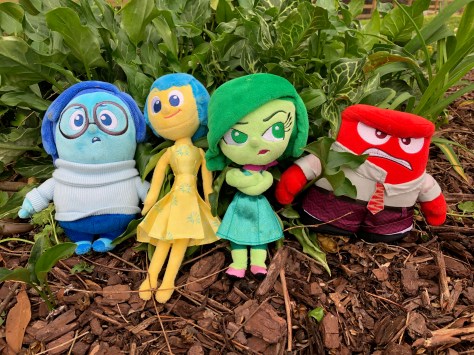
I am free from fear.  The other day Titus was rediscovering some stuffed animals that had been hidden deep in his closet.  He pulled out several characters from the movie Inside Out, proclaiming their names excitedly with each extraction:  “Look, Mom!  It’s Anger!  Oh, here’s Sadness!  And Joy and Disgust!”  As he dug further in the bag, he looked up at me with concern and questioned, “Where’s Fear?”  Slightly distracted, I answered him without thinking, “Oh, we don’t have Fear.”  Immediately, I paused, struck by the power of that statement. I claimed it right then and there–for our family, our home, and every aspect of our lives.  “There is no fear in love, but perfect love casts out fear. For fear has to do with punishment, and whoever fears has not been perfected in love. We love because he first loved us.” (1 John 4:18-19, ESV)

Because He came and died and rose and lives, I am free from all of those things, but I am also free TO things.  I am free to believe, to hope, to worship, to love, to give, to receive, to serve.  I am free to live.  I am free indeed.


“So if the Son sets you free, you will be free indeed.” (John 8:36, ESV)


The Stone I Carried

IMG-5105On Tuesday, April 2, 2019 at 7:09am, I placed a small, irregular-shaped, black stone in my left hand. Flecks of white, grey, and silver were scattered throughout my stone, which was why I had chosen it from among the thousands of options lining the ground beneath my deck. I proceeded to hold it in my hand nonstop for six hours. I held it while I dried my hair and realized that my hair is rather flat when I try to style it with a stone in one hand. I held it while I dressed the children and fixed their breakfast and realized that it is more difficult to care for little people when your hand is grasping a small stone.

Within a short while, I noticed that the stone made my palm sweaty, and by the end of the six hours, my hand felt stiff, clammy, and a little raw. I noticed the stone constantly at first, but after a couple of hours, it seemed like part of me. Even as it continued to inhibit my activities, it felt attached to me as if it belonged there. At one point I carried a small pile of items from one room to another and noticed that as I released them from my grasp, I had to make a conscious effort to hold onto my stone rather than letting it go with the other items.

The six hours passed more quickly than I expected, and at no point did the stone leave my palm. I had fully expected to drop it or need to put it down at least once or twice; however, clinging to it quickly became instinctive.

The stone I carried for six hours on the morning of April 2nd represented unforgiveness. The act of carrying it was an exercise I was instructed to complete while reading The Book of Forgiving by Desmond and Mpho Tutu, one of several resources God has graciously led me to over the past few months.

From the experience, I drew the following conclusions…

Carrying unforgiveness feels cumbersome at first but gradually becomes deceptively natural.

Carrying unforgiveness affects my physical appearance and leaves me feeling stiff and raw.

Carrying unforgiveness affects almost everything I do in some way.

Carrying unforgiveness inhibits my ability to help others.

When I cling to it, unforgiveness begins to feel like a natural part of me.

When I hold to unforgiveness, I am unable to fully open my hands to receive.

Unforgiveness serves no useful purpose whatsoever.

Unforgiveness offers nothing of value to me or those I love and serve.

Letting go of unforgiveness requires a conscious, willful act.


In the chapter of the Tutus’ book that assigned this exercise, the following poem is offered:

“I will forgive you

The words are so small

But there is a universe hidden in them

When I forgive you

All those cords of resentment pain and sadness that had wrapped

Themselves around my heart will be gone

When I forgive you

You will no longer define me

You measured me and assessed me and

Decided that you could hurt me

I didn’t count

But I will forgive you

Because I do count

I do matter

I am bigger than the image you have of me

I am stronger

I am more beautiful

And I am infinitely more precious than you thought me

I will forgive you

My forgiveness is not a gift that I am giving to you

When I forgive you

My forgiveness will be a gift that gives itself to me”

(from p. 26-27 of The Book of Forgiving by Desmond Tutu and Mpho Tuto)


May I always remember the stone I carried and the One who empowers me to lay it down.


“Then Peter came up and said to him, ‘Lord, how often will my brother sin against me, and I forgive him? As many as seven times?’  Jesus said to him, ‘I do not say to you seven times, but seventy-seven times.’” (Matthew 18:21-22, ESV)

Curveballs

IMG-5104

Baseball is back on my mind after decades of absence. Next week Titus and Lydia will start playing Challenger Baseball, a division of our local Little League for children with disabilities. We have been practicing catching, throwing, and batting in anticipation of their first game. The extent of our backyard practice goals is for them to keep their eyes open long enough to see the ball coming toward them in order to catch it rather than be hit by it.

From my teenage years, I have many fond memories of dusty, dirty, spit-filled dugouts. I kept score for our high school baseball and basketball teams and even throughout college. I met my best friends and every guy I ever dated through my years of scorekeeping for baseball and basketball teams and felt as comfortable in dugouts and gymnasiums as anywhere else.

Most anyone familiar with baseball knows that in simple terms, a curveball is a type of pitch in which the pitcher puts a specific spin on the ball in order to make it drop just as it approaches home plate. This is obviously intended to throw the batter off and make the pitch more difficult to hit.

The day after I posted my last blog entry called “Home,” I encountered the first of two significant curveballs in my own life. It happened to be my birthday, and I was anticipating as enjoyable a day as one could hope for when her birthday falls on a Monday. The kids were ready for the day, and Titus and Tess were in Tess’s bedroom building elaborate structures with her large assortment of colorful MegaBlocks when I noticed a small puddle of water on the floor by her feeding pump. Thinking I must have spilled some of her medicine earlier in the morning, I wiped the puddle and went about my morning.

A few minutes later, I re-entered the room only to see the same puddle on the floor. “I thought I wiped that up,” I told myself as I bent down to wipe the water off the floor.

Several minutes later, I again entered the room and saw the same puddle and another smaller one just beside it. Trusting that I was not absentminded or distracted enough to have thought I had already wiped the same puddle three times, I examined the floor more closely and realized that water was coming up from under Tess’s floorboards. A few hours later, I received an extremely undesirable birthday gift: news of a broken pipe under our house that had saturated the insulation, the support beams, and Tess’s brand new floors. Within 24-hours, all of Tess’s belongings were in a storage box on our driveway, two holes were cut in the wall of her room, fans and dehumidifiers were whirring, and Tess’s new floors were torn up.

Recognizing that I had just written about how much my home meant to me, I saw this curveball as an enemy strategy to directly target something I had openly shared to be a source of strength and a gift from the Lord, and I resolved to be unaffected by the strike. But a week later, just as the recovery and restoration process of Tess’s room neared the halfway point, another curveball barreled toward home plate.

I had been anxiously awaiting our March 27 custody and support hearing. Desperate for financial support and binding custody orders, I was eager for the slow-moving wheels of the justice system to speed up. The Saturday night before our Wednesday hearing, as I drove home from having dinner with a friend, I felt the Lord direct me to go to the courthouse. It was already dark, so my rational brain did not think this wise, but the Spirit insisted. Alone and in the dark, I pray-walked around the Chesapeake Juvenile and Domestic Relations Courthouse seven times, each time praying for one of our five minor children and the first and final times, praying for the judge and attorneys and for my own financial situation and strength on trial day. When I drove away, absolute peace overwhelmed me.

Three days later, the evening before our hearing, my attorney called with the unexpected news that our judge had put in retirement papers effective immediately and would not hear our case the next day. A substitute judge would sit on the bench but would likely only hear the support portion of the hearing and continue the custody portion.

I am not proud to say that my immediate reaction to the news was despair. I had already experienced a four-month delay from our last scheduled trial date and had been desperately counting the days until March 27. About two hours into this despair, the Lord chastised me with a clear admonition. He reminded me of my seven-lap prayer walk in which I supposedly relinquished to Him every aspect of this trial and drove away with a complete sense of peace in His sovereignty over the trial and its outcomes.

I knew that the Lord was reminding me that if I truly trusted Him, I would know that He had either allowed or orchestrated this unexpected curveball and that to do anything other than continue to trust Him would be to prove myself either weak in my faith or a liar.

If a batter doesn’t keep her eye on the ball, she will be deceived by an unexpected curve and likely miss the ball altogether or catch the tip of it. I may not have been a ballplayer in my youth, but as the scorekeeper, I knew full well the consequences of both of those responses.

Before this season of loss and rebirth in my own life, I reacted terribly to curveballs. They threw me off course, made me angry, tempted me to blame or lash out at others, stole my joy, or left me in despair. None of those responses reflected trust in the sovereignty of God.

The Apostle Paul faced an extraordinary number of curveballs in his ministry. As I have studied the book of Acts with my Community Bible Study group this year, I have been struck by how many times Paul was seized, accused, beaten, and imprisoned on his three missionary journeys. No matter what he faced, his kept his steady gaze fixated on the Lord, his actions focused on preaching the gospel, his resolve steady, and his heart positioned toward complete trust in Christ.

In his letter to the Romans, Paul wrote, “For we know that the whole creation has been groaning together in the pains of childbirth until now. And not only the creation, but we ourselves, who have the first fruits of the Spirit, groan inwardly as we wait eagerly for adoption as sons, the redemption of our bodies. For in this hope we were saved. Now hope that is seen is not hope. For who hopes for what he sees? But if we hope for what we do not see, we wait for it with patience. Likewise the Spirit helps us in our weakness. For we do not know what to pray for as we ought, but the Spirit himself intercedes for us with groanings too deep for words. And he who searches hearts knows what is the mind of the Spirit, because the Spirit intercedes for the saints according to the will of God. And we know that for those who love God all things work together for good, for those who are called according to his purpose.” (Romans 8:22-28, ESV)

Following Paul’s lead means recognizing the fallen nature of man and creation and all the pain that brings. It also means anticipating redemption of all that is broken and patiently living in hope of that redemption even when we do not see signs of it. It means relying on the Spirit when we feel weak, allowing the Spirit to intercede for us when we do not have the words we need. And it means knowing that He works all things together for good in our lives. Not hoping that but KNOWING it. Not some things but ALL things–even the curveballs.

My two recent curveballs were minor in comparison to others in my own life and those of many who have faced far worse circumstances than I can imagine, but the best thing about experiencing curve balls is the total refocusing they require. An effective curveball will leave a batter more alert, more focused, more intent than she was when it came across the plate and earned her a strike.

Both of my circumstances had favorable outcomes. Tess was out of a bedroom for two weeks and I was out a deductible, but the repairs were made quickly and competently and her room was restored with the unexpected perk of a new paint job that replaced a color I had grown to detest. The substitute judge assigned to our trial forgot to come to court, and though we could have walked out with nothing but a new trial date, our attorneys negotiated temporary agreements that would sustain me until August when our new judge would hear the case.

But in both situations, the best “result” was the reminder that my hope is not in circumstances—whether a house or a judge—but in the God who controls all. My beloved house could fall down around me and the trial could bring negative outcomes, but if my eyes stay focused on Jesus, the “founder and perfecter of my faith,” it won’t matter if I hit a homerun or strike out swinging because He will lead me through either situation with a full knowledge that I cannot comprehend. If He allows or even orchestrates a curve ball, it is because He sees the necessity or benefit of it, and who am I to question that?

I hope the day comes when my first response to life’s curveballs is to turn to the Lord and say, “Wow! I didn’t see that coming, but You did and I trust You. Help me see Your hand in this situation. Show me what to do now.” Until then, I will work on shortening the duration of my “tantrums,” throwing my bat or cap a little closer to the plate, dusting them off a little more quickly, and stepping back into the batter’s box with renewed focus.


“For my thoughts are not your thoughts, neither are your ways my ways, declares the Lord. For as the heavens are higher than the earth, so are my ways higher than your ways and my thoughts than your thoughts. For as the rain and the snow come down from heaven and do not return there but water the earth, making it bring forth and sprout, giving seed to the sower and bread to the eater, so shall my word be that goes out from my mouth; it shall not return to me empty, but it shall accomplish that which I purpose, and shall succeed in the thing for which I sent it. For you shall go out in joy and be led forth in peace; the mountains and the hills before you shall break forth into singing, and all the trees of the field shall clap their hands. Instead of the thorn shall come up the cypress; instead of the brier shall come up the myrtle; and it shall make a name for the Lord, an everlasting sign that shall not be cut off.” (Isaiah 55:8-13, ESV)

Home

IMG-4936My three oldest children surprised me with the most amazing early birthday present—a commissioned watercolor painting of my new home! The gift overwhelmed me to tears, which became the source of several conversations between Titus, Lydia, and me for the next twenty-four hours as they attempted unsuccessfully to process the concept of “happy tears.”
This beautiful picture now hangs in the entryway to my home—a perfect location because I see it every time I walk down our hallway as well as every time I enter our home through the front door. I doubt it will ever stop making me smile.

Every mother who receives a tremendously thoughtful gift from her children knows the joy I feel, but this picture is even more than that to me because of all that my home means to me.

Through this home, the Lord has restored peace to my life and the lives of my children.

“The Lord is my shepherd; I shall not want. He makes me lie down in green pastures. He leads me beside still waters. He restores my soul.” (Psalm 23:2-3a, ESV)

The moment I walked into the backyard of this house and saw the creek; the weeping willow trees; the duck family; and the large, hilly yard with endless possibilities for childhood play, I knew this was the perfect home for us. As I peered through the back windows of the master bedroom, family room, and kitchen and saw those same views, I knew that this home had a built-in source of peace and calm that would sustain me through whatever came my way. That has proven true over and over again as I have sat at my picture windows and watched the children play, the rain fall, the duck family swim, the sun set, or the herons take flight. No harsh words, no tension, no fear, no turmoil. Just peace.

Through this home, the Lord delivered me to a secure place where I could live independently and confidently.

“I waited patiently for the Lord; he inclined to me and heard my cry. He drew me up from the pit of destruction, out of the miry bog, and set my feet upon a rock, making my steps secure. He put a new song in my mouth, a song of praise to our God.” (Psalm 40:2-3a, ESV)

Since moving here nine months ago, I have learned (with the generous assistance of a deacon in our church) that I can maintain a home and yard. I can use power tools, start a generator, mount smoke detectors, replace toilet handles, install doorknobs, and solve a myriad of new problems. I have met trustworthy, reliable people to help with the things that are beyond my abilities. My older kids helped me hang Christmas lights on our porch (maybe we will try the gutters next year!), my attic is actually organized (mostly), and the house stays comfortably lived-in but orderly. Instead of being overwhelmed by the responsibility, it has motivated me to do things I never thought I could do, to work hard even when I want to just sit still, and to ask for help when I need it.

Through this home, I saw how much my family loves and sacrifices for me.

“And all who believed were together and had all things in common. And they were selling their possessions and belongings and distributing the proceeds to all, as any had need.” (Acts 2:44-45, ESV)

When it became clear that I was hurting myself and the children by remaining in our previous home environment, the obvious question was where would we go? I looked at rental homes but quickly realized several intrinsic problems. Rentals are temporary and unpredictable and because of their unique needs, my three youngest children required stability and minimal transitions. Pets are not always welcome in rentals, and we had two dogs. Thinking about the stress of being in someone else’s home with all of the inevitable potty accidents, g-tube leaks, rogue Sharpies, and vomiting episodes overwhelmed me. I didn’t see any other options—even though I had strong credit scores, teaching an online writing course did not remotely yield the income necessary to qualify for a mortgage. But my family saw options—each and every one of them. They had been waiting patiently for me to see what they had seen months earlier, and they stood ready to pool their resources in one of the greatest acts of love I have ever experienced. Thanks to an incompetent loan officer, the process was laden with frustration at every turn, but God kept making a way where there seemed to be none. The day I turned the key in the lock of my very own home was a glorious day in which the impossible became possible.

Through this home, the Lord showed me that His plan is far superior to mine.

“The heart of man plans his way, but the Lord establishes his steps.” (Proverbs 16:9, ESV)

Once I had made the decision to move out, I started seriously searching for a home. Very quickly, I found the perfect place for us. It was a flipped house with brand-new everything, had a large backyard, and was within walking distance of our church. I couldn’t act on this home right away because several things needed to happen first. So I watched it and prayed for it to remain available. Friends looked at it and prayed with me. When the time came that I could make an offer, I just knew that God had held this house for me. But things did not go as expected, and the door seemed to be closing on my “perfect” house. I was confused and mad at God. As I cried out to Him in frustration, He revealed some false hope and lingering fear that was holding me back from walking forward in confidence that moving out was truly His will for me. As I released those to Him, He led me to my current home AND re-opened the door to the “perfect” home I had been praying about for over a month. The decision was pretty clear the minute I saw the backyard of this house, but it was sealed the next morning when one of my best friends returned from a trip and sent a text inquiring about “my house.” She meant the original house because she had gone to see it with me and had been praying with me that the house would remain available. She had been visiting her daughter and didn’t know about the events of the past few days. When I texted back to let her know that I was about to pursue a different house, she asked for the address to look it up. Not a minute later, I received a text that gave me chills: “You are not going to believe this. Michael (her husband) and I built that house in 1993.” Through all the bumps of the remainder of the home-buying process, I never had another moment’s doubt that this was the house God had for me all along. His plan is always superior to mine.

Through this home, I learned that God will provide for me and that all that I have is actually His.

“Even the sparrow finds a home, and the swallow a nest for herself, where she may lay her young, at your altars, O Lord of hosts, my King and my God. Blessed are those who dwell in your house, ever singing your praise!” (Psalm 84:3-42, ESV)

Soon after moving in, I began to feel guilty for how much I loved my home. I even prayed a prayer telling God that I was sorry if I loved the house and yard TOO much. In my devotional time soon after, He led me to a study of Psalm 84. And through that study, I realized that the house isn’t actually mine. It is His. And I am privileged to dwell in it. And when I sit in my special chair and look out over the creek and through the weeping willow trees and see the herons and the ducks live their lives before me or watch the sun set in glorious pink and purple hues, I am at His altar. I am singing His praises and being grateful for His provision and soaking in the peace and sharing the joy with my children and all who visit us here.

I cherish every memory we make here—celebrating holidays and birthdays, welcoming friends, making music, telling stories, cooking, watching movies, playing games, reading books, writing words—even experiencing disappointments, recovering from sicknesses, and crying tears. This is truly my favorite of all the homes I have ever lived in, and I hope I can live here for the rest of my life. But if God leads me somewhere else, I will be sure to follow because He has shown Himself faithful to always lead me home. 

Commissioned watercolor painting of 1004 Wymers Court created by Adriana von Helms (Instagram handle:  art.adriana.gail).

Desperate

IMG_6932

A young woman has just been accepted to a nationally acclaimed graduate program in her field and awarded an assistantship that will pay her tuition and a stipend for her entire program. Just after enrolling in her first classes, she misses a period. Her head spins with possible scenarios and lands momentarily on the thought of abortion—a viable solution in her 24-year-old mind because, in that moment, she feels desperate.

An older mother of four healthy children miscarries four babies in eighteen months. She accepts that her family must be complete only to learn that she is pregnant again. Soon after realizing this pregnancy appears to be viable, she receives a call that test results indicate a high likelihood that her baby has Down syndrome. Genetic counselors want more invasive testing, the obstetrician suggests termination, and her heart and mind begin to race. She feels desperate.

A young Filipino couple gives birth to a premature baby boy who is diagnosed with Down syndrome and Tetralogy of Falot, a rather complex congenital heart defect. The couple had come to the United States to give birth to their son so that he would have the best possible medical care but planned to return to the Philippines soon after his birth. The thought of taking this medically fragile baby back to their country where he would likely die overwhelms them, and they feel incredibly desperate.

A French couple who has battled cancer goes to great lengths to have a baby of their own—invitro fertilization with a donor egg and a surrogate mother made them parents-to-be of twins! But at 29-weeks gestation, the surrogate mother is rushed to the hospital for an emergency c-section. Born prematurely, the twins suffer severe brain bleeds. Desperate, the babies’ parents leave the twins in the care of a local adoption agency and return to their home country.

In our media-saturated era, platforms abound for heated discussion of when life begins and who has the right to terminate it, about which lives are worth living and which are better ended, about taking a stand for or against. It is so tempting to draw a line in the sand and declare “sides” and positions, but that rarely seems to produce anything of substance. A more worthwhile pursuit is to listen to the stories—the people behind the positions and polarizing statements and passionate words. The same theme runs through most of them—desperation.

We face decisions every day of our lives. Most are inconsequential, but others change the course of our lives or someone else’s forever. For every drunk driver who takes an innocent life, there are many more who caught a ride home with a sober friend. For every unwed teenage girl who finds herself pregnant, there are likely many others who made the same choice that led to that pregnancy but with no visible consequence. For every driver whose momentary glance at his cell phone cost him his life, there are countless others whose distraction had no such price. It’s a fine line between the casual decision and the unthinkable consequence—a line we all walk every day.

As the debates rage on in the public arena, I think of where Jesus would be if He walked the earth today. He would be ministering to the desperate. His life testifies to that. The woman who had been bleeding for 12 years reached out to touch the hem of His garment—desperate. He felt the power go out from Him and turned to see whose faith had made her well—ministering to the desperate. He heard the cries of Martha and Mary for their brother Lazarus, dead for four days, entombed and stinky—about as desperate as a person could get. And He called Lazarus forth, right out of that tomb and into life—ministering to his and his mourning sisters’ utter desperation.

The words murder and infanticide evoke outrage and are intended to provoke extreme reactions. Both are horrific crimes that steal lives from individuals. But behind most murders are also desperate people. When the Lord rejected his sacrifice, Cain allowed anger to overtake him. Desperate, he “rose up against his brother Able and killed him” (Genesis 4:8b, ESV). Moses, a Jew raised by Pharaoh’s daughter, grew up and saw his people in bondage. One day he walked among them and saw an Egyptian beating a Hebrew. Desperate, “he struck down the Egyptian and hid him in the sand” (Exodus 2:12b, ESV). Late one spring afternoon when he should have been out fighting with his troops, David lusted after and slept with Bathsheba, the wife of Uriah, leaving her pregnant with David’s child. Unable to manipulate a cover-up that would make Uriah think that baby was his, a desperate David sent an order to “[s]et Uriah in the forefront of the hardest fighting, and then draw back from him, that he may be struck down, and die” (2 Samuel 11:15, ESV).

Jesus never condoned sin or murder; in fact, his views of what constitutes murder were extreme: “You have heard that it was said to those of old, ‘You shall not murder; and whoever murders will be liable to judgment.’ But I say to you that everyone who is angry with his brother will be liable to judgment” (Matthew 5:21-22, ESV). But Jesus also willingly went straight to the desperate, spoke into their painful situations, and reached out a hand. He offered living water to the woman at the well who had five husbands and was in an adulterous relationship (John 4:1-45). To another woman caught in adultery, he scattered those about to stone her by simply bending down and writing on the ground, then issuing a challenge that the man without sin should “be the first to throw a stone at her.” Left alone with the woman, Jesus declared, “Neither do I condemn you; go, and from now on sin no more” (John 8:7b, 11b, ESV).

Knowing and speaking what we believe is incredibly valuable. Knowing what the Word says about life is critical. But seeking the desperate and reaching out a hand speaks a stronger truth than words or platforms. We all have a circle of influence, and it isn’t just our families and friends. It’s our bank teller, our hair dresser, our mail carrier, and our bus driver. Among them are undoubtedly desperate people walking that thin line between the casual decision and the unthinkable consequence. To influence decisions about life, we need to see the desperation in those around us, reach into it, and find ways to make it less desperate.

Carrying placards outside abortion clinics makes a statement to those entering or driving by. Marching for life in Washington draws attention to the tragedy of abortion. Calling out lawmakers for introducing legislation that makes it easy to terminate life for convenience seems noble. But most of those actions are not likely to reach the people walking into those clinics who have already wrestled with their desperation and found no way through it, only a way out.

In the scenarios that opened this piece, I was both the young graduate student who contemplated abortion and the older mother encouraged to terminate her pregnancy. The Filipino man and woman were the birth parents of my adopted son, and the French couple gave life to my adopted twins. Since those graduate school days, I have seen and felt desperation that has transformed my views of what it really means to stand for life.

Standing for life is saying no to the genetic counselor and obstetrician who encourage us to terminate even if it means saying yes to a life very different from the one we planned. It is getting to know the unwed expectant mother who fixes our coffee in the hospital coffee shop, meeting some of her tangible needs, and reassuring her fears about delivery. Standing for life is working with churches and other organizations who offer tangible and long-term support to women in crisis pregnancies so that they can endure nine months of hardship to give life, even if they decide someone else is better positioned to raise that life. Standing for life is opening our hearts and families and homes to babies and children that others are unable to raise, especially those who have special needs or siblings that make them more difficult to place.

Standing for life is waking up every day and figuring out what it will take to help children with extra challenges overcome the odds, defy the predictions, and push the limitations just a little bit farther than they pushed them yesterday. It is whispering into my daughter’s ear that she is beautiful and strong and smart and that one day she will go to college and have a job; it is believing with all my heart that the extra copy of the 21st chromosome that resides in every cell of her body does not cancel out her potential for greatness. It is helping my son manage the environment that tries to overwhelm his senses, seeing his strengths, and compensating for his weaknesses without letting him know that he is any different from any other kid he sees; it is recognizing that it is critical that he feel loved and valued and able and that the longer he can keep those truths as his core identity, the less ravaging his challenges will be to him. And it is standing back while my 5-year old daughter struggles to crawl up the three little stairs from her bedroom to the kitchen, navigate her walker in tight or crowded spaces, and use the hand her brain doesn’t like to remember is even there; it is trusting that in standing back, I am helping her learn strength, develop resilience, and harness the power within her.

Like Jesus did, we must scan the masses of people who surround us and find the desperate ones. Listen to their stories, encourage them, and support them tangibly or connect them with someone who can. Stand for life—one messy, stress-filled, exasperating day at a time. And when the desperate see us standing there willing to engage, to help, to adopt, perhaps they will choose to stand with us. And one day maybe debates in the public arena will be silent on the issue of abortion. Maybe it won’t matter what laws are on the books because there will be so many better alternatives for desperate people.

Loss as Gain

IMG_6952“Yes, and I will rejoice, for I know that through your prayers and the help of the Spirit of Jesus Christ this will turn out for my deliverance, as it is my eager expectation and hope that I will not be at all ashamed, but that with full courage now as always Christ will be honored in my body, whether by life or by death. For to me to live is Christ, and to die is gain.” (Philippians 1:18b-21, ESV)
Paul penned these words to the Philippian church from prison, likely in Rome. The Philippians were not unfamiliar with seeing Paul in such circumstances. While in Philippi, he had cast a spirit of divination out of a slave girl who had “brought her owners much gain by fortune telling.” (Acts 16:16b, ESV) Needless to say this greatly upset her owners who “seized Paul and Silas and dragged them into the marketplace before the rulers.(Acts 16:19b, ESV) There they accused the men of disturbing the city. “And the crowd joined in attacking them, and the magistrates tore the garments off them and gave orders to beat them with rods. And when they had inflicted many blows upon them, they threw them into prison, ordering the jailer to keep them safely. Having received this order, he put them into the inner prison and fastened their feet in the stocks.” (Acts 16:22-24, ESV)

But the story didn’t end there. While in prison, “Paul and Silas were praying and singing hymns to God.” (Acts 16:25a, ESV) Miraculously an earthquake broke open the doors of the prison and loosened the prisoner’s bonds, but none of them tried to escape. As a result of the miracle, the jailer and all of his family believed and were saved. Paul and Silas were released the next day and “they went out of the prison and visited Lydia. And when they had seen the brothers, they encouraged them and departed.” (Acts 16:40, ESV)

Paul knew deliverance. And he knew Christ.  Because of that knowledge, he could confidently reassure the Philippian church that his circumstances were not dire, regardless of the outcome.

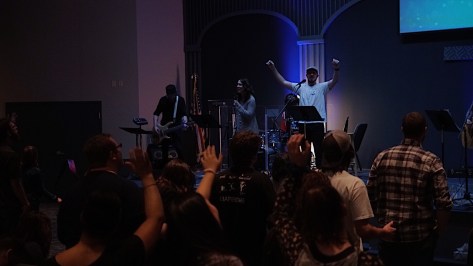
Friday night, I went to one of the Encounter services that my church hosts quarterly for the community. That night I experienced the most joy in worship that I have had in the past year, and it was so encouraging to be in that place again after so many months of despair. But inside I was also pleading with the Lord to take away some lingering pains of loss that continue to creep back into my spirit. The worship team led us in a beautiful, original song that one of the leaders had written, and as the Lord ministered through it, He revealed to me that often loss serves as a conduit through which to receive His love. He reminded me of how He had used the losses in my life to enable me to receive His love more fully and to give my own more readily. He convicted me that instead of trying to erase the lingering pain, I need to be grateful for it because every time I feel it, it sends me running straight to Him. He brought to mind Paul’s words pasted above, written to the Philippian church but timeless in truth for me and others processing hardship: “Yes, and I will rejoice, for I know that through your prayers and the help of the Spirit of Jesus Christ this will turn out for my deliverance.” Rejoice. Pray. Receive the help of the Holy Spirit. Keys to turning loss into deliverance. “…it is my eager expectation and hope that I will not be at all ashamed, but that with full courage now as always Christ will be honored…” Expect.  Hope.  Don’t be ashamed.  Be fully courageous. Keys to honoring Christ in our losses.

It is my natural inclination to run from pain, but I am becoming more and more convinced that God wants me to run into it instead. That He allows loss in our lives—some temporary and some permanent—in order to strip us down to a place where we can more fully receive His love. That the pain of loss is nothing to fear but something to embrace.

This possibility is expressed so powerfully in the climax to the song “In Christ Alone” by Keith Getty and Stuart Townend: “No guilt in life, no fear in death—This is the pow’r of Christ in me; From life’s first cry to final breath, Jesus commands my destiny. No pow’r of hell, no scheme of man, Can ever pluck me from His hand; Till He returns or calls me home—Here in the pow’r of Christ I’ll stand.”

While I sometimes wish that there had been a different outcome to the many losses I have experienced over the past ten years, I also see the deliverance they brought. I may never understand why the stories had to end exactly the ways they ended—why babies were miscarried, why Timothy had to die, why my marriage failed—but I do see the gain.

If I had not miscarried those four babies, I would not have had Lydia. Her birth dramatically changed my life for the better. Every day that I spend with her, she brings me great joy and rightly adjusts my perspective. Without her life, the call to adoption would never have come. Timothy and the twins would not be part of our family. The losses of those four babies were real and they wounded deep parts of me, but what God brought out of them was life-changing and life-giving. Through them, He settled “the solitary in a home” (Psalm 68:6, ESV)—three times over.

Timothy’s death—though unexpected and heartwrenching—made God more real to me than He had ever been before. I had always struggled to feel close to God. I didn’t seem to have the connection with Him that other believers enjoyed, and I wasn’t sure why. But in Bedspace 24 in the Pediatric Intensive Care Unit of the Children’s Hospital of the King’s Daughters in Norfolk, Virginia on the evening of May 15, 2013, I experienced the literal presence of Jesus Christ as He ushered Timothy José Barnes through the gates of heaven. He was as present in that room as I was. All of the Bible studies I had done, prayers I had lifted up, sermons I had listened to, and worship I had offered didn’t come close to deepening my faith and knowledge of Christ the way Timothy’s death did. While I would take Timothy’s life back in a second, the impact of his death on my relationship with the Lord somehow gave it meaning. To die was literally gain.

It is a bit more raw to reflect on possible gains from a marriage that hasn’t finished failing. I once heard that it is best not to write from a bleeding wound, and in terms of absolutes, I agree. Because I serve a miracle-working God, I cannot yet say with certainty how this marriage story will end, even though the foreshadowing is pretty blatant. I am convinced, however, that transparently sharing the unfolding and God’s work in me through that process brings honor and value to the experience and facilitates healing. And I am confident that even though my earthly love story turned dark with deception, infidelity, abuse, and betrayal, it has hurled me straight into the arms of the most honest, faithful, loving, and trustworthy man I have ever known. Jesus has swept me up in a new love story that is far more real and satisfying than I ever imagined possible. He revealed and then killed unhealthy survival tactics in me that needed to die long ago, and then He lavished me with a tender, cherishing love that is mending and softening my broken heart and showing me what it feels like to live truly loved. Whatever ending He writes to my marriage story, I already see that there will have been so much gain from the losses within it.

God answered my prayer at the Encounter last week, but not in the way I expected. I entered His presence to plead with Him to remove the lingering remnants of pain from my loss, but instead He asked me to embrace them—to rejoice in them, to pray my way through them, and to trust the Holy Spirit to use them. He told me to have eager expectation and hope, not to be ashamed, and to have full courage so that He might be honored, no matter the outcome. He reminded me to trust that to die is gain.

I still don’t like the grief of loss—the ache can be unbearable at times—but I am reminded of something else Paul said at the end of that same letter to the Philippians: “…I have learned in whatever situation I am to be content. I know how to be brought low, and I know how to abound. In any and every circumstance, I have learned the secret of facing plenty and hunger, abundance and need. I can do all things through him who strengthens me.” (Philippians 4:11b-13, ESV)

Or as the Amplified Bible insightfully phrases that last familiar verse: “I have strength for all things in Christ Who empowers me [I am ready for anything and equal to anything through Him Who infuses inner strength into me; I am self-sufficient in Christ’s sufficiency].” (Philippians 4:13, AMP)

“No fear in death”…even of the things and people I hold most dear…even of the pain of the losses…because empowered by Christ, “to die is gain.”


Photo taken by Jonah Barnes at The Bridge Christian Fellowship.

Living Loved

IMG_6927

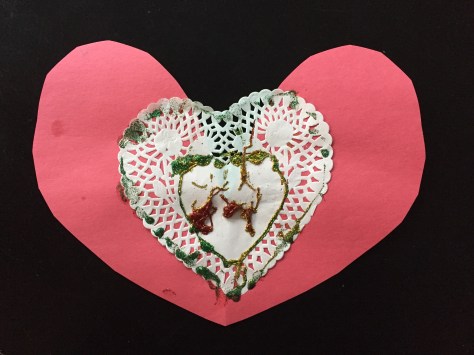
Today is Valentine’s Day, when thoughts turn to monumental decisions like “chocolate or flowers,” “fancy restaurant or romantic dinner at home”? Earlier this week, I felt a sense of dread surrounding this day—the first Valentine’s Day in 31 years without my husband. But then I remembered last Valentine’s Day. I wrote about it in my Day 9 Advent Journal:

Last year Tess spent two-and-a-half months in the hospital and had seven surgeries within a four-month period. Simultaneously, our family was enduring the catastrophic events that I described in yesterday’s journal. Soon after the New Year, my body started reacting to all of the stress. I suffered severe headaches, developed corneal ulcers that destroyed a significant portion of my vision in one eye, and broke out in the most painful rash I have ever experienced. On the day of Tess’s discharge after the seventh and final surgery of her ordeal, I was finally able to slip away to the doctor to get help for the rash. I was emotionally spent from a toxic encounter earlier in the day and was grateful just to sit down in a sterile waiting room at the Tricare Clinic where no one knew me, needed me, or threatened me in any way. When I heard the text notification chime from my pocket, I instinctively reached for it, bracing myself for the likely negative intrusion into my moment of respite. Instead, I saw a message that included these words:

“You are dearly loved, admired, and deeply respected…Your love makes a difference and is beautiful even when unnoticed…You are loved and lovely. I pray that you can always live loved because that is your true identity.”

The words in between these were equally personal and powerful, but those declarations of love in the midst of such an unloving day were what wrecked me. Because as I read them, I realized that this particular cold, dark day happened to be Valentine’s Day and that through one of His sweet servants, God Himself had just delivered my one and only Valentine.

In the 365 days between last Valentine’s Day and this one, I have begun to understand what it really means to live loved, and it has nothing to do with men or chocolate or fancy restaurants.

“And they heard the sound of the Lord God walking in the garden in the cool of the day, and the man and his wife hid themselves from the presence of the Lord God among the trees of the garden. But the Lord God called to the man and said to him, ‘Where are you?’…And the Lord God made for Adam and for his wife garments of skins and clothed them.” (Genesis 3:8-9, 21, ESV)

Living loved is realizing that you believed a lie, turned away from God, and made mistakes that will have consequences for the rest of your life but that He went searching for you, found you, helped you realize you were lost, and made a sacrifice with which He could handstitch a covering for you.

“When Joseph’s brothers saw that their father was dead, they said, ‘It may be that Joseph will hate us and pay us back for all the evil that we did to him.’ So they sent a message to Joseph, saying…please forgive the transgression of the servants of the God of your father.’ Joseph wept when they spoke to him…But Joseph said to them, ‘Do not fear, for am I in the place of God? As for you, you meant evil against me, but God meant it for good, to bring it about that many people should be kept alive, as they are today.” (Genesis 50:15-16a, 17b , 19-20, ESV)

Living loved is forgiving those who commit evil acts against you—even when they strip you of all that you know and love and leave you imprisoned with no sign of justice—knowing that God can use even evil for a greater good.

“Then Pharaoh commanded all his people, ‘Every son that is born to the Hebrews you shall cast into the Nile…a Levite woman…conceived and bore a son, and when she saw that he was a fine child, she hid him three months. When she could hide him no longer, she took for him a basket made of bulrushes and daubed it with bitumen and pitch. She put the child in it and placed it among the reeds by the river bank.” (Exodus 1:22 and 2:1b-3, ESV)

Living loved is trusting God with everything and everyone that you love—even when that means letting them go.

“When Pharaoh drew near, the people of Israel lifted up their eyes, and behold, the Egyptians were marching after them, and they feared greatly. And the people of Israel cried out to the Lord. They said to Moses, ‘Is it because there are no graves in Egypt that you have taken us away to die in the wilderness? What have you done to us in bringing us out of Egypt?…For it would have been better for us to serve the Egyptians than to die in the wilderness.’ And Moses said to the people, ‘Fear not, stand firm, and see the salvation of the Lord, which he will work out for you today…The Lord will fight for you, and you have only to be silent.’” (Exodus 14:10-11, 12b-14, ESV)

Living loved is receiving the deliverance of the Lord and resisting the temptation to flee back to comfortable bondage. It is abandoning fear for faith and resting in His promise to fight for you.

“But Ruth said, ‘Do not urge me to leave you or to return from following you. For where you go I will go, and where you lodge I will lodge. Your people will be my people, and your God my God. Where you die I will die, and there will I be buried. May the Lord do so to me and more also if anything but death parts me from you.’” (Ruth 1:16-17, ESV)

Living loved is welcoming the people God brings alongside you even when it means they sacrifice something to join your journey. It is receiving when you would rather give and humbly admitting that you are in need.

“Then Job answered the Lord and said: ‘I know that you can do all things, and that no purpose of yours can be thwarted’…And the Lord restored the fortunes of Job…And the Lord gave Job twice as much as he had before.” (Job 42:1-2, 10, ESV)

Living loved is holding onto faith in the absolute goodness and sovereignty of God in the face of the unthinkable.

“Those who sow in tears shall reap with shouts of joy! He who goes out weeping, bearing the seed for sowing, shall come home with shouts of joy, bringing his sheaves with him.” (Psalm 126:6, ESV)

Living loved is embracing grief and pain and sorrow, feeling the emotions that make us human, but trusting God’s promises to return them to us as joy.

“I have been crucified with Christ. It is no longer I who live, but Christ who lives in me. And the life I now life in the flesh I live by faith in the Son of God, who loved me and gave himself for me.” (Galatians 2:20, ESV)

Living loved.


(Valentine created by Lydia Barnes.)

Blossoming

IMG_6898

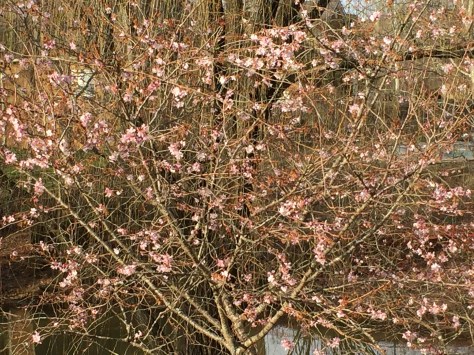
A beautiful little tree lives outside the picture window in my bedroom. In early January, when the Virginia winter pulled one of its identity-crisis weeks and temperatures reached 70, tiny pink blossoms formed on my little tree’s branches, and I wondered if she was a winter-blooming tree. I am notoriously clueless about gardening, and my yard has surprised me repeatedly these past six months as various flowering plants have appeared in unexpected places—the fruit of the previous owners’ labor and design. I took pictures of a pink sunset that January week, loving how it matched my little tree’s new blossoms.

But then the cold snapped back into its rightful place, and I sadly watched my little tree’s blossoms shrivel and die. Soon her branches were as bare as they had been in December, and she blended in with the other forlorn-looking trees in my yard—still beautifully intricate in their barrenness but devoid of color.

This week, another false spring appeared as we enjoyed four days in the 70s! Windows flew open, small piles of sand accumulated on the family room floor beside discarded shoes and socks, and a mosquito even joined us for bedtime stories (where he met his tragic but necessary demise). By the week’s end, I again glimpsed pink blossoms on my little tree’s branches, slightly fuller and brighter than the last time she bloomed. I gazed at them a little more cautiously this time, wondering if they would outlast the cold that had already returned.

I empathize greatly with my confused little tree—wanting to bloom and display the color hidden inside her—but finding her attempts premature and short-lived. I, too, feel eager to bloom—to emerge from my winter season where some things in my life have had to die and be cut away for new life to blossom.

Healing from the loss of yourself and anything you have loved is a messy, slow process. Long, cold, grey days give way to bright, encouraging, warm days. You peek out and see the sun and feel the warmth, so you step out into it and run unencumbered, tasting joy and freedom and loving it! But with no warning, you find yourself back in hibernation listening to the cold rain beat on your window pane, wondering if spring will ever come.

There are so many fast-track ways to “recover” from loss:  party it away; enter a rebound relationship; overwork, overbook, overeat, or overspend; relocate; medicate; serve yourself to death. But filling a void has a much different effect than experiencing healing transformation. It is tempting to choose the fillers because they numb the pain and let us escape the issues and problems that caused it in the first place. But submitting to the process of feeling the pain, grieving it, and being transformed by it propels you to a place so much richer than the one you left.

One of the many reminders that has hung on my little corkboard for the past year is a quote by Joseph Garlington that says, “God closes one door and opens another, but it is hell in the hallway.”

Yep. That pretty much sums it up. It’s hell to be in the middle of transformation. If we could ask the butterfly how the chrysalis feels, she would probably say it feels like you are dying.  That it is dark and claustrophobic and restrictive and that time moves ever so slowly. It’s lonely in there, and it’s an act of total submission to the Creator who promises that He sits on the throne and is “making everything new!” (Revelation 21:5a, ESV)

Like the little tree outside my picture window, I have found the transformation process confusing. Sunny, warm days full of peace and joy and hope bring glimpses of the brightly colored blossoms God is restoring to my life. But then an unexpected cold snap hits, and they all fall to the ground as I realize it isn’t quite spring yet. There are unhealed places in me that He hasn’t touched yet. And it feels like failure.

On one of those cold-snap days, a friend dropped a folded piece of paper into my Bible bag at church. When I discovered it later, sitting in my car in the Starbucks parking lot (where else?), I drank in Natasha Metzler’s words eagerly and silently. When I got to the end, I gasped aloud as I read:

“Nobody makes it through life unscathed by sorrow, and we all feel the scraping sadness at times. And being healed doesn’t mean we’re 100% okay with what’s happening in life. No, no. Being healed means learning to feel all the sadness and all the happy when it comes, all the while knowing that our shalom, our peace and wholeness, is settled deep. It won’t move, no matter what we’re feeling. We’re promised in Philippians 4:7 that the peace of God, which surpasses all understanding, will guard your hearts and minds in Christ Jesus. This means we don’t have to understand everything. Not the loss, not the sorrow, not the lack. We can just know, deep down, that we are safe, even when life hurts. Today, I am feeling 99.8% okay. And as it turns out—that’s enough. Because even though I don’t understand it all, there is a truth that goes far beyond my feelings—and it says that I am whole, even with a thread of sorrow stitched through my my life.”[1]

Through her words, I realized that it’s okay to be confused like the little tree. It’s okay to blossom one day and be barren the next. That even as He transforms and heals me, I will have threads of sorrow and grief woven into my being. And that even after extended weeks of spring and summer, fall and winter will come again. But as long as I submit to the process, avoid the “easy fixes,” willingly feel the sunshine AND the cold snaps, I WILL blossom…again and again…in His time.

For everything there is a season, and a time for every matter under heaven: a time to be born, and a time to die…a time to break down, and a time to build up; a time to weep, and a time to laugh; a time to mourn, and a time to dance…a time to seek, and a time to lose; a time to keep, and a time to cast away…a time to keep silence, and a time to speak…He has made everything beautiful in its time.” (Ecclesiastes 3:1-2, 3a-4, 5, 7b, 11a, ESV)

[1] When You’re 99.8% Okay.” by Natasha Metzler  

Uncovered

img_6778Finally, be strong in the Lord and in the strength of His might. Put on the whole armor of God, that you may be able to stand against the schemes of the devil. For we do not wrestle against flesh and blood, but against the rulers, against the authorities, against the cosmic powers over this present darkness, against the spiritual forces of evil in the heavenly places.” (Ephesians 6:10-12, ESV)

Here is a sad confession. I typed those three verses (almost) entirely from memory, and it took me a pathetic amount of effort to achieve that. Since the 5th grade when I struggled diligently to learn the Gettysburg Address for my beloved teacher Ms. Turner, I have known that I am not good at memorizing. Oh, I have a great memory—for events, for people, for the basic essence of a story or passage of scripture—but my word-for-word recall is seriously challenged. At age 48, I now feel compelled to change that—somehow. My motivation? Warfare.

Over the past few weeks, I realized that I have been walking around completely uncovered—spiritually naked and exposed. After Christmas—just when I started looking to the future with some dreams and some concrete plans; just as I settled into new semester routines designed to help me stay focused, caught up, and spiritually fed—in swooped the enemy to launch another assault, and immediately the grief and the despair and the fear rushed in and kidnapped my mind and heart.

I have watched Satan completely capture someone I dearly loved and so pervert that person’s thinking and behavior that I was unable to recognize him anymore. Of all people, I should know the stakes of the war and the incorrigible, unscrupulous character of the enemy.

But somehow, yet again, the enemy found the weak spot, found the buttons to push, found the place to strike. I was blindsighted yet again. Attacks were launched. Safe people and places became unsafe. And before I realized what was even happening, the enemy had my mind again. I do not know whether the attack hurt the most or the disappointment I felt for allowing the little punk to get to me again.

In the midst of that disappointment, I woke up to an early morning text from a friend with this word God had given her for me:

“Then the Lord will create over the whole site of Mount Zion and over her assemblies a cloud by day, and smoke and the shining of a flaming fire by night; for over all the glory there will be a canopy. There will be a booth for shade by day from the heat, and for a refuge and a shelter from the storm and rain.” (Isaiah 4:5-6, ESV)

With it, she added a word of encouragement: “Melissa, you know that place…keep going there!!!! One moment, one day at a time.”

Reading her message took me immediately back to the passage in Exodus that this same faithful friend had shared with me two months ago. That passage said, “Then the angel of God who was going before the host of Israel moved and went behind them, and the pillar of cloud moved from before them and stood behind them, coming between the host of Egypt and the host of Israel. And there was the cloud and the darkness. And it lit up the night without one coming near the other all night.” (Exodus 14:19-20, ESV)

How, in just two months, had I managed to slip out of His protective covering? As I pondered this over the course of the morning, God continued to speak truth to me until a picture emerged. I had allowed myself to become exposed—to live uncovered—outside of that canopy, right in the middle of the storm and rain.

Over the days that followed, God sent word after word:

Stand firm.

Walk THROUGH the valley…He is with you.

The enemy will twist the truth and speak his lies through anyone willing to be his vessel.

You have been in a long battle, and you are weary, but your endurance will not come from your own strength. It will come from His endurance in you. 

Put on the armor of God every single day and as you do, tell yourself WHY you need each individual piece.

You are covered and protected by grace. Jesus is strong in you! 

I had somehow forgotten the power of the enemy and his dirty tactics and shown up for the battle wearing nothing but my own strength. Self-talk is not enough to the win the battle for my mind. Self-disciplines will not sustain me when I experience betrayal or personal attacks. Emotions will prove weak companions in the dark of night when the enemy whispers his lies.

I do not know how long it will take me to memorize the rest of the Armor of God, but I am determined to own that word and every other passage of warfare scripture I can find. Next time the enemy comes after my mind, He will run straight into the Word of the Lord. Straight into truth. And it will send him scurrying back into the darkness with his little lies.

That is how I will stay covered. That is how I will endure. That is how I will claim the victory that is already won.

“Therefore take up the whole armor of God, that you may be able to withstand in the evil day, and having done all, to stand firm. Stand therefore, having fastened on the belt of truth, and having put on the breastplate of righteousness, and, as shoes for your feet, having put on the readiness given by the gospel of peace.  In all circumstances take up the shield of faith, with which you can extinguish all the flaming darts of the evil one; and take the helmet of salvation, and the sword of the Spirit, which is the word of God, praying at all times in the Spirit, with all prayer and supplication.” (Ephesians 6:13-18a, ESV)