“It’s Complicated”

I never knew what to do with Israel-Palestine. For years, mostly in church, I heard outrage toward Palestinians, unconditional loyalty toward Israel, and biblical justification for both. My attempts to understand the issue were meager, and I concluded that I had no opinion on the matter because it was just too complicated to understand.

The events of October 7, 2023 changed that—but not immediately. Because it was a Saturday, I learned of the attacks at church on Sunday morning. An elder led the congregation in prayer for Israel. I was appropriately sorry but didn’t think much about it because…well, it was just too complicated. 

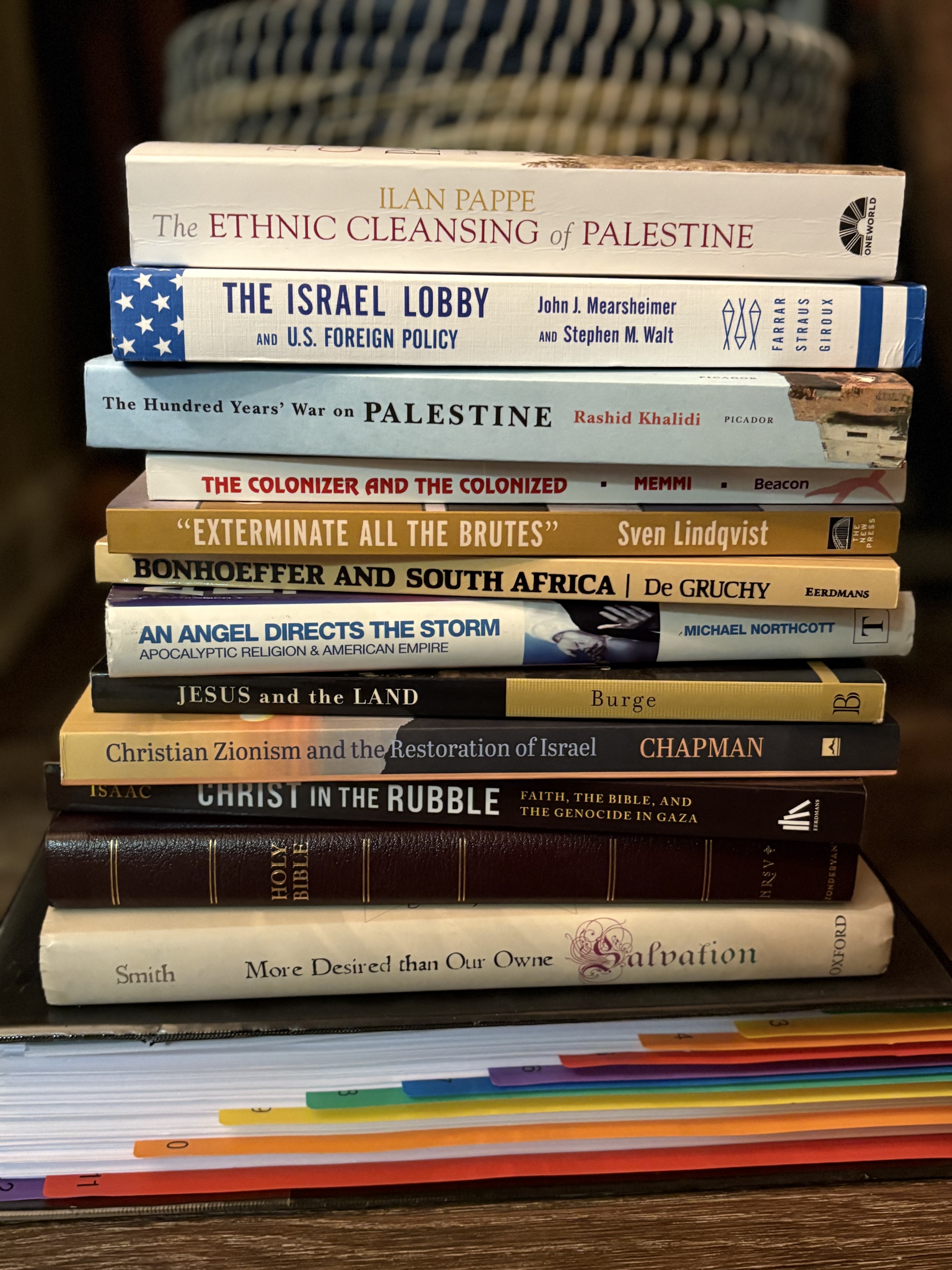
Three months later, I heard a sermon by Christian Palestinian pastor and theologian Dr. Munther Isaac called “Christ in the Rubble.” In my Evangelical Christian bubble, Palestinians were terrorists, not Christian pastors. Listening to his sermon grieved me and left me with a myriad of questions, but I did not pursue them because they still seemed…well, too complicated. 

A year and a half later and several months after a series of revelations led me away from my evangelical church home, I received a copy of Dr. Isaac’s book, also called Christ in the Rubble, for my birthday. Within the first few chapters, I was mesmerized. Page after page, Dr. Isaac measuredly described the historical events that led to what I eventually realized has become a story of ethnic cleansing and genocide. His book is monumental because it takes something complex and emotionally volatile and makes it understandable for someone like me who was not encouraged or motivated to learn about, and had assumed she could not understand, the issues surrounding Israel-Palestine.

Two months later, as part of my M.Min. program at St. Stephen’s University, I had the opportunity to enroll in a summer course called “Zionism, the Church’s Colonial Legacy, and the Palestinian Call.” Part of me was nervous. This would be my first SSU course and the topic was something I had only a book and a sermon’s worth of knowledge about. Would I be able to engage meaningfully? Would the learning curve be too steep? The other part of me was excited. I entered SSU to challenge myself to stretch my faith in world-changing ways, and I now knew that this is a watershed event of my lifetime. With my evangelical bubble burst, I could not—would not—live as an ignorant puppet. I wanted to understand—truly understand—and see the issue with the eyes of Jesus.

Dr. Mark Braverman proved to be as knowledgeable and gentle a guide as Dr. Isaac. In his own words, he is “a Jew, deeply connected to my tradition and to my people, who is horrified and heartbroken over what is being done in my name: for the suffering of my Palestinian sisters and brothers in Palestine and in exile, for the psychological and spiritual peril of my own people who have imprisoned themselves behind the wall they have built.”[1]

Over twelve weeks, I read broadly and deeply a high volume of texts from numerous scholars and theologians. I grew to realize that what we are witnessing is simple: Israel is undoubtedly committing ethnic cleansing and genocide against the Palestinian people. The reasons are more complex but identifiable. They include but are not limited to colonialism, Zionism, the Israel Lobby, flawed theology about the promise of land, false narratives about the founding of America, scripturally unsupported eschatology, and a twisting of the concept of antisemitism. At the root of most of these reasons lies a beast called empire. 

Silence is complicity. And thankfully, there are numerous examples of nations, faith communities, and individuals who have spoken out. Choose a few Kairos documents to read and you will find hope and a way forward amid an overwhelming tragic situation. There are options from South Africathe United Kingdomthe United Statesthe Philippines and most importantly, Palestine itself. More recently, you will find formal declarations of apartheid and genocide, including admissions from Israeli sources. 

As a youth and young adult, I read numerous memoirs from the Holocaust and always wondered why no one stopped the horrors from occurring. I told myself that they would have had they known. Well, today we know. The world knows. Reports of ethnic cleansing and genocide reach us daily. And yet, the cries continue, the people starve or are killed trying not to, the bombs fall, and the war machine keeps humming along. 

In my class, multiple students raised the point that they could not speak of what we were learning in their churches. I thought about that in context of my own experience. I have been active in church bodies in multiple states over the past thirty years, but in no church that I have attended was I ever encouraged to read or understand anything related to Israel-Palestine. Despite this, I knew the drill: Israel was the good guy that any true Christian would defend at all costs. Palestinians were terrorists and indefensible. Any alternative opinion was heresy.

Interestingly, none of this messaging came to me via direct instruction or even explicit teaching from the pulpit. It was just understood and soaked into me through prayer requests, prophetic words shared on Sunday mornings, and the corporate response to news related to Israel and Palestine, especially the October 2023 attacks. I have always been an eager student—taking classes, attending Bible studies, and reading books recommended by pastors and others I respect—but only in the past six months, under a pastor faithful to Jesus rather than wed to Christian nationalism or Christian Zionism or the evangelical church agenda and as a student at St. Stephen’s University, a Canadian school whose mission is “to prepare people, through academic, personal, and spiritual development, for a life of justice, beauty, and compassion, enabling a humble, creative engagement with their world,” have I been encouraged and equipped to learn about the Israel-Palestine conflict and to form my own opinions about what I have learned.

This is my Kairos moment, my time to speak out, to cease being complicit, to become a force of change, to use my voice and my gifts as a writer and teacher and encourager in my very small corner of the world. My message is simple: It isn’t complicated, and it is utterly critical. 

“But for those children who live and die in affliction tonight, are we not obligated by our humanity (if not our faith) to stop switching the channel, to at least attend and bear witness? Does not the crucified God demand that our ‘where are you?’ move beyond a desperate (or cynical) rhetorical question into a sincere inquiry, one that remembers to consider the cross?”[2]


[1] Braverman, Mark (2011, Dec. 7). What is a Kairos Document? [Presentation]. Kairos for Global Justice Encounter, Bethlehem.

[2] Jersak, Bradley (2022). Out of the embers: Faith after the great deconstruction. Whitaker House.
Seminarian Era

I first applied for seminary in 2008. A few years before, I had been privileged to be part of a Bethel Bible Series Intensive led by the pastor of our church in Jacksonville. We slowly and deeply studied the entire Bible over two years. The experience was so life-altering that several students immediately applied for seminary or changed careers. As a military wife and mom of four young children, the impact for me was less visible but no less dramatic, leading me to rely on God and stretch myself in ways I never would have before. However, as I now know, stepping out in faith often brings unexpected outcomes. By 2008, my marriage was an increasingly negative force in my life, I had suffered four back-to-back miscarriages, and the bold decisions I had made in faith had left me confused and depressed. 

At that point, I decided to join my fellow Bethel Intensive classmates who had embarked on seminary journeys. My application was accepted, and I enrolled in my first course—Greek—only to learn I was pregnant again. Fully expecting to miscarry, I questioned God for allowing me to endure yet another loss when I was taking steps to move forward from a season of despair. His response was to put my seminary journey on hold, again showing me that my simple plans, while not wrong, were but a shadow of what He had in mind for me. 

I did not miscarry but gave birth to Lydia Eliana, my beautiful daughter who happened to have Down syndrome and a congenital heart defect. Her life has changed me and my faith in more ways than I could count or describe. From the night after her birth when I experienced a visitation from God in our hospital room to her open-heart surgery eight months later, my previous trust walks began to look like mere baby steps. God expanded my world and my faith exponentially, and once again not a “blessed” life but unimaginable trial followed. 

I sometimes refer to the years that followed as my Job years. They brought three adoptions of children with special needs, numerous surgeries and extended hospital stays for Lydia and her younger siblings, a flood, a tornado, the death of a son, and the steady decline of my marriage that had turned abusively toxic. In 2018, I secured a safe home for myself and my youngest children despite overwhelming odds. Four years later, I became the one thing I never wanted to be—an ex-wife—and in the process, I tasted personal injustice in a system skewed toward men with money and careers over the wives that helped them secure both.

My years as a single mom to three children with exceptional challenges as well as four adult children have honestly been the best of my life. With less money, less personal time, and much more responsibility, I have rediscovered the self I lost to a relationship that was unhealthy and a life that was supposed to be scripted a certain way but that very nearly suffocated me and my children. I earned my PhD in Special Education during those years, an undertaking that baffled many who questioned the timing but was lifegiving to me. As a homeschool parent, I watched my research play out in real time in my own children’s lives. I began writing again and learned that I could use my voice to shine light on the ability and potential of all people. I learned that families don’t have to look like the “ideal” to be loving and whole and healthy. I watched God redeem and restore all that had been destroyed in my relationships with my children. His provision for me during those years was beyond anything I could have hoped.

My own experience, those of my children, and events in our nation during the past five years opened my eyes to how differently people in our nation experience the world. At a march in Norfolk, Virginia in the spring of 2020, I heard speakers talk of systemic injustices and racism through things like housing, finance, and zoning—concepts that were completely new to me. I began to read voraciously—history, memoir, political theory, theology, and scripture—trying to understand the “-isms” that plague our country and why our nation is so slanted, fractured, and polarized. Meanwhile, the political environment in our nation declined to unimaginable levels, and voices emerged that married the Christian faith with some unbelievable bedfellows. I struggled with my own local church’s overt and covert complicity in what I was witnessing on a national level and eventually chose to leave a familiar worship space for one that centers the radical love and power of Jesus as depicted in Scripture. The more I read and experience, the more convinced I become that the answers aren’t just in federal policies or even local practices but in the stories of individual people and in respectful listening to, consideration of, and acting on those stories.

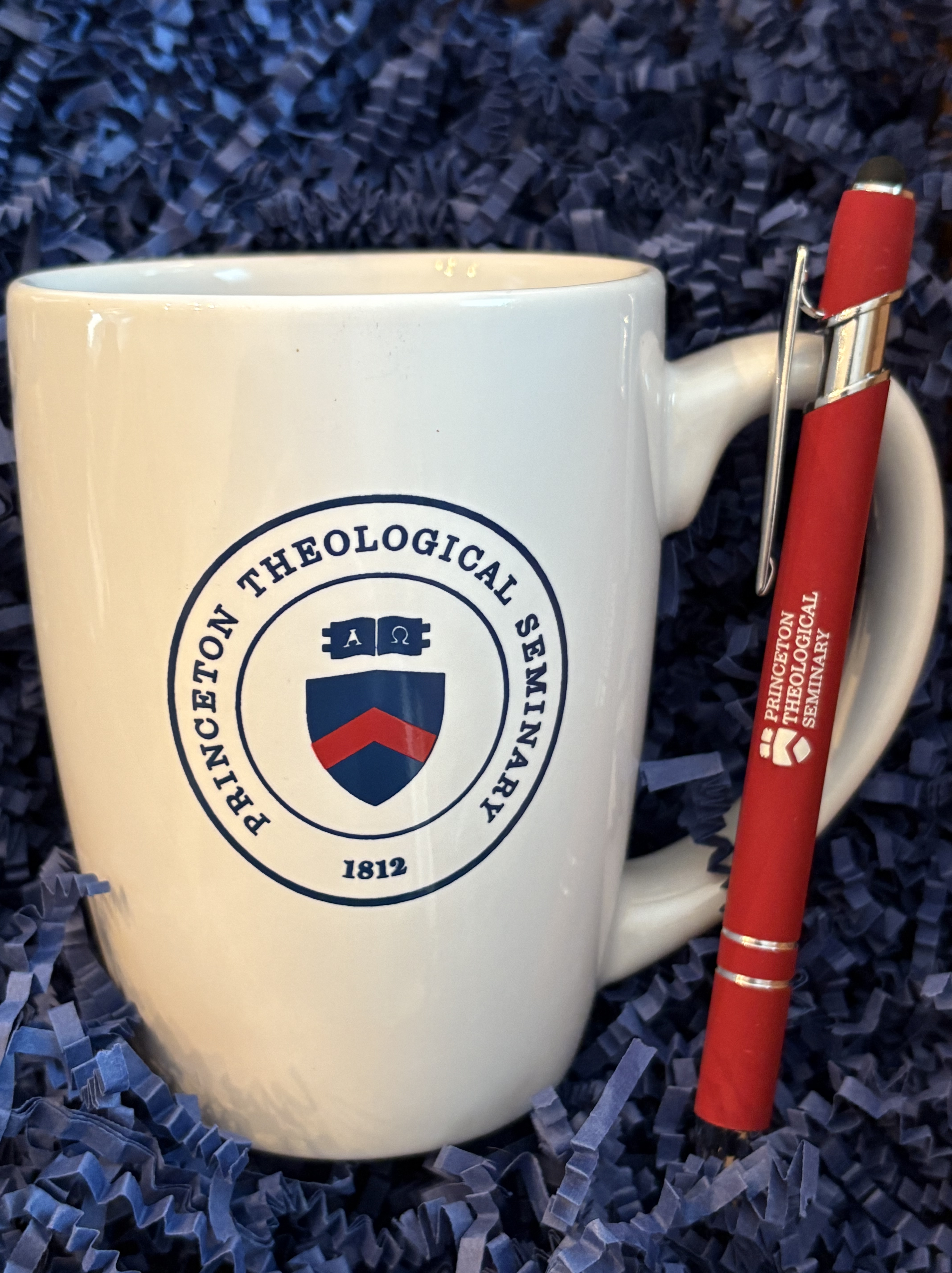
Lydia turned sixteen in October, a few weeks before I received a letter of acceptance to Princeton Theological Seminary. Pausing my seminary journey to raise her and her siblings was not a sacrifice but an opportunity. The version of myself that will pursue a Master of Theology in Justice and Public Life from PTS has astronomically more experience and understanding than I had when I was first accepted for seminary study almost two decades ago. The mission field in which God led me to serve and on which I live each day of my life has developed a much sharper sense of my calling as an advocate of those whose voices are marginalized, silenced, belittled, distorted, or completely unacknowledged by society. Whether through my role as an educator or a writer, I know that I am called to be a difference-maker in the pursuit of justice. As I enter this program at PTS, several aspects of the “how” I will do this remain unknown. I trust God to direct my steps as He has always done and believe unequivocally in His capacity to lead me wherever He knows I need to go to fulfill His purposes in my life.

Just after the election, my friend Kiva sent me a link to a podcast featuring Heather Cox Richardson, a historian and writer whose work I have found to be exceptionally informative and empowering over the past four years. In it, she discussed ways to move forward in the coming years. Her advice was to do what you do best and do it with joy. What I have always done best is read, learn, teach, and write about the people and issues for which God has broken my heart. It is with that intention and with an open posture that I enter my “seminarian era,” eager to see God provide the “how” I will need to fulfill the “what” and “why” He planted in my heart during what I hope is only the first half of my life.

In her most recent newsletter, Krista Tippett wrote of the current Moment, describing it as “an age of devastating tumult” as well as “an age of magnificent possibility.” She expounded: “Much is breaking. Much is being born. The two go hand in hand and that is one of the deepest and strangest, most terrible and most redemptive truths of human reality.” She called for us to combat the “narrative of danger and destruction [that] comes to us a thousand times, a thousand ways, each day” by training “our eyes and imaginations on the beauty and creativity that are so alive in our world, the generative learning and stretching that are underway.” For me, the opportunity to study the theology of justice and and public life through PTS is my act of resistance, my way of training my eye and imagination in order to equip myself to “do what I do best and do it with joy.” In doing so, I hope to “combat the narrative of danger and destruction” by adding my voice to the remnant crying out on behalf of the love and mercy Christ Himself modeled. I have to believe that if enough of our little voices join together, the sound will rise above the piercing volume of falseness and cruelty that dare to carry the banner of a Man who bears no resemblance to their noise.

Diamond Cutters

Diamonds form below the Earth’s surface in molten rock under specific amounts of extreme heat and pressure. Their resulting molecular structure makes them the hardest known mineral in the world, so a diamond can only be scratched by another diamond. In their natural state, however, diamonds are rough stones that require processing to become a sparkling, gift-worthy gem. The task of crafting that gem falls to a diamond cutter. 

Many choices go into the diamond cutter’s work: whether to cut the stone to a manageable size by cleaving it along its weakest plane, by sawing it with a rotating blade, or by utilizing a laser. Whichever method is chosen, the process is time-consuming and demands that the diamond cutter decide which part of the diamond will become the table (the flat top with the largest surface area) and which will become the girdle (the outside rim at the greatest point of diameter). The cutter then uses other diamonds to hand cut the diamond to the desired shape and to create the girdle’s rough finish. Finally, he or she uses a wheel and an abrasive diamond powder to smooth the diamond and create a finished look.

Last week marked the tenth anniversary of this blog, a platform I created to capture our infant twins’ adoption story as it unfolded, but which ultimately became a space to reflect upon and share a variety of stories over this past decade of life. In the end, not only have the experiences I captured transformed me, but the process of reflecting on and writing them has as well. My hope in sharing them is always that perhaps each one touches and, in some small way, transforms at least one of the people who take the time to read them. 

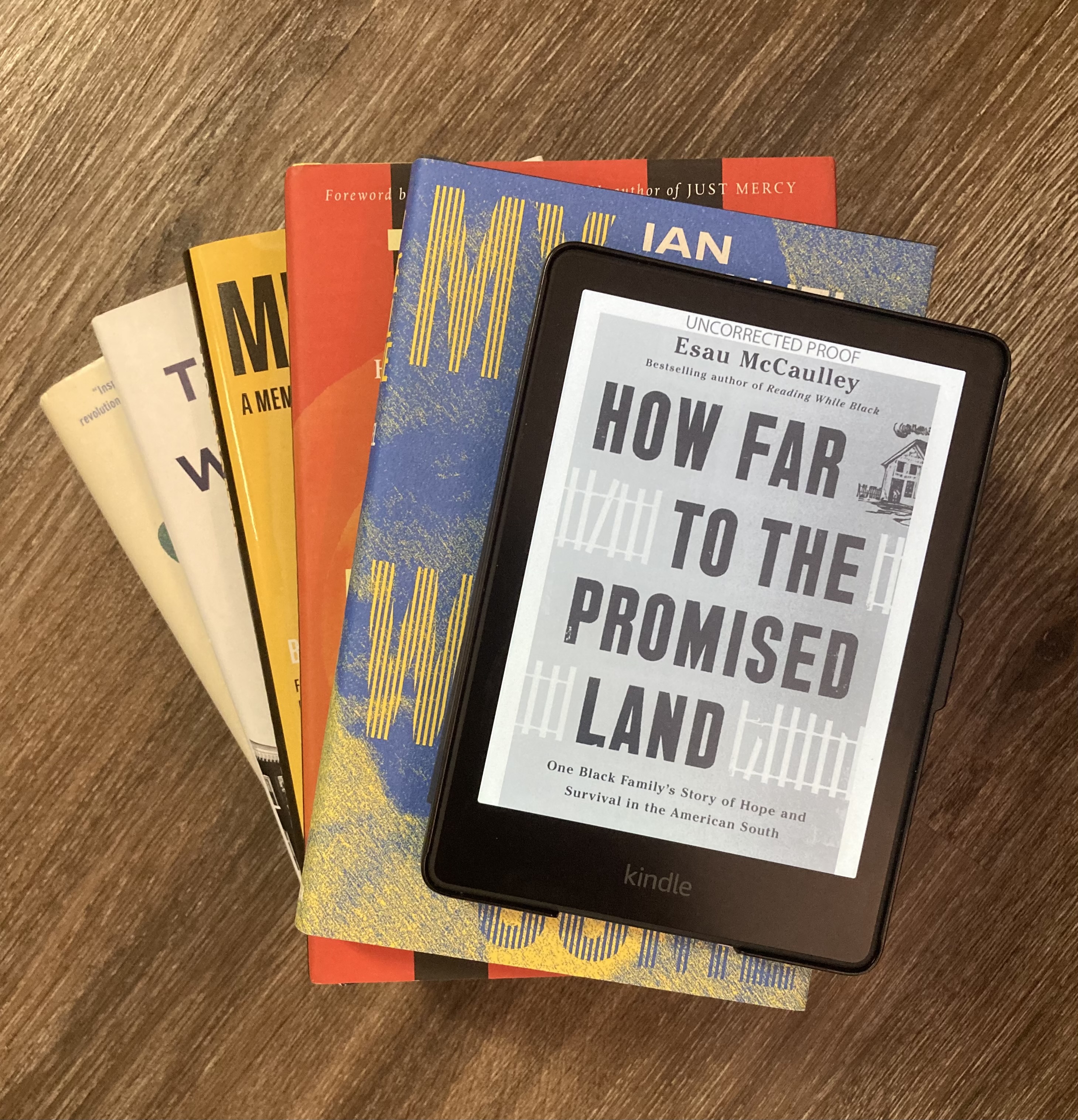
As I reflected on this milestone in my own writing journey this past week, I also had the privilege of participating in a Q&A  Session with Esau McCaulley about his forthcoming book How Far to the Promised Land: One Black Family’s Story of Hope and Survival in the American South. Listening to Esau share the decisions he made about what to include and not include in his book, I was struck by the similarities between the craft of memoir writing and the craft of diamond cutting. 

Like a diamond cutter, an author who writes of his or her personal journey begins with a vast amount of naturally-occurring raw material. Each person, event, and experience in a writer’s life is a part of his or her quarry of stones. How does a memoir writer even know where to begin? 

Diamonds are one of three forms of carbon, which is both “one of the most common elements in the world and is one of the four essentials for the existence of life.” Just as the raw material of a diamond is brought to the surface and transformed by a diamond cutter into something exquisite, so are the events of a life in the hands of an author. The choices made during that extensive process affect the value of the gem produced.

I eagerly pre-ordered Esau’s book last winter when the release date was first announced, and when the invitation was later extended to join his launch team, I quickly responded. Esau has long been one of the most respected voices to which I turn for a thoughtful, biblically-sound response to the issues of social and racial justice that pervade our nation. I knew Esau as a young seminary graduate where he served in a church our family attended immediately after our move to Virginia. His wife Mandy was our children’s primary care physician during her three-year pediatric residency at the naval hospital near our home.  

Because of my respect for Esau as a writer and theologian, the snippets of knowledge I had from social media of his family’s experiences after leaving Virginia, and my love for memoir as a literary genre, I anticipated an enjoyable and engaging read. What I experienced, however, was so much more.

I have written previously of the power of story and have made a personal vow to follow the advice that Farah Jasmine Griffin’s father gave her to “read until you understand.” In an effort to understand as much about the experience of others as I can possibly grasp, I have read memoirs by Anthony Ray Hinton, Jr., Wes Moore, Viktor Frankl, Frederick Douglass, Michelle Obama, Brandon P. Fleming, Alicia Appleman-Jurman, Harriet Jacobs, Ian Manuel, Elie Wiesel, Michelle Kuo, and many others. Each has profoundly affected me in its own way; however, Esau uniquely crafted his memoir in ways that provided me new and deeper levels of understanding and reflection.

Diamonds are judged on four factors that determine their beauty. The first factor is the cut, which is determined by the cutting process described above and the resulting facets and shape of the finished diamond. A diamond’s clarity is a measurement of its flaws or inclusions. Its weight is measured in carats, and its color ranges from yellow to icy white, which is the most transparent and most expensive. In addition, a diamond’s luster and dispersion of light, though not one of the four factors, also contribute to its beauty and worth.

As the diamond cutter of his story, Esau’s choice of cut laid the foundation for the entire book. Rather than the more common, narrow focus typical of most memoir (and powerful in its own right), Esau had a pivotal experience that helped him see the need to write about “the community and family that shaped me—the people normally written out of such stories—and how the struggle in each life to find meaning and purpose, regardless of its outcome, has a chance to teach us what it means to be human.” He wrote his story along with that of his mother, his father, his grandparents, and numerous other family and community members in what is ultimately a wider yet deeper picture of his own life and especially the interconnectedness of all lives.

In crafting his story, Esau digressed from the work of a traditional diamond cutter who would seek to minimize flaws and inclusions for the sake of clarity. A diamond may be more valuable the closer it is to perfection, but clarity in a powerful story is achieved through the transparent inclusion of the underside of life—the parts that we often hide but actually need to examine, to understand, and sometimes to act upon. Esau took the risk of sharing some incredibly difficult and flawed aspects of the people of whom he wrote, including himself, and in doing so provided a powerful opportunity for his readers to both understand and be understood. I could not list the number of connection points offered in the twelve chapters of this book, but I would dare to say that I believe its story will resonate in some way with anyone who reads it.

The weight of Esau’s story is significant. As the story of a black family in the American South, how can it be anything but heavy? As I write this, news has broken of a racially-targeted mass shooting in Jacksonville, Florida—a place that both my family and the McCaulleys have called home. We need this story and many others like it. We need a nation that encourages reading and discussing these stories. Most of all, we need the transformation and action that can come from understanding the intricacies of people, especially those who are targeted in crimes such as the one in Jacksonville—and yes, even those who commit them.

Esau observed, in the chapter on his marriage, that his own marriage and more broadly, any interracial marriage, “is not about racial reconciliation in America; that is too much weight for anyone to bear.” The same could be said about this memoir. It is a weighty story of one family over a period of specific times and places. It cannot carry the burden or promise of solving the issues it brings to light, but it can offer to take each reader a step closer on his or her journey of understanding. As someone who has been deliberately pursuing her own understanding, I received from Esau’s diamond crafting an entirely a new vantage point from which to see, not only an individual but, “the story of a people.” And as the subtitle of the book states, it is both a survival story AND a story of incredible hope. Reading it evoked a full range of emotions in me from sorrow to laughter, from outrage to respect. I laughed, I cried, I raged, I learned, and ultimately, I was transformed a degree more by the experience.

The most expensive diamond is transparent. Writing this memoir had to be costly for Esau and his family, but the result is a multifaceted, brilliant gem with immense value to the reader. Part of the power of his narrative is that while it offers redemptive hope and forgiveness, it acknowledges the cost of trauma…the message that is often avoided yet most needed in areas of any type of reconciliation, whether racial, social, or personal. His story not only moved me closer to understanding, it gave me a new vantage point from which to see and understand ALL stories, including my own. It encouraged me as a writer to continue crafting my own diamonds out of the molten rock of my own experiences and to do so with thoughtful intention to the cut, the inclusions, and the clarity with which I share.

The dispersion of light is not considered one of the four main factors on which a diamond’s beauty is judged. Dispersion occurs when white light passes through a prism and splits into its spectrum of colors—what we know as the colors of the rainbow. The very best stories are those that can be held up and examined so that the light hits them in a myriad of ways from multiple angles and perspectives. That light reveals truth about the subjects of the stories, their authors, and those who hear them. But in a truly powerful story, that light will be dispersed and the story will transform all who encounter it—the writer, the reader, and the world in which they live—perhaps even such that white light is seen for the spectrum of color it truly is. 

Write on, diamond cutters.

(Information on diamond cutting retrieved from How Stuff Works.)

Divided We Stand

Five days after the murder of George Floyd, I sat by my daughter’s bed in our local children’s hospital, feeling deeply saddened and helpless about the racial division in our country. I shared a list on social media called “Anti-Racism Resources” that stated it was “intended to serve as a resource to white people and parents to deepen our anti-racism work.” Along with the link, I wrote a simple message: “Excellent list of resources for teacher friends, mom friends, and just friends in general. I want to be part of the solution.” A measly offering, I knew, but somehow it felt better than doing and saying nothing.

A Facebook “friend” that I knew only from some shared community activities over the years commented, “Though I agree with the sentiment and the drive to do something helpful, several of the resources listed in this reference have a decided political and polarizing agenda.” I was genuinely puzzled by her comment and simply responded that I appreciated a starting point for resources but trusted everyone to discern for themselves what is useful for their needs and what is not. 

She was not reassured and replied with, “It’s your wall and of course you are free to do as you wish [insert happy face emoji]. I am just concerned about the widespread dissemination of anything that may be geared at creating more divisiveness.”

This exchange has stayed with me over the past several years as educational debates have raged across the country. I recently stepped away from a teaching job after being told to avoid “any politically charged issues and topics” in developing a course for teachers working with at-risk learners—a virtual impossibility, considering poverty and race are two predominant causes of a learner being at risk of academic failure. In my home state of Virginia, an executive order was passed “ending the use of inherently divisive concepts, including critical race theory, and restoring excellence in K-12 public education in the Commonwealth.” Florida just banned a new College Board pilot Advanced Placement (AP) course in African American Studies on the grounds that the course is “inexplicably contrary to Florida law and significantly lacks educational value.” 

As an English teacher who has taught AP courses for the past five years, the Florida ban astonishes me. AP courses are not mandated; they are chosen by students—typically the most academically advanced students. They are carefully designed courses with rigorous guidelines because they culminate in an exam that provides students an opportunity to earn college credit. The AP courses offered by the College Board reflect an array of subject areas representative of the choices in the general education curriculum of a typical liberal arts college—Calculus, Statistics, Chemistry, Environmental Science, Psychology, Human Geography, Music Theory, European History, Chinese Language and Culture, and Microeconomics are just a sampling of the courses currently offered. A course in African American Studies is a logical addition to the AP course menu.

The statement that such a course “significantly lacks educational value” would be baffling out of the context of our current culture of stupefying political and governmental attempts to silence voices that desperately need to be heard. Ironically, the very act of avoiding “divisive concepts” perpetuates divisiveness more than the inclusion of them ever would. Rather than “protecting” students from divisiveness, these acts fracture our nation, dividing us into those who foster ignorance and those who seek understanding.

As a teacher, I encouraged my students to join academic conversations by articulating their own experiences, beliefs, and opinions and supporting them. When researching an issue, I implored them to go first to primary sources—the letters, speeches, transcripts, and memoirs of participants in whatever historical, scientific, or cultural event they were studying. If participants were silent, I encouraged them to discover why. Were they illiterate? If so, why? Did a disability or lack of access to necessary tools inhibit their ability to communicate their experiences? Did systems exist that silenced or simply did not value their perspectives? 

Primary sources are not infallible. History is not definitive. Perspective and context are vital components of every story. The same experience told from multiple viewpoints will always sound different, much as each instrument in an orchestra produces a unique sound and plays a unique part of a movement. Diverse, even contradictory, stories paint a fuller, more detailed picture of an event and while they can never fully capture an experience, they provide a curious individual the opportunity to at least try to understand the event or situation being described. Omitting the most tragic, flawed, disturbing parts of a history deprives a learner not only of the full picture but also of the lessons to be learned, even from failures and atrocities. The authors of the Old Testament books of Judges, the Kings, and the Chronicles clearly knew this.

I, too, once thought that the goal was to ignore difference and pursue unity. But unity doesn’t require sameness or turning a blind eye to difference. The foundation of unity is a common respect for the value of human life—every human life. Understanding as much as possible about the histories and experiences of others is unifying, not divisive. My experience as a white single parent of children with disabilities differs from those of my black friend who parents two young adults, including a son, in a culture where black men are in danger if they are pulled over for a burned-out taillight. They differ from those of a friend who co-parents her son with her fiancé, her ex-husband, and her ex-husband’s husband. They differ from a Sikh family that is torn between the desire to pass on tradition and the risk of sending a turbaned man out into a world of fear and hate. They differ from the men and women who sit on death row either because they made a mistake or because someone else did and they were falsely imprisoned for it. They differ from a child who grows up in a neighborhood where drugs are easier to get than food. They differ from my own child whose brain suffered so much damage at birth that she struggles to see, to eat, and to move her body in the simplest of ways. I will never fully comprehend any more than someone else could fully grasp my lived experience, but every story I hear or read expands my capacity for empathy and my sense of unity to the people in our beautifully diverse nation. 

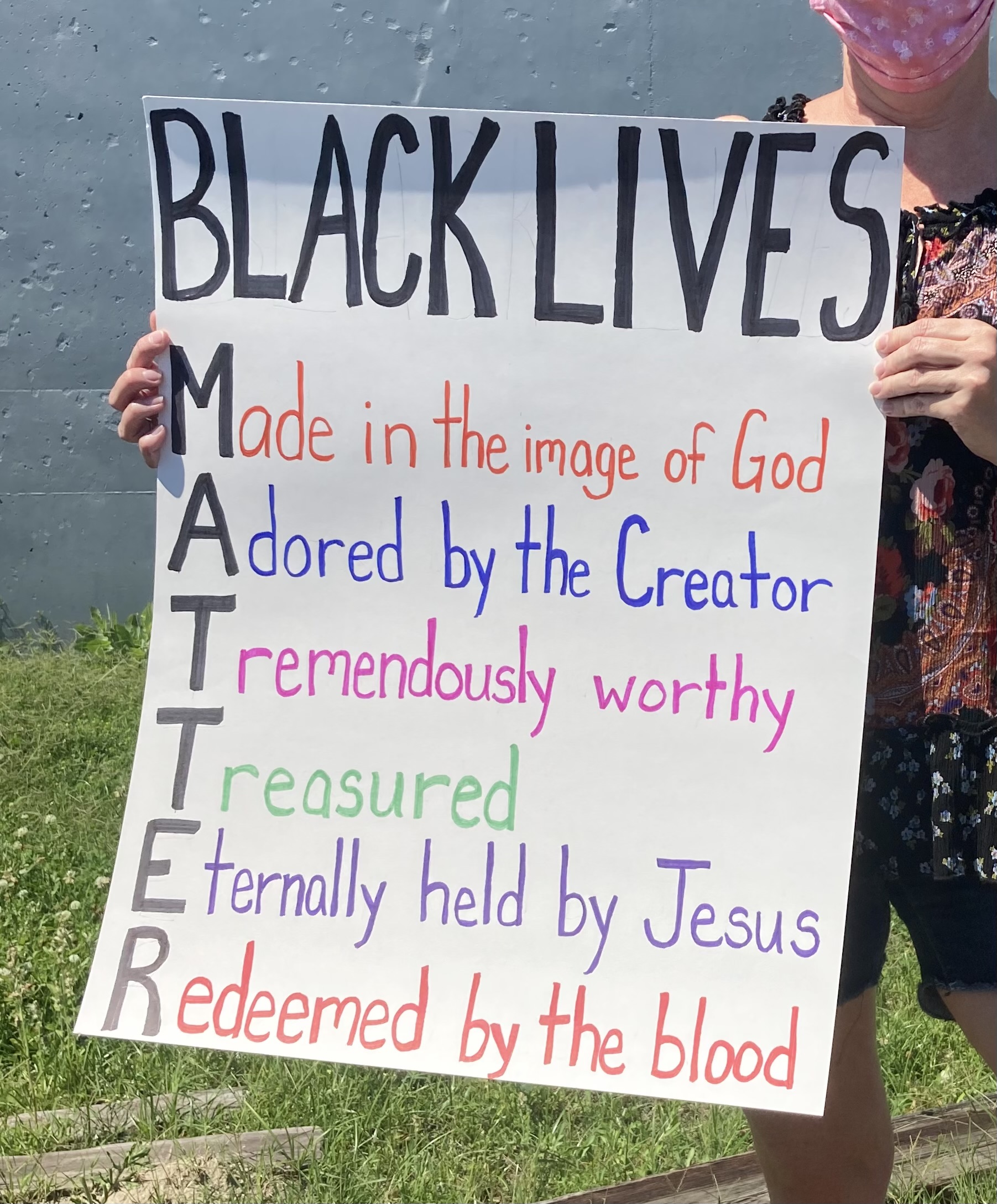
My own journey to understand more about racial justice has shown me both the impossibility of truly understanding and the necessity of never ceasing my efforts to do so. In the weeks after George Floyd’s murder, I had the opportunity to participate in a prayer march with members of my church. I have never felt more truly a part of the body of Christ than I did marching through the streets of Norfolk, Virginia, with my Black Lives Matter sign. But I was also taken to school that day. Listening to community leaders speak about specifics of systemic racism in our community opened my eyes to how very little I know about how we got to where we are today. I am an educated person. I am a teacher. I have had many black friends through all stages of my life. I admire numerous black heroes in our nation. I took college courses on African American literature and have included works by Frederick Douglass, Martin Luther King, Jr., James Baldwin, Malcolm X, Maya Angelou, Bryan Stevenson, and many other black writers in my English courses for years. I thought, at the very least, I was not part of the problem. But after listening to speaker after speaker at that prayer march, I realized how incredibly ignorant I have been to the depths and sources and consequences of the racial disparities in our nation and how complicit I am in them.

Since that June day in 2020, I have read and listened voraciously, trying to learn what my education failed to teach me. I have been a student of Anthony Ray Hinton, Jr., Esau McCaulley, Wes Moore, Ian Manuel, Austin Channing Brown, Brandon P. Fleming, Howard Thurman, Nikole-Hannah Jones, Danté Stewart, Ibram X. Kendi, Cole Arthur Riley, and Derrick Bell. My bookshelves overflow with the stories and perspectives that will teach me next. Everything I read or hear simultaneously helps me understand more and highlights the fact that I can never truly understand. It exposes not only my ignorance but also my illusions of innocence. As long as the problem of racial injustice exists, we are all part of the problem. Every story I hear has expanded both my understanding of the “faces at the bottom of the well” and my desire to join their ascent, however hopeless it sometimes feels. 

The idea that a course in African American Studies “significantly lacks educational value” is ludicrous. It would be valuable for every American citizen to take that course—and a course on every other marginalized people group in our country for that matter. We all need MORE understanding, not less. The word educate is derived from the Latin root educat (led out). To educate is to lead someone out of ignorance, not by deciding what they should know or believe but by equipping them to be critical thinkers who are capable of reading multiple perspectives, discerning their own understanding and beliefs, and then adding their voice to the conversation—the conversation of a diverse nation united by its mutual respect for the people that comprise it. The thought of any individual seeking to hinder another individual’s access to specific perspectives and stories defies the very purpose of education. It is an act rooted in ignorance and fear. It is the epitome of the very divisiveness it seeks to eradicate.

Team Hamlin

I ordered my first official NFL jersey last week. It only took me 52 years. I enjoy a good pro football game but have never closely followed an NFL team. My team loyalties lie with my college alma maters. As a lifelong UNC Tar Heel basketball fan and a dedicated Michigan Wolverine football fan, I bleed Carolina blue on the basketball court and have Go Blue forever imprinted in my DNA from grad school days in “The Big House.” 

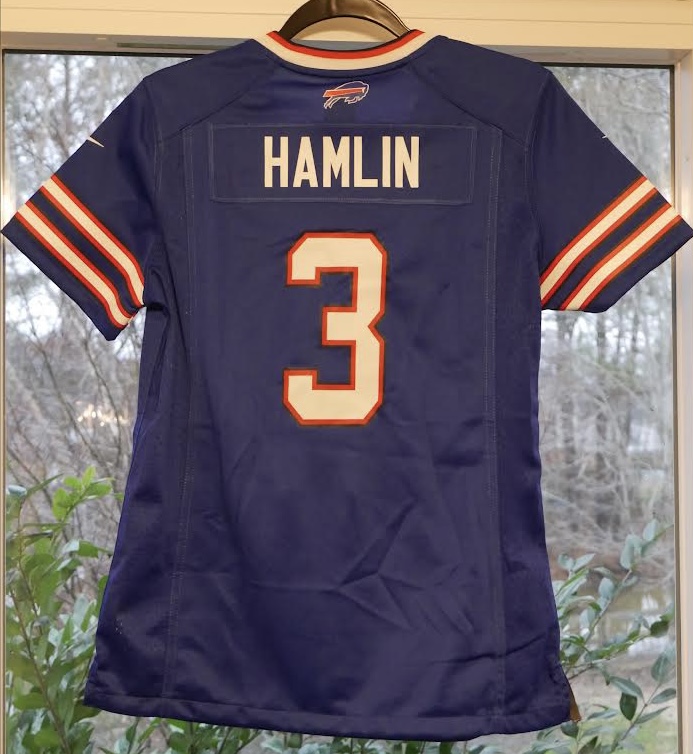
I will wear my Buffalo Bills Hamlin 3 jersey with no pretense of being a member of the Bills Mafia (yet) but simply as a grateful tribute to the hope and inspiration I witnessed over the first week of 2023. In stark contrast to the embarrassing fiasco played out in our nation’s capitol by bickering national “leaders,” watching the events surrounding Damar Hamlin’s traumatic injury unfold exemplified all the good I want to believe about humanity and our nation’s potential. 

I once longed for Condoleezza Rice to run for president and think I now understand why she set her sights on the NFL commissioner position instead. Two decades ago in the New York TimesRice was quoted as saying, “I think it would be a very interesting job because I actually think football, with all due respect to baseball, is a kind of national pastime that brings people together across social lines, across racial lines. And I think it’s an important American institution.”

That’s exactly what we witnessed over the first week of 2023 and it was truly beautiful. Hamlin’s injury was horrific and terrifying, and I wish it had not happened to him. But all that was triggered the moment he crumpled to the turf was extraordinary and will hopefully carry him through his long road to recovery and beyond.

When I wear my jersey, I will think of Damar’s parents, who hospital personnel and the Bills head coach described as exemplary in their handling of their son’s life-threatening injury. As a parent of multiple children with complex medical issues, I have spent many days of my life in ICUs, including the day our son Timothy died there. It is both an overwhelming and beautiful place to be, but it is not an easy place to be. Tensions run high in life-or-death situations, and the ICU is a constant life-or-death situation for its inhabitants. The ICU staff is trained for that, the patients are fighting for their lives, but family members are thrust into the environment, usually without warning. Sleep is elusive, stress abounds, and the stakes are high. To have your parenting described as exemplary in that context is an impressive tribute.

Damar credits the presence of his parents as “the biggest difference” in his life, but that presence did not come easily. Damar’s dad was imprisoned for a drug conviction for three-and-a-half years of Damar’s childhood. Whatever choices may have led to Mario Hamlin’s conviction as a young father, they were clearly overshadowed by his choice not to let that define him or give him an excuse to abandon his son. As Bryan Stevenson of the Equal Justice Initiative (EJI) says repeatedly, “Each of us is more than the worst thing we have ever done.” The fact that Nina and Mario Hamlin held their young family together through such adversity likely prepared them for what they faced on January 2 and the days that followed; the hottest fires forge the strongest steel. When I wear my jersey, I will hope to parent my family with the same resolve.

My Tar Heel legacy (born, bred, dead as our fight song so eloquently states) imprinted me with a clear understanding of rivalry and competition. When we beat Duke in the semifinal game of the 2022 Final Four, that was as satisfying to me as winning the national title would have been. (In addition to passing the dreaded swim test, all UNC grads are mandated to hate Duke for the rest of their days.) Seeing the intensity of the Bengals-Bills competition immediately dissolve into unity in prayer and support for Damar on the field and over the week that followed was incredible to witness. Cincinnati’s acts of hospitality and support trickled across the nation and into Week 18 of competition as opposing players, coaches, and fans expressed support for Damar and the Bills. When I wear my jersey, I will carry these memories as hope for our polarized nation.    

Medical providers have long been heroes in my world. The heart surgeon who repaired the hole in my daughter’s heart and the perfusionist who simulated her heart and lungs while the surgeon worked seemed to have superpowers in my eyes. The many nurses, doctors, respiratory therapists, and countless other medical providers who have cared for my kids year after year have my utmost respect. Seeing the athletic trainers, paramedics, trauma physicians, and other “ordinary” folks doing their everyday jobs while the nation was riveted to television broadcasts and Twitter updates allowed a dark situation to illuminate something that happens somewhere every single hour of every single day. When I wear my jersey, I will remember the people who live ever-ready to fight for the life of whoever needs their care. 

My youngest son is my sports-watching buddy, but he can never play a contact sport because of the cerebral shunt placed in his head just before his first birthday. He can’t emulate the physical prowess of the elite athletes we cheer for, but I will surely encourage him to show the love and brotherhood that Damar Hamlin’s NFL brothers demonstrated this past week. The hugs, tears, and prayers were not limited to the minutes or even hours that followed Damar’s cardiac arrest but extended into the next weekend and to the week of his return to Buffalo. In a world where masculinity is too often equated with self-reliance, bravado, and emotional absence, we sure needed to see that when shaken by sudden trauma, the biggest, strongest, toughest men in our society dropped to their knees, bowed their heads, and pleaded for the life of their brother. And as they waited days for news, they clung to and took care of each other. When I wear my jersey, I will remember that as Damar tweeted after waking up to find he had “won the game of life,” “Putting love into the world comes back 3xs as much.” 

I do not subscribe to the philosophy that tragedies happen “for a reason,” but looking for the good and the hope in darkness has served me well in the hardest seasons of my life. Damar Hamlin has a long recovery ahead of him, but everything I have seen from him, his family, and his teammates makes me believe that they, too, will be looking for the good and the hope. Perhaps the nation that came together in the first week of 2023 to show “Love for Damar” can put some love back into the world by believing that young dads in prison can grow into exemplary parents and by supporting overworked medical providers whether they care for pro athletes or kids with disabilities. Maybe we can encourage our sons to look up to men who pray and cry and hug and stand in unity, even for their “enemies.” And perhaps our polarized nation, whose leaders seem to be constantly embroiled in conflict, can follow the NFL’s playbook this past week and come together across racial, social, and political lines. That’s the team I want to be on—the team whose jersey says Hamlin 3.

Time to Scream Back

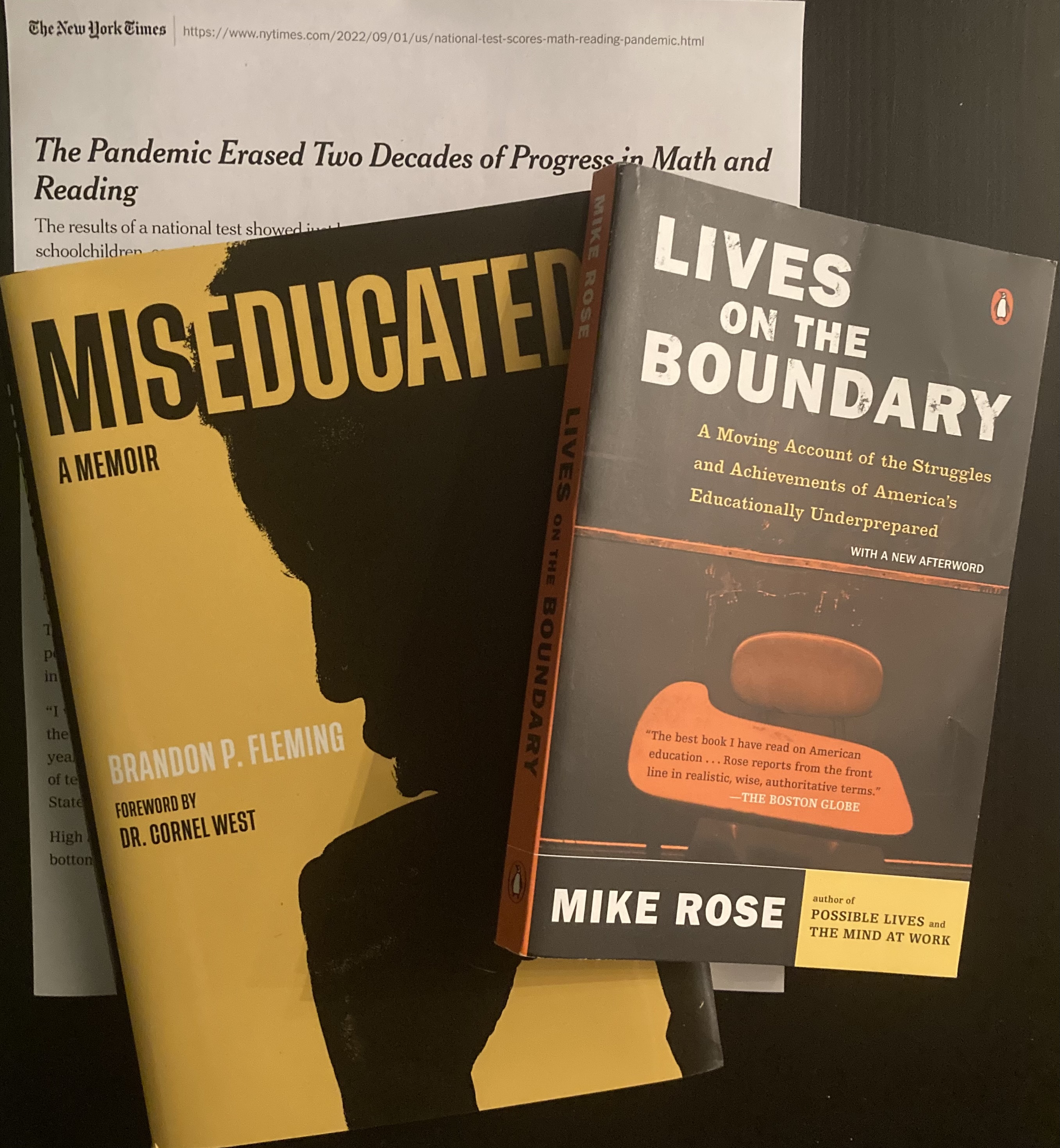
The New York Times headline that splashed across our devices three weeks ago screamed The Pandemic Erased Two Decades of Progress in Math and Reading. It’s time for American educators to scream back.

Did the pandemic erase two decades of progress? No. Did it harm our youth in a myriad of ways? Yes. But the data that prompted the screaming headlines don’t capture the harm. They capture the results of a national sample of nine-year-olds on a standardized test. Once again, a snapshot from an isolated instrument is used to make a broad statement about systems and individuals, neither of which it can remotely encapsulate. The broken state of education in our nation goes much deeper than a standardized test can possibly depict, just as the learning potential of the student taking that test is so much more than it can possibly portray. 

I have been an educator since the day I knew what one was—from the tiny schoolroom my parents let me create in our spare bedroom to teach my animate and inanimate pupils (aka my brother, my grandmother, and my stuffed animals) to a wide variety of classrooms over the past thirty years, ranging from a rural high school in North Carolina to an inner city junior high in Florida to a graduate classroom in Michigan to an alternative high school in northern Virginia. I have taught online, in people’s homes, in church classrooms, and on my living room couch. I have worked with AP students who earned perfect scores on the SAT and students who have “no measurable IQ.” The study and practice of education has been my life’s work. 

And that headline makes me want to scream. 

The alarm sounded by the “nation’s report card” will be received as the educational equivalent of a six-alarm fire to which all available personnel should respond. But if the response is federal policies crafted by polarized politicians to pour funding and programs onto the fires of our educational system that will be deemed successful when the standardized test scores of nine-year-olds rise from the ashes and show that pandemic losses have been regained, nothing will have changed. 

American educators, it is time for us to scream back at the headlines. If you interact with a child in our nation, you ARE an American educator. Our global, interconnected, fast-paced world is the classroom of our nation’s youth, and the most educationally valuable moments of a child’s day are any in which he or she is engaged in everyday life with another human being. Our children’s education IS in crisis, but the problems are much bigger than a standardized test can possibly capture. Our youth live technology-saturated lives and face unbelievable risks of violence, addiction, and abuse. Our teachers have an innate passion for teaching and a love of young people but have been shackled for years by standards, tests, policies, and paperwork. Parents are overwhelmed, overworked, and under-supported in their day-to-day lives. And our leaders are embroiled in an unbelievable national display of pervasive, ego-driven polarization in which everyone loses.

Almost thirty years ago as an eager graduate student in the University of Michigan’s School of Education, I devoured the words of Mike Rose in his autobiography Lives on the Boundary. As Rose reflected, his story “makes particular and palpable the feeling of struggling in school, of not getting it, of feeling out of place” but also conveys “an overall narrative of possibility, possibility actualized through one’s own perseverance and wit, yes, but also through certain kinds of instruction and assumptions about cognition, through meaningful relationships with adults, through a particular set of understandings about learning and the relationship of learning to one’s circumstances” (p. 247). His work guided and inspired my classrooms for years to follow.

A few weeks ago as I drove to visit my father, I was equally mesmerized by the voice of Brandon P. Fleming as he narrated his memoir Miseducated. Fleming’s story is remarkable and profound and inspiring. It simultaneously encapsulates the despair and the hope of what education is and what it can be. His vision and his commitment to act on that vision dramatically changed the lives of numerous young people and their families—not to mention his own. In the epilogue of his memoir, Fleming implored his scholars to use the voice he helped them discover to break barriers and shift balances of power. Fleming reflected that “where a man has no voice, he does not exist. He can even be present and not exist, because inferiority is an induced consciousness whose physical manifestation begins with silence. He is seen, but he is not heard. He is not understood. Because he does not matter…But when he discovers his voice, he determines that he can sing and summon the sound of hope” (p. 251). By singing his own song, Fleming inspired me to sing mine.

Rose and Fleming, two men who lived in very different times and cultures affirmed the same truth I captured in my dissertation written this past year—a study based on the theories of Reuven Feuerstein that captured the powerful mediation of mothers homeschooling learners with special educational needs and disabilities. It is the truth that beats in the heart of every educator and must be the central tenet for any person or program that hopes to facilitate true learning. That truth is the belief that every single individual has something to offer and the potential to learn and grow—EVERY individual—from the nonverbal, non-ambulatory son of one of my dear friends to the high school student with the perfect SAT score to the adolescent gang member in the prison cell awaiting trial as an adult to the little girl with the “immeasurable IQ” who wakes up in my house every morning eager to learn. To learn and grow and discover what they have to offer, they need people to see them, love them, invest in them, and equip them. They need their basic needs met. They need to feel safe. They need assessments that measure their learning propensity and education that is tailored for them, not standardized education geared toward standardized testing of standardized “learning.”

The alarm has sounded on a national crisis in education that is not two years but many decades in the making. Its solutions will not be found in polarized, politicized, bureaucratized systems but in the individualized education of unique students with unique needs. It will take place in homes, classrooms, fields, studios, workplaces, and communities across the nation. It won’t look the same for every child because no child is the same as another. It will require innovations like those of educators like Rose and Fleming and the mothers who shared their stories with me. Most critically, it will demand trust—not in politicians or policies but in people—traditional and nontraditional teachers—and the young people they are inspired to teach. It will require advocacy and a willingness to listen. It will require leaders to set aside egos and personal agendas and provide what is needed to make a difference in individual lives and communities. It will require teachers, students, and parents to “sing their song” and to listen to the song of others. Some of those songs will be beautiful and inspiring; others will be tragic and painful to hear. We will learn from them all and if we act, lives will change—one at a time—and with them, our nation.

American educators, it’s time to scream back.

Dear 2020,

I’m sure you’ve heard all the jokes going around about you. You definitely caught us all by surprise. You came in so hip and fun with your double 20s—and the vision pun potential was tremendous. But with the roar of a March wind, you shifted on us, and we’ve all been kind of stumbling round in the whirlwind of you ever since. Our eyes are clouded by the debris and dust, and we all have wounds of some kind. Some of us died literally; others died emotionally—or lived but lost our will to live. We witnessed things we never expected to see in our lifetimes—piles of pandemic body bags, horrific acts of racial injustice, and an embarrassingly polarizing national election filled with hate and judgment. 

Our usual media feed of sports stars and Hollywood celebrities was replaced by images of mask-scarred medical workers, first responders, and teachers—the true heroes in our world finally being recognized for the sacrifices they make every day of every year. That act of service alone makes you a year worthy of praise.

Personally, 2020, you felt like an ordinary year with a few bizarre circumstances thrown in the mix. Granted, it was one of my more challenging years, mainly because of seven surgeries and four hospital stays for Tess, my sweet, strong overcomer. It was heartbreaking to watch two of my children lose their high school and college experiences like prom and graduation, and I felt the loss of not seeing much of my friends and family in person. I dearly missed our usual activities like Special Olympics and the Broadway tour season and simple acts like going to movies in the theater. It does irk me to leave 2020 still married with no end in sight, but God has promised to redeem my years of waiting for court dates and closure. Thankfully nothing about this year has changed the fact that God always keeps His promises. 

On the brighter side, 2020, you brought me a new son-in-love on the most beautiful wedding day imaginable, a day I have already and will continue to replay in my mind over and over because it was truly filled with nothing but joy! And the way our friends came together to make that day happen amidst COVID challenges is something I will always cherish. I had the opportunity to develop a new course this year, something I enjoy so much despite the stress of it. You will also be remembered as the year I finished my doctoral coursework, the fruit of two and a half years and countless hours of labor that I enjoyed with all my being. (Though I cannot say I’m sorry to start my dissertation in a different year—just to be safe.)

So many things actually stayed the same for me in your presence—I worked online from home, went to school online from home, schooled my kids from home, shopped mostly online, and had my groceries delivered—things I did well before you normalized them. I honestly appreciated the slower pace of having less places to go and more time to savor the experiences I did get to have. I think I connected more deeply with my kids and other family and friends because we talked more and did less. My house stayed (a little) cleaner, I think. And I even found a wellness plan I love and want to do consistently—a first in over twenty years (really in my whole life if I’m honest). 

For me, the main difference in 2020 was feeling less isolated, which I realize is counter to most of the world. Some of the “hardships” that are normal for me—living on the edge of medical crisis and living and working in ways that allow for the constant possibility of the unexpected—are now experiences that literally everyone in the world can relate to on some level. While I would never wish hardship on anyone, the mutual understanding has made me feel a little less alone.

For all your ugly divisiveness, 2020, my chosen optimistic view of you is that ultimately, you will be the year that unifies us like no other. That maybe not now, but in five or ten years we will all look back on you with pride for the perseverance and grit and courage it took ALL of us to endure and overcome some parts of you. The myopia will fade with time, and we will see the whole beautiful picture of you, 2020, and know that we are not alone, we are not weak, and we are not defeated. 

Farewell, 2020. I will savor these last few days of you—days of Christmas and the birth that gives all years meaning. And yes, I look forward to the promise of a new year, albeit a bit more skeptically than last year—but not bitterly or without hope. 2020, you are unforgettable for sure, but you are also beautiful in your own way, and I think the very best thing we can all do is to be grateful for you. 

Love,

Melissa 

“Give thanks in all circumstances; for this is God’s will for you in Christ Jesus.” (1 Thessalonians 5:18)

Teaching and Learning

Over the past week, school boards across my area have been voting on their plans for the start of the upcoming school year, almost exclusively opting for virtual learning for at least the first quarter of the year.  This morning, a local news service reported on the outcome of one school board decision rendered late last night.  This quote sprang off the page and smacked me in the face:

‘Posting online assignments is not teaching and sitting in front of a computer screen is not learning,’ said one parent.”  

And with 17 words, a nameless, faceless parent completely invalidated my current professional life.

I am a teacher. I have known I would be a teacher since the first day of first grade when I came home from school and set up my little Fisher Price chalkboard with magnetic letters and CVC word cards on the floor in my bedroom.  Thanks to my parents’ support, my “classroom” expanded in the coming years until our entire playroom was transformed into a mock classroom, complete with a teacher desk, student desks, and a large chalkboard hung on the wall.  I spent hours creating worksheets, filling them out with varying degrees of accuracy, and then grading them with a fine red felt-tip marker.  My “students” were usually stuffed but often included my younger brother and my grandmother who sat hours under my tutelage.

When I graduated from college with a degree in English education, I anticipated a traditional career in teaching and administration, but a combination of my husband’s military career and my own desire to be home with our children, led me down a beautifully alternative path that included a school for children in a group home, two traditional public schools, an alternative public night school, a homeschool co-op, and my own family’s homeschool.  I eventually settled into a career as an online high school English teacher and course developer, first for an online school that held scheduled live class sessions and for the past three years as an independent contractor for an online school that offers asynchronous Advanced Placement (AP) courses.  I teach a diverse and extremely engaged group of students each year through our virtual classroom, which includes many types of interaction, including “posting online assignments.” Those assignments often take me hours to create and lead to a variety of challenging responses from my students, requiring them to interact with the written word, other people, and their environment. This past year, even with an unexpected, modified AP exam that measured a fraction of what they had studied all year, 43% of my students earned a 5 on their AP English exam. The global average was 13%. But more importantly, my students and their parents report growth in their writing, their love for reading, and the way they think about and respond to the world.

I am a learner.  I absolutely love education and will be a student of something my entire life.  As with teaching, I have been blessed to have a variety of learning experiences in my life.  I attended public school for twelve years, earned my BA at the University of North Carolina at Chapel Hill in the days when we typed our papers on “fancy” word processing machines or on IBM computers in the computer lab.  A few years later, I earned my MA and EdS at the University of Michigan where my husband and I shared a new and exciting piece of equipment called a “personal computer” to complete our research and assignments.  All of that education was conducted traditionally and in person.  In my twenty-five years since graduate school, I have participated in numerous live and virtual professional development workshops and conferences and taken at least two college-level virtual courses every five years to keep my teaching certificate current.  I took five graduate-level courses online to become qualified to teach English at the college level, and I am currently just over halfway through an entirely online, exceptionally informative PhD program in Special Education through Liberty University.  I learn a great deal “in front of a computer screen.”

Through this myriad of teaching and learning experiences over my fifty years of life, I can confidently say that neither teaching nor learning is confined to a particular context or restricted to a particular methodology.  Students learn and teachers teach when their hearts and minds are engaged in the pursuit or transference of a skill or knowledge or understanding. Educational philosophers, theorists, and researchers have spent lifetimes engaged in describing and labeling the phenomena of learning and teaching, and I have dedicated my life to studying and practicing the best wisdom I can glean from them.  What I have learned is that every student is different, not only from each other but from themselves–day-to-day and even hour-to-hour.  I have also learned that any situation or circumstance can be conducive to teaching and learning if the people engaged want it to be.  A gifted teacher can teach his or her student in a cardboard box with nothing but his or her mind and body.  Likewise, a child can learn as much, if not more, from his or her parents, siblings, and friends as from a certified teacher.  Mentorship and experience are often far superior to structured lessons.  Nature and play teach what textbooks and workbooks cannot begin to capture.  Music and art have the capacity to break language and cognitive barriers to expression and understanding. History has proven that a motivated student can learn in a jail cell or as a slave on a plantation or in the most desperate, deprived situation imaginable.  

After a lifetime of formal education, training, research, reading, writing, and experience in many educational fields, I have grown to become a huge proponent of the most individualized, personalized education possible and of mediated learning experiences that have the potential to not only educate a child but transform his or her cognitive abilities, no matter what biological or environmental challenges he or she may face. To me, the educational goal for any student with whom I work is to do everything I can to maximize his or her potential.  That looks different for every child and changes as the child grows and develops, and it includes a wide variety of learning resources and contexts.

Reading the words “Posting online assignments is not teaching and sitting in front of a computer screen is not learning” first stirred in me a fiery defense of my current professional life but eventually transformed into a pity for the closed mindedness of anyone incapable of seeing beyond tradition and expectation regarding what teaching and learning are “supposed” to look like to embrace the myriad of possible learning contexts, venues, and methods available to teachers and students today.  Virtual learning has been an amazing opportunity for me and my students for almost ten years now—well before COVID and the current educational crisis.  I could tell countless stories of the benefits of virtual learning and have found it just as effective as my face-to-face traditional teaching and learning environments, though in different ways. Is it the ideal educational setting? No, but not because of anything intrinsic to virtual learning but because there is no learning environment that can be elevated above another. The “ideal” teaching and learning environment is the environment in which the teacher teaches and the learner learns.  That can change year-to-year and even day-to-day.  

In this particular season of my life, virtual learning and teaching work for me.  Because of online education, I was able to sit beside my daughter’s bed in the local Pediatric ICU last month and provide feedback on my students’ final writing assignments of the year as well as watch lectures and conduct research for one of my PhD courses.  Was I teaching?  Most definitely.  Was I learning? Undoubtedly.  But I would venture to say that I learned just as much that week from the hospital staff and from my daughter herself.  Because you see, to a true teacher and a motivated learner, education is quite simply life.  It is watching, listening, reading, thinking, seeking, discussing, and understanding. It can be either facilitated or inhibited by technology, people, and circumstances.  That is an individual choice, not a fixed reality.

There is no utopic solution to mitigating the pandemic, navigating the upcoming school year, ending racial injustice, or addressing any of the other crises facing our country right now. The bickering and judgments that litter social media and the news only make all of those situations worse.  Our children are watching and listening. Whether knowingly or not, we as their parents and educators are mediating their learning—about how to handle a crisis, how to treat people who seem different from us, how to disagree with one another, and how to make the best of a situation we did not choose.  Our children WILL learn and progress this year.  A sudden and unexpected break in what we are accustomed to CAN be an opportunity to think creatively, to try something new, to be resourceful, and to simplify.  It won’t be easy, but nothing worthwhile ever is. It may not be as defined or structured as we like, but discomfort and inconvenience often birth unprecedented resourcefulness and innovation.  Hardship and trial foster resilience and perseverance that cannot be explicitly taught.  Embracing circumstances and seeking to make the best of them will teach our children a priceless lesson that cannot be measured or quantified.  

Now I will get back to creating and posting online assignments for my classes that start next month and sitting in front of a computer screen to research and write about current special education practices. Teaching…and learning.

This IS living.

IMG-5127

I rarely engage in political dialogue or debate because I lack the knowledge and desire to participate in conversations that rarely seem to end well.  For those reasons, I preface this entire post with a disclaimer:  Even though it was prompted by a politician’s comments, this post is not a political commentary but a simple reflection.

Earlier this week, the Texas Lieutenant Governor, Dan Patrick, was quoted as saying, “I’m not living in fear of Covid-19. What I’m living in fear of is what’s happening to this country….My message is…let’s get back to work.  Let’s get back to living.”

With all due respect to Mr. Patrick, this IS living.

Living is waking up each morning, grateful for the gift of another day, and facing whatever happens to the best of our ability.  Some of us plan our days to the minute; others take each day as it comes.  However, none of us can predict what a day will bring, no matter what plans or desires we may have for it.

Some of our days are beautiful.  The weather cooperates, we are productive, our relationships are rewarding, our work is meaningful.  Maybe we are praised for something we accomplished or thanked for a kindness we extended.  Perhaps we attended a wedding or took our kids to the park.

Some of our days are tragic. A tornado ravages our neighborhood, we are in a terrible car accident, we receive a devastating diagnosis.  Maybe we failed an exam we had spent a year preparing to take or we closed the door to our failing family business.  Perhaps we attended a funeral or said goodbye to a dying parent.

Every single day for the past few weeks, every single person in our country has had to sacrifice something, from the tiniest newborn baby to the eldest citizen.  Every child, every adult.  Some have lost time to play with a friend, a visit from a grandparent, a high school prom.  Others have lost a job, a friend, a spouse.  Many have lost their lives.  There have been no exemptions, no waivers.  No preferential treatment has been given.

I am the daughter and sister of parents and a brother whose age and health place them in the highest risk categories. I am the mom of a graduating senior who is unlikely to walk the stage in May as planned for four years. I am the mom of a daughter whose school year just ended abruptly and a son whose job is at risk.  I am the mom of a physician assistant who works with high risk patients in a hospital setting.  I am the mom of a little girl considered “the vulnerable among us,” who would likely be viewed by many as “dispensable” because of her limited ability to contribute to society (something with which I, and every single person who knows her, would vehemently disagree).  I feel the ramifications of our current situation deeply every single day and suspect that will only grow over the coming weeks.

Medical experts and leaders are gathering as much information as they possibly can and making decisions based on that information.  Those decisions have been hard to hear and difficult to implement. Some of them will prove to help and some will harm.  Only time will tell.

One thing is certain. We will all lose a lot in this situation.  We will lose time, money, experiences, jobs, and people.  Some of us will lose our lives.  But we are very much working.  We are working to protect as many lives as we possibly can.  We are working to educate our children.  We are working to maintain our mental health.  We are working to find unique ways to connect with others, share our gifts, and continue to earn a living.  We are working to find toilet paper.

And we are very much living. We are waking up each morning, grateful for the gift of another day, and facing whatever happens to the best of our ability.  Hopefully we are praying and seeking God as never before.  Hopefully we are loving Him with all our hearts, souls, minds, and strength and loving our neighbor as ourselves, even if that means simply waving to him from our front porch or dropping some groceries off on hers.

In his interview, Mr. Patrick was also quoted as saying, “As a senior citizen, are you willing to take a chance on your survival, in exchange for keeping the America that all America loves for your children and grandchildren?” The America I love is one that values every single life and is willing to sacrifice any perceived sense of normalcy to save as many lives as possible.  All the lives.  Not just the young lives or the rich lives or the “valuable” lives.  The America I love is going through an unprecedented crisis that has the potential to unite its citizens as nothing before.  The America I love will rebuild no matter what devastation exists when the vaccine or cure or treatment is finally found and Covid-19 is rendered powerless or at least less powerful.

In reality, what we are experiencing on a grand scale happens to many people every single day of every single year.  I think of our son Timothy whose little heart and lungs failed unexpectedly, sending our family’s lives into a tailspin only days after we adopted him.  The next sixteen months brought one crisis after another.  Every member of our family sacrificed something. The things we lost, we never got back. And in the end, Timothy died, not of his heart and lung conditions but from a rogue infection that took his life in 48 hours.

Many others could tell similar stories of devastation of life, home, business, property.  It happens every day.  It is part of living.

The difference now is that it is happening to all of us at the same time.  It is shaking up society as we know it.  It is wrecking financial havoc.  It is creating uncertainty.  We cannot control it, and we don’t like that.

How about instead of bemoaning that and trying to carve out subsections of society that can somehow slip out of the circumstances and “get back to work” and “get back to living,” we see the amazing opportunity our nation has to unify, to empathize, to love each other well? How about we unite in the battle against this virus and defeat it?  And then how about we work together as a nation to rebuild—whatever that takes and whatever that looks like?  That would be the America that I love.

Will our lives look different?  Yes.  Will some things and people be gone forever?  Yes.  Will that hurt?  Yes.  Does that have to be catastrophic?  No.  It’s going to be whatever we make of it. Because that’s living—waking up each morning, grateful for the gift of another day, and facing whatever happens to the best of our ability.


“And the Lord your God will circumcise your heart and the heart of your offspring, so that you will love the Lord your God with all your heart and with all your soul, that you may live.” (Deuteronomy 30:6, ESV)