Advent Journal Day 16: Faith

IMG_6536“And behold, a woman of the city, who was a sinner, when she learned that [Jesus] was reclining at table in the Pharisee’s house, brought an alabaster flask of ointment, and standing behind him at his feet, weeping, she began to wet his feet with her tears and wiped them with the hair of her head and kissed his feet and anointed them with the ointment…Then turning toward the woman he said to Simon, ‘Do you see this woman? I entered your house; you gave me no water for my feet, but she has wet my feet with her tears and wiped them with her hair. You gave me no kiss, but from the time I came in she has not ceased to kiss my feet. You did not anoint my head with oil, but she has anointed my feet with ointment. Therefore I tell you, her sins, which are many, are forgiven—for she loved much… And he said to her, ‘Your sins are forgiven.’ Then those who were at table with him began to say among themselves, ‘Who is this, who even forgives sins?’ And he said to the woman, ‘Your faith has saved you; go in peace.’” (Luke 7:37-38, 44-47b, 48-50)

The biblical stories of healing or forgiveness that are directly connected to the faith of the individual can be daunting to read. If faced with such circumstances, would my faith be strong enough to save?

But doesn’t our faith always save us? It seems to me that faith is what holds me together, and that it is only when I forget to have faith that despair enters in. I have heard it preached that fear and faith cannot co-exist, and I believe that is true. But the thing I really must remember is that faith doesn’t depend on me. Faith isn’t something I do but something God gives. So I don’t lose my faith—He doesn’t take it back from me—I just forget to live in it. And when I do, the enemy is right there ready to slip into any crack he may sense in my faith—or my remembrance of my faith—and to fill it with fear.

I experienced this most starkly in the wee hours of May 15, 2013. Timothy had been rushed to the PICU the morning before with the rogue infection that would eventually take his life. His intestines had been externalized in a silo, and we had almost lost him. By early afternoon, he seemed to be out of the woods only to return to the edge later that evening. The doctors and nurses had worked diligently to stabilize him, and I had gone home to care for the other children and try to catch a few hours of sleep. I had barely laid my head on the pillow when a call from the hospital propelled me back into my car and down the bypass. It was after midnight, but I had been told to hurry because Timothy was headed to the OR for an emergency procedure.

Our trusted surgeon who had saved Timothy’s life the morning before intended to open his silo in a planned procedure around lunchtime on the 15th, save what he could of Timothy’s intestines, and remove what the infection had killed. Instead, Timothy’s vital signs were worsening, and the on-call surgeon had decided to open him up right away to see what could be done.

I don’t know how many times I have sat in CHKD’s surgery waiting room—too many to count—but this was the most memorable. Since it was after midnight, we were the only ones there. When the doctor came out, he was noticeably distressed. Timothy’s intestines were almost all completely dead. He could see only a few pink pieces that could possibly be dissected and patched into a salvageable tract, but it would not be enough to sustain him. He would need TPN and eventually a transplant—IF he survived the procedure in his precariously fragile state. This alone would not be so daunting except that this little boy already had a mended heart, compromised lungs, a trach, and a g-tube. He had lived all but one month of his life in hospitals. All of this ran through our minds as the doctor explained the options and told us to take a few minutes to decide whether to attempt the procedure or to close his silo and probably guarantee death soon after.

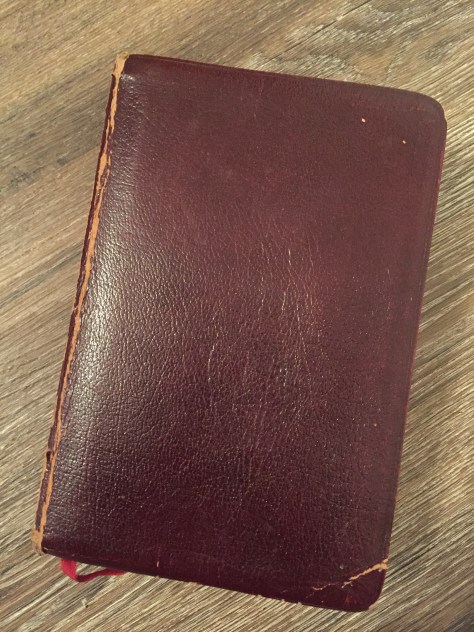
I don’t know how long he left us there to ponder this option, but I know that we were distraught. Neither one of us had slept, and the previous day had been a roller coaster of the greatest proportion. We didn’t say much except to say that we did not want to be in this position. We didn’t want to make this decision. I put a call in to our former pastor and his wife, knowing that they would be sound asleep and unable to help. We wanted someone to tell us whether either option was biblically “wrong.” Instead we were left alone with our decision and gripped with fear.  I remember flipping desperately through the book of Psalms in my oldest, most beloved Bible, hoping to find some word of instruction.

The doctor impatiently checked back with us, saying time was critical and Timothy was at risk just waiting in the OR. It was then that I heard from the Lord—not with an answer but with a reassurance.

What God revealed was that it did not matter which path we chose because He was sovereign in either situation. If we opted for the procedure to continue, Timothy would either die on the table or survive and make his way with little to no intestines. If we opted to close him back up, miraculous healing could still occur or death could be imminent. The doctor had assured us that either option was medically reasonable, and in that moment, God led us to have faith in Him to carry out His plan for Timothy’s life in either scenario.

With full confidence that our decision in no way limited God’s power to heal our son if He chose to do so, we told the surgeon to close the silo.

I have shared many stories of Timothy’s life and death over the past five years, but this one is the most difficult to tell. Because at some level, it felt like we had given up on Timothy’s life after all of those months of advocating for him in every possible way.

I have no idea whether our decision was “right” or “best.” For me it was not a choice between life and death but a choice to have faith in the sovereignty of God over every situation and a choice to give our son the most dignity in life or death that we possibly could.

Jesus told the woman her faith had saved her and to “go in peace.” Our faith saves us—from our sins, from death, from our fears, from thinking we are ever outside of God’s reach. And peace follows–peace that transcends the outcome of the situation…because it is grounded in faith.


“But God, being rich in mercy, because of the great love with which he loved us, even when we were dead in our trespasses, made us alive together with Christ—by grace you have been saved—and raised up with him and seated us with him in the heavenly places in Christ Jesus, so that in the coming ages he might show the immeasurable riches of his grace in kindness toward us in Christ Jesus. For by grace you have been saved through faith. And this is not your own doing; it is the gift of God, not a result of works that no one may boast.” (Ephesians 2: 4-9, ESV)

Advent Journal Day 15: Release

IMG_6530“…she took for him a basket made of bulrushes and daubed it with bitumen and pitch. She put the child in it and placed it among the reeds by the river bank.” (Exodus 2:3, ESV)
Moses’ s mother is one of the bravest women in all of history. A Levite woman who gave birth to a son just as “Pharaoh commanded all his people, ‘Every son that is born to the Hebrews you shall cast into the Nile.’” (Exodus 1: 22, ESV)

Can you imagine the love it took to place that baby boy in that basket and walk away? It wasn’t that she didn’t know whether he would survive. She was counting on the fact that he would and took precautions to ensure it. She stationed his sister nearby to stand watch “to know what would be done to him.” And Scripture implies that she strategically placed him where Pharaoh’s daughter came to bathe.

“Now the daughter of Pharaoh came down to bathe at the river…She saw the basket among the reeds and sent her servant woman, and she took it. When she opened it, she saw the child, and behold, the baby was crying. She took pity on him.” (Exodus 2:5-6a, ESV)

The baby’s sister then offered to get a Hebrew woman to nurse the child for Pharaoh’s daughter, which amazingly resulted in Pharaoh’s daughter paying Moses’s own mother to nurse him for her. Eventually, though, her job as a nursemaid ended.

“When the child grew older, she brought him to Pharaoh’s daughter, and he became her son.” (Exodus 2:10, ESV)

I wonder which release was the most difficult. The first literally saved his life, and the act brought her baby back to her in a temporary but protected state. But that walk to Pharoah’s palace must have been heart-wrenching. She had nursed and cared for her son and yet had no choice but to release him back to the very family who had caused the situation in the first place by ordering the death of all of the Hebrew babies, the family of the man who enslaved her people.

But in time, her released son became the instrument by which her people (and possibly she herself) were delivered from bondage.

Many years later, “standing by the cross of Jesus were his mother and his mother’s sister…and Mary Magdalene. When Jesus saw his other and the disciple whom he loved standing nearby, he said to his mother, ‘Woman, behold your son!’ Then he said to the disciple, ‘Behold, your mother!’ And from that hour the disciple took her to his own home.” (John 19:25-27, ESV)

And in that release of His mother and His death that followed it, Jesus—God the Father incarnate—freed her from eternal bondage.

Scripture tells of other examples of necessary releases—Hannah released Samuel to fulfill the promise she made to God that led to his birth. Abraham released his only son Issac to be sacrificed at God’s command, only to receive him back immediately as a faith-reward.

One of the most powerful stories of release is that of the prostitute mother who came to King Solomon in a dispute with another woman. Both women had infants, but one of them had lain on her son in the night causing him to die. She claimed that the other woman’s son had actually died and that the living infant was hers. Solomon wisely ordered that the child should be divided in two. “Then the woman whose son was alive said to the king, because her heart yearned for her son, ‘Oh, my lord, give her the living child, and by no means put him to death.But the other said, ‘He shall be neither mine nor yours; divide him.’” (1 Kings 3:26, ESV)

King Solomon then knew who the child’s real mother was because she was willing to sacrifice her child to save him.

As parents, we are all called to release our children. In an ideal scenario, that release occurs naturally as they grow to adulthood and leave our homes. That natural release is hard enough. I was privileged to experience it twice, and both times it was bittersweet but good and right.

Other times we are forced to release our children in painfully unnatural ways: to a death that comes far too soon, to circumstances we spent our lives praying they would never experience, and even to people willing to divide them in two to get what they want. All three are unbearably painful.

And when you have cried until the tears dry up, you fall on your face before the Lord and do the only thing you can do…the same thing Moses’s mom and Hannah and the prostitute mother did…release your child to the Lord and trust Him to honor the release, knowing that even unnatural releases orchestrated by evil men like Pharaoh can be redeemed for good…to save the child himself, to save a nation…or in the case of Mary’s release…to save the whole world.


“And she said, ‘Oh, my lord! As you live, my lord, I am the woman who was standing here in your presence, praying to the Lord. For this child I prayed, and the Lord has granted me my petition that I made to him. Therefore I have lent him to the Lord. As long as he lives, he is lent to the Lord.’” (1 Samuel 1:26-28, ESV)


Advent Journal Day 14: Sisters

IMG_6492“In those days Mary arose and went with haste into the hill country, to a town in Judah, and she entered the house of Zechariah and greeted Elizabeth. And when Elizabeth heard the greeting of Mary, the baby leaped in her womb. And Elizabeth was filled with the Holy Spirit, and she exclaimed with a loud cry, ‘Blessed are you among women, and blessed is the fruit of your womb! And why is this granted to me that the mother of my Lord should come to me? For behold, when the sound of your greeting came to my ears, the baby in my womb leaped for joy. And blessed is she who believed that there would be a fulfillment of what was spoken to her from the Lord’…And Mary remained with her about three months and returned to her home.” (Luke 1:39-45, 56, ESV)

After hearing the angel’s stunning announcement that she would supernaturally conceive the Savior of the World, Mary went “with haste” to the home of her relative Elizabeth who was experiencing her own miraculous conception. Their reunion brought the power of the Holy Spirit upon both of them, and they proclaimed joy and blessings, including Mary’s famous Song of Praise, “The Magnificat,” which translates “my soul magnifies the Lord.”

I have no biological sisters, a fact that I have long lamented, but God has abundantly blessed me with many heart sisters and daughters over the years. This morning I enjoyed a beautiful Christmas party planned and attended by the sisters in my church family. This week one of my sisters spent her evening with me enjoying a Christmas Village through the very excited (and sometimes impatient) eyes of my children. Tonight another sister is taking me to a ballet!

It doesn’t surprise me at all that Mary went straight to Elizabeth’s home with her shocking news. Can you imagine the conversations these two women shared in their three months together? (With Zechariah silenced, they must have had unlimited time to talk!) There is nothing like a trustworthy, Lord-loving sister to help you process all that life brings.

I’m not sure where I would be right now without the sisters and daughters in my life who pray, encourage, uplift, exhort, and speak the hard honest truth to me. I recently read an article by Greg Morse on the Desiring God website called, “Find a Friend to Wound You.” He wisely stated that “godly friends are not less than EMTs (emergency medical technicians) who will rip open our carefully crafted excuses and stun us back to life. They wound us for our good.” In contrast, he said that ungodly friends “cheer us on toward destruction. They bequeath the kiss of flattery—the Dementor’s kiss. They coddle our egos, telling us what we want to hear, not what we need to hear.” He exhorts us to recognize that our “souls need friends who are willing to risk wounding [our] pride in the moment for the long-term good of [our] soul.”

I have had several such friends speak into my life over the past year as I sought the courage to walk away from a toxic but secure situation into a peaceful but very uncertain future. In the midst of that terrifying walk, I also experienced the shocking betrayl of one of those friends. A few short years ago, I would have shut down after experiencing that—closed and locked the door to my heart—but that is exactly what Satan hoped I would do when he orchestrated that situation. He would love nothing more than to isolate me and leave me to my own counsel.

Instead, I am running “with haste” into conversations, outings, service, fellowship, burden-sharing, mistake-making, feeling-hurting, wounding, giving, forgiving, and life-giving community with my sisters. And I fully expect the Holy Spirit to show up for us just as He did for Mary and Elizabeth, bringing blessing, joy, and fulfillment—our own little canticle of souls trying to magnify the Lord.


“Two are better than one, because they have a good reward for their toil. For if they fall, one will lift up his fellow. But woe to him who is alone when he falls and has not another to lift him up! Again, if two lie together, they keep warm, but how can one keep warm alone? And though a man might prevail against one who is alone, two will withstand him—a threefold cord is not quickly broken.” (Ecclesiastes 4:9-12, ESV)

Advent Journal Day 13: Immanuel

l.NoRNtNXisdVOTJTv

When I was pregnant with Lydia, we had narrowed her name to two choices: Eliana Grace or Lydia Emmanuelle. I had suffered four miscarriages over the preceding year and a half and was sure that this pregnancy would end the same way. When it didn’t, I knew God had answered my cries, and I wanted our baby to have a strong biblical name that honored His faithfulness.

Eliana means “My God answered.” The biblical meaning of Grace is obvious, and Lydia, the “seller of purple cloth,” was a strong woman of faith who supported Paul’s ministry. Emmanuelle was derived from the Hebrew “Immanuel,” which means “God with us.”

We had always chosen our babies’ names well in advance of delivery, though we kept them secret. For some reason, we just could not decide between these two names and agreed to meet our newest daughter to see which fit her best before choosing. Perhaps all of the uncertainty we had felt during the pregnancy caused the indecisiveness? We knew there was a good chance that this baby would be born with Down syndrome, but we had refused all of the conclusive prenatal testing because it was too invasive. Various problems detected in the later part of the pregnancy left us with little doubt, but we would not know for sure until she was born.

On Columbus Day 2008, October 13, with her two oldest sisters present, our beautiful fifth child was born. We decided to name her Lydia Emmanuelle and shared the name with her grandma and siblings at home, who promptly started working on a Welcome Home sign.

Alone in my hospital room at the Portsmouth Naval Hospital in the wee hours of Lydia’s first night of life, I faced the reality of her diagnosis, wept, mourned, and then had a divine encounter I will never forget.

I was trying to nurse this newborn baby with her low muscle tone and imperfect heart when I was suddenly overwhelmed with the realization that she would struggle her whole life because of her chromosomal abnormality. I thought of her as a little broken-winged bird, and the tears I had held in all day began to fall freely and silently. In that moment, all self-pity I may have indulged in the preceding months was replaced by a fierce love and protective instinct toward her that has only grown with time.

Shortly after this personal catharsis, a nurse came into the room to check on us. She saw me weeping, and she sat down beside me. She began to tell me of her own baby born with a genetic condition, one that was fatal. Her child had eventually died. And then she shared that she was pregnant again, with a baby that likely had the same condition and would face the same outcome. She looked at Lydia, told me she was beautiful, and then told me how grateful she was for the baby she carried, regardless of how long it would live.

When this nurse left the room, she took with her every ounce of regret or sadness I would ever feel for my baby’s “defects.” In their place, she left me with gratitude for life—all life—a gratitude that turned into a personal mission and calling to place the highest regard and give the greatest opportunity to babies that others discard. I felt as though I had been visited by an angel.  As I sat there with tears streaming down my face, I heard the Lord telling me to change our baby’s name. I heard Him say, “Give her the two best names.” So the next morning, Lydia Emmanuelle became Lydia Eliana.

Even though her name didn’t end up being Emmanuelle, Lydia’s life introduced me to Immanuel as I had never known Him before. He was with me during my pregnancy, the week after I received my triple screen results that said 1 in 10 chance of Down syndrome; He told me that He knit her together in my womb and that whether she had this condition or not, she was perfectly made in His image for His purpose. And fear and despair were replaced with a deep, abiding peace that carried me the remaining nine months.

He was there the day our son Timothy died. As we sang and rocked our baby boy into heaven, I saw and felt Christ’s presence in that PICU room like I had never experienced before. He became real to me that day, and I have never been the same—one of many of the ways Timothy’s life changed the world.

He has walked each step of this recent, unwanted journey with me—providing everything I have needed along the way. He has caught my tears in His hands and returned them to me as peace and joy.

When I struggle daily with the harsh realities of life in a broken world filled with broken people, He reminds me that there is nothing I feel that He doesn’t understand. He knows injustice and abuse and betrayl, and He promises to redeem them all—in His time.

And when I experience the joys of life in a beautiful world, He reminds me that He too knows what it feels like to love a child so much that it hurts, to feel the closeness of a true friend, to fellowship and celebrate and teach. He sends sunsets and blue herons and playful ducks and gentle rains to remind me that He holds all things together—including me.

Because He is Immanuel, I am never alone, never forsaken, never without hope. God with us—God with me.


“All this took place to fulfill what the Lord had spoken by the prophet: ‘Behold, the virgin shall conceive and bear a son, and they shall call his name Immanuel’ (which means, God with us).” (Matthew 1:22-23, ESV)

Advent Journal Day 12: Rescue

IMG_6477I have always loved Christmas music, but this Advent season my playlist looks a little less traditional than usual. Over the past year, my heart has been drawn toward battle songs—anthems through which the Holy Spirit ministers to the deepest parts of me and stirs me to stay in the fight, to rebuke the enemy, and to remember who holds me.
Last winter when Tess was hospitalized, and I would drive home from the children’s hospital late at night, I would often sing “This Thing is Not Going to Break You,” a beautiful song by Christa Wells that a friend from my Bible study had sent to me. Tears would literally pour down my face as I sang the chorus over and over:

“This thing is going to try to break you

But it doesn’t have to

You’re showing us how

This thing is going to bend and shape you

But He won’t let it take you/You know it somehow

This thing is not going to break you”

My voice would often choke on the title lyrics because I so desperately wanted them to be true, but inside I just felt shattered.

Months later as I saw the deliverance I wrote about yesterday, it was “No Longer Slaves” by Bethel Music that stirred my soul. I began singing with a new confidence, boldly claiming what the lyrics promised:

“I’m no longer a slave to fear

I am a child of God


I am surrounded

By the arms of the father

I am surrounded

By songs of deliverance

We’ve been liberated

From our bondage

We’re the sons and the daughters

Let us sing our freedom


You split the sea

So I could walk right through it

My fears were drowned in perfect love

You rescued me

And I will stand and sing

I am the child of God”

Our church worship team often leads us in a song called “Surrounded” by Michael W. Smith. It is the simplest of songs really but oh so powerful. Its lyrics are few—literally less than 25 words in the entire song—but their power is mighty. Earlier this fall I faced a new and unexpected battle, one that I have come to realize the enemy strategically designed to take me out. When I was breathless from the shock of it, all I could gasp out were the lines of this song—over and over and over again:

“This is how I fight my battles

This is how I fight my battles…

It may look like I’m surrounded but I’m surrounded by You

It may look like I’m surrounded but I’m surrounded by You”

I don’t have a musical bone in my body. I wish I did, but either through lack of nature or lack of nurture, that talent eluded me. But slowly over the past ten years, I have learned the power of unabandoned worship. That has been a gradual work God has done in me—moving me from a two-hands on the hymnal, stand up-sit down girl to a face on the floor, crying out to God worshipper.

Two summers ago, someone saw me worshipping in the midst of a major trial. With disdain, this individual chastised me: “How can you stand there and worship like that?” All I knew to say was, “How can I not?”  When I worship, I proclaim truth with words penned by others–words I desperately want to believe.  And by proclaiming them, the Holy Spirit in me rises above feelings and circumstances and pours strength in my weakened self until the words I sing soak into my soul and bring healing.

My counselor recently shared a song with me that has become my Advent season battle song. It is by one of my favorite worship artists, Lauren Daigle, and its lyrics minister to the very deepest parts of my heart:

“You are not hidden

There’s never been a moment

You were forgotten

You are not hopeless

Though you have been broken

Your innocence stolen

I hear you whisper underneath your breath

I hear your SOS, your SOS

I will send out an army to find you

In the middle of the darkest night

It’s true, I will rescue you

There is no distance

That cannot be covered

Over and over

You’re not defenseless

I’ll be your shelter

I’ll be your armor

I hear you whisper underneath your breath

I hear your SOS, your SOS”

The more I sing this hauntingly powerful song, appropriately called “Rescue,” the more I realize that it actually IS a Christmas song. God saw our hidden, hopeless, forgotten, broken selves and sent out an army in the middle of the darkest night. He incarnated Himself and forever voided the distance between us and Him.

And because He came and lived and died and lived again, this girl who cannot carry a tune can fight her battles in song, whisper her SOS underneath her breath, choke out lyrics between sobs until she starts to believe them, and joyfully proclaim that she is a child of God.

Amidst the beautiful songs of the season, she will continue singing her battle songs, knowing that either way she is celebrating the greatest rescue mission ever conducted—all to reach little old me and little old you. 


“I will sing a new song to you, O God; upon a ten-stringed harp I will play to you, who gives victory to kings, who rescues David his servant from the cruel sword. Rescue and deliver me from the hand of foreigners, whose mouths speak lies and whose right hand is a right hand of falsehood…Blessed are the people whose God is the Lord!” (Psalm 144:9-11, 14b, ESV)


Advent Journal Day 11: Egypt

IMG_6455“Now when [the wise men] had departed, behold, an angel of the Lord appeared to Joseph in a dream and said, ‘Rise, take the child and his mother and flee to Egypt and remain there until I tell you, for Herod is about to search for the child to destroy him.’ And he rose and took the child and his mother by night and departed to Egypt and remained there until the death of Herod. This was to fulfill what the Lord had spoken by the prophet, ‘Out of Egypt I called my son.’” (Matthew 2:13-15, ESV)

This slightly less familiar part of the Christmas story resonates deeply with me this year. Because God also called me out of Egypt, and I keep trying to go back.

Egypt has a bit of a mixed reputation in Scripture. Clearly, it was a safe haven for Mary, Joseph, and young Jesus. And many, many years before, it had been a refuge of another type for another man named Joseph. Jacob’s favored son—the recipient of the coat of many colors—found himself in Egypt, sold by his own brothers as a slave, imprisoned, and alone. Eventually God freed him from prison and raised him to a place of authority, second only to Pharaoh himself. Through God’s provision, Joseph was positioned to feed the Egyptian people during great famine and to save and be restored to his own father and brothers as well. He then settled his family just outside of Egypt in a land called Goshen, where they prospered greatly.

But in the years that followed, “there arose a new king over Egypt, who did not know Joseph. And he said to his people, ‘Behold, the people of Israel are too many and too mighty for us. Come, let us deal shrewdly with them, lest they multiply, and, if war breaks out, they join our enemies and fight against us and escape from the land.’ Therefore they set taskmasters over them to afflict them with heavy burdens…they ruthlessly made the people of Israel work as slaves and made their lives bitter with hard service, in mortar and brick, and in all kinds of work in the field. In all their work they ruthlessly made them work as slaves.’” (Exodus 1:8-11a, 13-14).

The Egypt in my story was also a place of refuge that became a place of bondage. It was a place where I served the wrong gods and where things that had once seemed beautiful turned very dark. I fervently prayed for God to bring reconciliation and restoration within Egypt, but instead He chose to deliver me from it. And I am grateful.

But some days, I remember the Egypt of refuge and forget the Egypt of bondage. Sometimes the hurt just gets stuck in my throat and I can’t quite swallow it down or cry it out, so it just stays stuck there. And on those days, I think I want to go back to Egypt where things are familiar and secure.

A few weeks ago, I shared this struggle with a friend who intimately knows my story, and she reminded me that the Israelites suffered this same internal battle. They even experienced it in the midst of their deliverance, crying out to the Lord, “Is it because there are no graves in Egypt that you have taken us away to die in the wilderness? What have you done to us in bringing us out of Egypt? Is not this what we said to you in Egypt: ‘Leave us alone that we may serve the Egyptians? For it would have been better for us to serve the Egyptians than to die in the wilderness.’” (Exodus 14:11-12, ESV)

And later, even after seeing the miracle of God’s deliverance, they lamented: “Then all the congregation raised a loud cry, and the people wept that night. And all the people of Israel grumbled against Moses and Aaron. The whole congregation said to them, ‘Would that we had died in the land of Egypt!…Would it not be better for us to go back to Egypt?’” (Numbers 14:1-2, 3b)

Moses, Aaron, Joshua, and Caleb pleaded with the people, telling them that the land God prepared for them was exceedingly good and that with His protection they need not fear the giants they may encounter in that land.

Through my friend and His word, God unequivocally told me the same: Do NOT go back to Egypt! And to anyone else tempted to return to whatever bondage God has delivered you from—whether internally or externally inflicted—I say the same: Do NOT go back! Your memory will play tricks on you—recall the easy and simple and leave out the dark and evil. Egypt will entice you with its fine food and shiny riches. Maybe your identity is tied up in Egypt, and you aren’t sure who you are outside of its boundaries. People you love may have chosen to remain in Egypt, and you may miss them or think you can rescue them. Fear will whisper to you that Egypt is familiar and secure—you know what to expect there, and the future is just an uncertain mystery. But as Corrie ten Boom once said, “Never be afraid to trust an unknown future to a known God.” The same God that delivered you from Egypt will walk you step-by-step through the promised land—giants and all–providing all that you need.

The land He has brought me to IS abundantly filled with exceedingly good things, and thankfully He has surrounded me with people ready to remind me of that on the days when the hurt gets stuck in my throat.

“Good-bye Egypt.”


“And Moses said to the people: ‘Fear not, stand firm, and see the salvation of the LORD, which he will work for you today. For the Egyptians whom you see today, you shall never see again. The LORD will fight for you, and you have only to be silent.’” (Exodus 14:13-14, ESV)

Advent Journal Day 10: Savior

IMG_6451“And, lo, the angel of the Lord came upon them…And the angel said unto them, Fear not: for, behold, I bring you good tidings of great joy, which shall be to all people. For unto you is born this day in the city of David a Savior, which is Christ the Lord.” (Luke 2:9-11)

Can’t you just hear Linus’s voice? I think one of my all time favorite Christmas moments is when he answers Charlie Brown’s desperate, pleading question: “Isn’t there anyone who can tell me what Christmas is all about?!?”

This morning, I awoke with another question on my mind…Who is MY Savior?

I know the Sunday School answer. Jesus. But who does my life say is my Savior? I’m forty-eight years old and have been a believer for thirty-five years (with about a six-year gap as an agnostic, but that is another story altogether). But I don’t think I lived most of those years as if I had or even needed a Savior other than myself. I don’t say this proudly or with false humility but with a gut-checking realization that would come with shame, except that I know the source of shame and am not entertaining him or any of his minions.

Last winter in another worship encounter at my church (yes, I have an amazing church!), our incredibly gifted worship leader, Olivia Dyer, introduced a song called “Defender” by Rita Springer. That song (actually the entire album, Battles) has become very meaningful to me over the past year, especially the following lines:

“When I thought I lost me

You knew where I left me

You reintroduced me to your love

You picked up all my pieces

Put me back together

You are the defender of my soul”

I could write pages about what these lines mean to me, but at the heart of them is the need for a Savior. I wish it hadn’t taken such tragedy for me to see the need or fully receive it, but I wouldn’t go back now even if I could. I don’t want to be that person anymore…the one who thought she had to fix everything and everyone, the one who felt responsible for the world, the one who lived in fear, the one who tried to be everybody’s Holy Spirit, the one who said she trusted the Lord but really looked to man—herself, her husband, her friends, her church—for affirmation, for identify, for answers, for happiness.

Relationships, jobs, hobbies, addictions, money, success…we look to them for all of those things, but eventually the emptiness returns because we have a void they just cannot fill. Trying to be someone’s Savior is exhausting, and expecting someone to be yours is unfair. I have done both and had them done to me. But when I broke and God put me back together, He mercifully left those pieces out and made Himself the “defender of my soul.” And every chance I get, I will point others to Him—my Savior, who is Christ the Lord!

“He drew me up from the pit of destruction, out of the miry bog, and set my feet upon a rock, making my steps secure.” (Psalm 40:2, ESV)

Advent Journal Day 9: Encourage

IMG_6448As I pulled away from the Starbucks drive-thru yesterday in the cold, pouring rain, I glanced down at the cup in my drink holder (I had gotten the red swirly holiday cup this time—one of my favorites!). Across the top of the cup in black Sharpie were the words “Thanks, Mom! I love ya! You can do it!” The words felt as warm as the drink inside the cup, and I smiled thinking of the beautiful young friend who penned them…one of my “barista daughters.”

It’s amazing how a simple word of encouragement can turn a day or a mood or an attitude completely upside down. I see it in my kids, too. Titus often has “moments” (sometimes days FULL of them!), and I have learned that one of the best ways to defuse them is to think of something positive to say about him in that moment. The same can be said of my students. When I evaluate their writing, I know that they need me to critique it, edit it, and challenge them to improve it, but if I start by complimenting something about it, the rest is much more easily received.

Barnabas is known as the encourager in the early church. Acts 4:36 says his name means “son of encouragement.” What an incredible calling! Barnabas was set apart by the Holy Spirit and called to speak boldly (Acts 13). I have a Barnabas in my life, and I have been awed by how specifically God directs her. She now lives across the country from me but with amazing precision, Sarah will still send me a prayer, a prophetic word, a note of encouragement, or even a small gift that will arrive within hours of a difficult situation or hard day.

Last year Tess spent two-and-a-half months in the hospital and had seven surgeries within a four-month period. Simultaneously, our family was enduring the catastrophic events that I described in yesterday’s journal. Soon after the New Year, my body started reacting to all of the stress. I suffered severe headaches, developed corneal ulcers that destroyed a significant portion of my vision in one eye, and broke out in the most painful rash I have ever experienced. On the day of Tess’s discharge after the seventh and final surgery of her ordeal, I was finally able to slip away to the doctor to get help for the rash. I was emotionally spent from a toxic encounter earlier in the day and was grateful just to sit down in a sterile waiting room at the Tricare Clinic where no one knew me, needed me, or threatened me in any way. When I heard the text notification chime from my pocket, I instinctively reached for it, bracing myself for the likely negative intrusion into my moment of respite. Instead, I saw a message that included these words:

“You are dearly loved, admired, and deeply respected…Your love makes a difference and is beautiful even when unnoticed…You are loved and lovely. I pray that you can always live loved because that is your true identity.”

The words in between these were equally personal and powerful, but those declarations of love in the midst of such an unloving day were what wrecked me. Because as I read them, I realized that this particular cold, dark day happened to be Valentine’s Day and that through one of His sweet servants, God Himself had just delivered my one and only Valentine.

This type of thing has happened over and over again for the past year, yet it always amazes me. To me, it is not only evidence of God’s provision for ME but also of my friend Sarah’s attentiveness to HIM. She has to hear Him to know when and what to say to me, and that is a testimony to her faith and discernment.

Not everyone has the calling that Barnabas and my friend Sarah seem to share, but we all have great capacity to encourage one another. In fact Paul admonished us to do so: “Therefore encourage one another and build one another up, just as you are doing.” (1 Thessalonians 5:11, ESV).

So much that we are called to do is difficult—loving our enemies, turning the other cheek, forgiving, demonstrating self-control—but encouraging one another is really easy. It isn’t expensive or time consuming to write a note, send a text, express a compliment, pat a back, give a hug, lend a hand, or express gratitude to someone. Why don’t we do more of it? For me, it is usually hurry or distraction that cause me to miss opportunities to encourage someone. Advent is the perfect time to open our eyes to the strangers, friends, co-workers, and family whose paths cross ours each day and to listen to the Lord as He nudges us to say or do just the thing they need to hear or receive to feel His love.


“May the God of endurance and encouragement grant you to live in such harmony with one another, in accord with Christ Jesus, that together you may with one voice glorify the God and Father of our Lord Jesus Christ” (Romans 15:5-6, ESV).


Advent Journal Day 8: Family

IMG_6444Last week I attended a quarterly worship event called The Encounter that is hosted by my church and open to the community. It was my third time attending one of these, and each time I have been directly blessed by the worship itself and by revelation God has given me through His word and His people.

At the event last week, a friend shared a word that the Lord had put on his heart about family. He spoke of how the holidays can bring challenges in the area of family but challenged us to think instead of the blessings of our spiritual family.

It’s funny how a word sometimes hits you like a baseball to the head and other times has to marinate a bit to reach the depths of what God wants to say to you through it. I needed to marinate in my friend’s word, but once it soaked in later that night in the quiet of my home, it overwhelmed me to tears.

Over the course of the past year and a half, I watched the family I had nurtured and built with every fiber of my being splinter, shatter, and eventually disintegrate. The people were still alive, but the family unit we had all known was destroyed. It devastated every one of us in our own ways. As a mother, the loss felt utterly overwhelming.

Through God’s grace, I have started to heal, rebuild, and find great hope in the future. But I have struggled with the word “family.” I would see artwork in stores that I loved but didn’t buy because it had the word “family” in it. I would hear messages at church about family and wonder how they applied to me. I would watch other families that I know and love and would be convicted by twinges of jealousy at the simple fact that they were intact. During the holidays, I did feel a sense of loss and grief, realizing that parts of my 26-year family were missing from the table—some by choice, some by circumstance, and some just because other people probably cook a better turkey than me (actually Harris Teeter cooked my turkey, whoever he is, and it was pretty delicious, but I was a turkey-risk for sure!).

Titus has always had a special need to identify his family—naming us each one-by-one and seeking the reassurance that we belong to him. I have found this fascinating, knowing he is adopted, even though he has yet to fully understand what that word means. It’s as if God places a special appreciation for family in those who have been orphaned.

I think that must be sort of like what I felt on Thanksgiving—orphaned and grasping to figure out what now constitutes my family. And when my friend’s word fully soaked into my being late that Friday night, it left me weeping with joy. Because I think that deep down, I thought I would not have a true family again unless I risked another marriage one day (a highly unappealing prospect right now).

But God has repeatedly told me over the past nine months that He is my husband now and that He is faithful and trustworthy and honorable and just and that He stands ready to defend me, love me, cherish me, and fight all of my battles. And that all I have to do is stay still and praise him (thanks to worship artist Rita Springer for those last two truths).

And the revelation that I received through the Encounter was that I am—and actually have been for many, many years—in a very strong, intact family of believers. That family thankfully DOES include members of my immediate and extended family with whom I share bonds of blood and law and lifelong memories, but it is also a much broader family that encompasses my church family, my honorary sisters and daughters, spiritual mentors, authors and speakers who have written and spoken truths that have molded and shaped me, youth leaders and college professors and camp counselors and students who have poured into my children, and countless friends I have met in the various chapters of my life. Many of these people are very different from me—maybe their theology differs from mine or their skin is a different color or they live life a little differently than I do. Maybe they don’t live in my house or go to my particular church or even live in my state.

But when I cry out to God in the desert and wilderness places I described a couple of days ago, He nudges one of them to call, text, or pray for me. When I have a need that I see no resource for, He fills it through one of them. They have shed tears for and with me, spent money on me, given gifts to me, shared talents with me, spoken truth over me, broken bread with me, drunk countless cups of coffee with me, sat by hospital beds with me, counseled me, corrected me, encouraged me, forgiven me, lifted my arms for me when I was too weak to hold them up, and picked me up when I was just a pitiful little puddle on the floor. All with love. And they will do it again. And again. And again. And again. And He nudges me to do the same for them in return. And the more I heal and grow, the more He will entrust me to do for them.

My family.


“And stretching out his hand toward his disciples, he said, ‘Here are my mother and my brothers! For whoever does the will of my Father in heaven is my brother and sister and mother.’” (Matthew 12:49-50, ESV)


Advent Journal Day 7: Offerings

IMG_6442

Well…it seemed like a good idea when I thought of it.

SOOOOO many people pour into my kids’ lives on a daily basis—care attendants, therapists, doctors, tutors, coaches, baristas (catch that pun?!)—and on a very limited single-mom budget, I wanted to do something small but meaningful for Christmas to let these people know how much we value them. So I did what any modern mom would do. I went straight to Pinterest to get ideas and then to Amazon to order supplies. They came in yesterday, and I eagerly set Titus and Lydia up at the table with the colorful paints and pristine brushes and the pretty little wooden ornaments that I simply wanted them to paint in some kind of colorful, abstract-artsy way. Then I would add a few special touches to make the ornaments a little more meaningful for the recipients, and Voilà!

Let’s just say that Titus and Lydia did not catch my vision of colorful and abstract-artsy. We have solid brown, solid blue, solid maroonish, a lighter shade of solid brown, solid mauve, a darker shade of solid blue that is only partially painted, and–look!–one two-tone bluish earth-looking one that suddenly seems like a masterpiece!

I pondered calling this a “practice batch,” pitching it, and starting over next week. But then I thought about the motivation behind that. These are people who help me care for my kids in the most real way possible. They understand the day-to-day work of helping children with extra challenges be the best they can possibly be. They see the underside of our lives—the hard and dirty and smelly (literally) parts—and they love us anyway, maybe even because of those parts. So who would I be trying to impress if I pitched the first batch and tried again next week?!?

If these ornaments aren’t colorful and pretty enough to give as gifts, does that mean that Tess’s debut vocal performance at Bible Study on Thursday when she kicked her foot to the beat and then shouted out the last word of each of the songs just as the other children finished singing them was “less than”?

Does that mean that when Lydia performs with the Children’s Christmas Choir next weekend, and her rendition of “Happy Birthday, Jesus” isn’t quite on key and is missing quite a few words, it will be “inferior”?

Shame on me for even feeling momentarily disappointed in these precious ornaments! They are as valuable as the most expensive, exquisite ornament I could buy at Tiffany’s. They are like the widow’s two-cents or the boy’s loaves and fish. They are like my pitiful attempts at singing worship songs on key and my suddenly shrunken tithe. Because doesn’t God honor all of our heartfelt offerings even if they are but filthy rags? (Isaiah 64:6) When our voices reach heaven, don’t they blend with the angels’ voices, no matter how bad they sound down here on earth? And when we stand before the throne, doesn’t He see our dirty, sinful, broken selves as righteous because He sees us through Christ?

These ornaments are beautiful because they were made and will be given by children who love with the purest of loves—a love without pretense or pressure or condition—a bubbling over, can’t-hold-it-in kind of love that melts your heart and dissolves your stress and makes you get up in the morning when you don’t really feel like it.  The same kind of love that birthed the baby whose life we celebrate on Christmas Day.

So I am keeping this first batch of ornaments and whichever masterpieces are produced in the next several sittings (because at the rate Titus and Lydia lose interest in painting, it will take us until next year to finish painting all of them!).

And if I know the people they were made for like I think I do…they will be well received.


“For the Lord sees not as man sees: man looks on the outward appearance, but the Lord looks on the heart.” (1 Samuel 16:7)

 (Masterpieces created by Titus and Lydia Barnes.)